THE MIND of a MARKET GAMBLER

THIS BOOK IS YOUR STOP-LOSS

I posted the photos on the website because in the printed and e-book versions, the quality doesn’t fully capture their charm.
You can click on any photo to enlarge it.

Cover:

A young man wants to become a Trader. He arrived with his money at the place where one can join the market game. 
At the gate leading to Broker Street, Sherlock stopped him.
"Wait. Before you enter the market and start swimming with the sharks, read this book.
Learn the basics – it will save you a lot of nerves and money."
This book is your Stop-Loss.
The cover hides many symbolic and intriguing details.

Chapter: 2.4

Chapter: 2.4

Sometimes a Trader, sitting alone in their quiet trading room, feels like Rambo on a battlefield. Physically, we’re not fighting anyone, but what happens in our heads can be a real war.
Most often, we battle our own habits, emotions, lack of discipline, consistency, and focus.
Staring at a screen is definitely not relaxation for a Trader 
it’s a huge challenge.
This job requires solid preparation and full commitment.

Chapter: 2.5

You’ve probably heard of the snowball effect. Imagine this: you do something good for two people, and they in turn do something good for another two… By the 32nd step, that good could reach more than 8 billion people.
Almost everyone wants the world to be a better place.
Maybe instead of waiting, it’s time to act?

Chapter: 2.6

Yes, that’s me :) The idea to write this book came about spontaneously. After a conversation with a fellow Trader, I realized it might be better to put these thoughts down on paper instead of just talking and explaining.
Maybe it would make someone’s life a bit easier and better.
Back then, I had no idea that the actual writing would turn out to be the easiest and most enjoyable part of creating a book. Countless times during editing, translations, fine‑tuning EPUBs, or working on the website you’re now visiting, I hit a wall. In those moments, there were only two options – give up or find a solution and keep going.
My journey to becoming a professional Trader taught me how to handle situations like that. And that’s why I didn’t give up while writing this book.
A Trader doesn’t quit. A Trader faces obstacles, analyzes the situation, and finds solutions. Over time, problems and challenges lose their power to intimidate.

Chapter: 3.2

Chapter 3.2 warns against blind trust and self‑proclaimed “experts.” I encourage you to learn independently and critically.
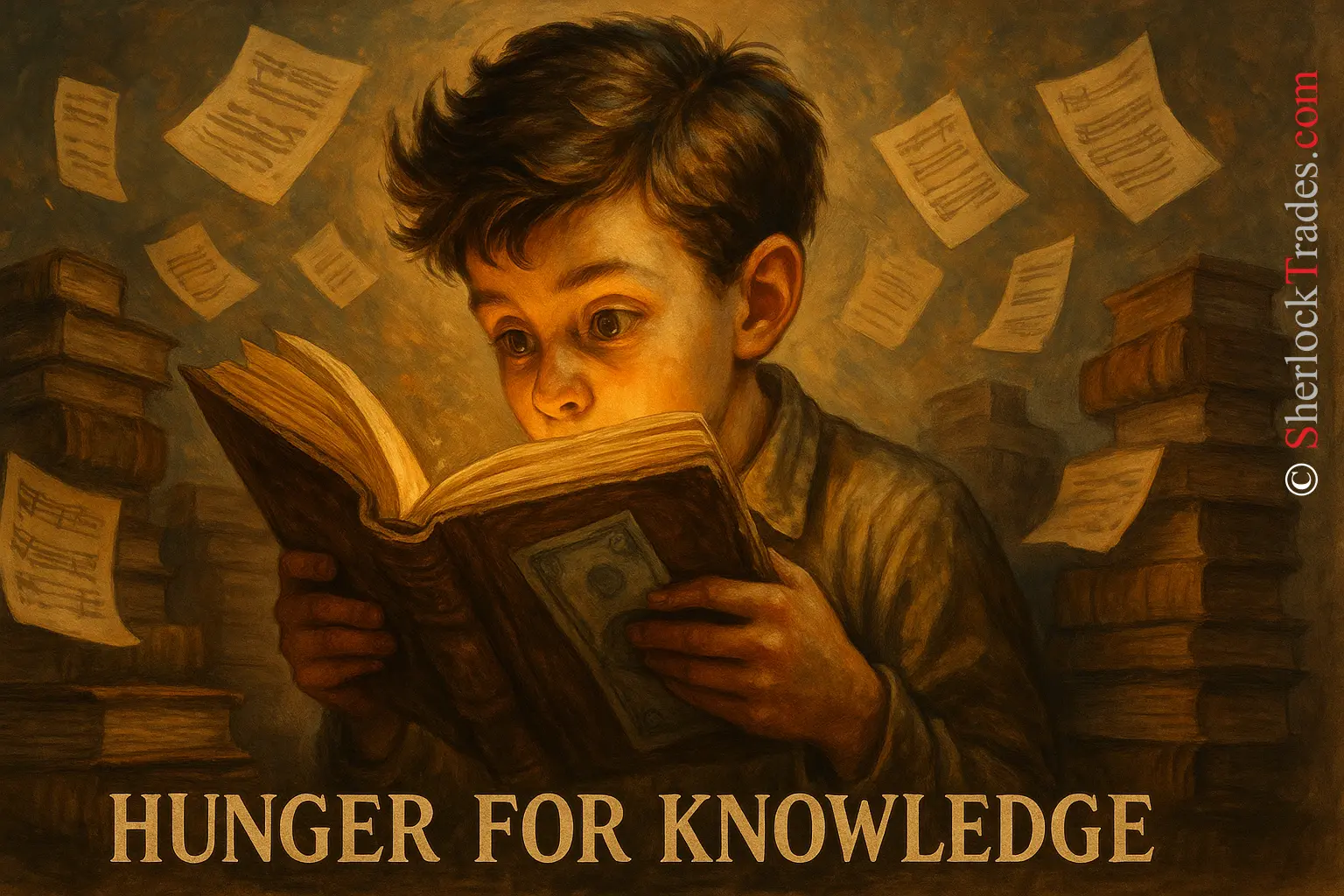
If you truly want to achieve the goal of stable, profitable trading, you must have a “hunger for knowledge” – the drive to seek the truth and verify information on your own before accepting it at face value from any “guru.”

Chapter: 5

As the main character of one of my favorite TV shows used to say: “Everybody lies.
People promising easy, quick profits… Magic formulas for success… News, forecasts, signals… 
Even our own brain can trick us…
A Trader must think like a detective – independently verify the facts and search for the truth, because every decision means putting their own money on the line.

Chapter: 6.2

Does it feel like this obstacle is too hard to overcome and you might as well give up?
Trading is a tough and very demanding profession. You will encounter plenty of obstacles along the way.
If your goal truly matters to you, there is no obstacle you can’t break through, go around, jump over, or even dig under to get past.
Think, be resourceful, and don’t give up – the reward is worth it. At least from my point of view :)

Chapter: 6.4.4

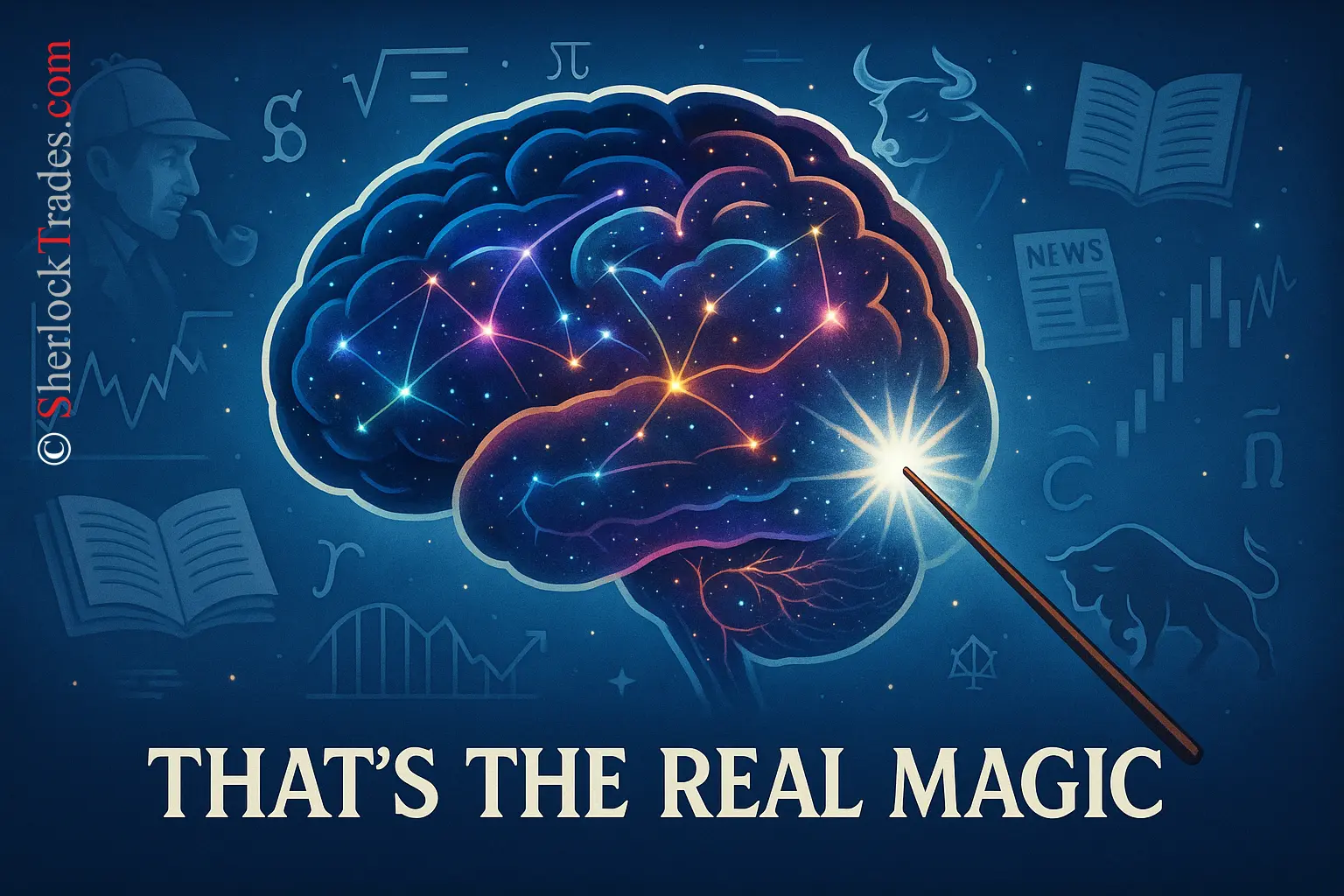
The true “magic” of successful trading is the result of working on your own mind. Our way of thinking, focus, and self‑control create the edge. It’s not magic – it’s conscious approach and mental discipline.
Opinions vary, but most estimates suggest that success in trading depends largely on well‑developed trading psychology. One thing is certain – without working on your mindset, you practically have no chance in the market.

Chapter: 6.5

A beginner Trader is usually overly eager to trade. They want to jump into a position as quickly as possible and make money. In the beginning, psychology and mindset seem unimportant – all the focus is on technique, chart analysis, and simply getting into the market. This is how most young Traders approach their education – it’s what they search for and study intensely.
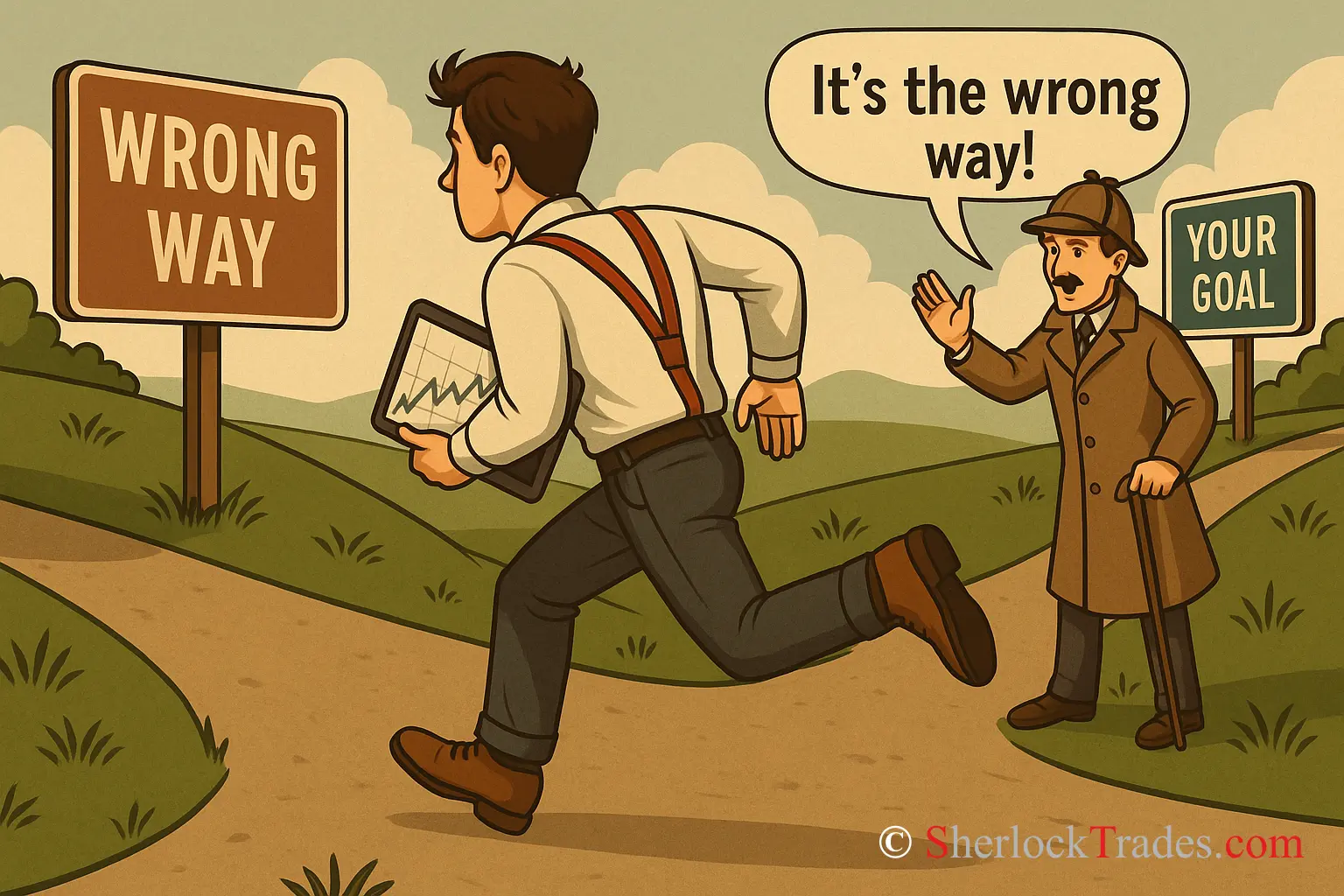
But remember, it’s not about running as fast as you can, it’s about running in the right direction. It’s not about learning to “play the game” as quickly as possible, but about learning the right methods and principles, and shaping your mind the right way.
Because if you run fast in the wrong direction, you’ll end up far away – just not where you want to be.
If I were you, I’d read this book first, because I know exactly how valuable it is :)

Chapter: 7.2 point 11

For outsiders, trading can look a lot like gambling. Yet the same demons lurk in the mind of both the gambler and the Trader – and they must be consciously driven out.
A lack of strategy and a belief in “luck” is a direct path to financial ruin.
This chapter warns against treating trading as a game of chance and emphasizes the importance of risk management and following a repeatable decision‑making process.
Have you read the chapter on the “Holy Grail”? It’s available on the website as a PDF.

Chapter: 7.2 point 12

We often assume that because we are honest ourselves, others must be as well… This illustration shows the naivety of beginner Traders, who are willing to pay any price for “secret knowledge” from people who present themselves as market masters.
This chapter warns against false mentors and buying into promises of quick success. True growth in trading does not come from magical strategies but from working on yourself, continuous education, and the painstaking refinement of your own trading technique.

Chapter: 7.2 point 12

This illustration is a positive counterpoint to the previous image. It shows a mentor–student relationship built on trust, knowledge, and patience. There’s no glitter or empty promises here – just learning, books, and what is real, even if it’s not very appealing from a marketing perspective.
It’s worth being very careful when choosing mentors and methods and verifying everything they present.
A poor choice means running in the wrong direction and moving further away from your goal.

Chapter: 8.2

Do you realize that somewhere in the future there’s a day, an hour, and a minute when you will die?
Until that moment, you have a fixed number of minutes and seconds left in your life.
Picture a huge bowl full of rice. Each grain represents one minute you have left. With every passing moment, one grain disappears from the bowl.
Will you use your grains on something truly meaningful, or will you let hundreds of them vanish forever because you turned on your phone and wasted time?
Choosing the right way to earn a living is one of the most fundamental decisions in anyone’s life.
Otherwise, you could end up wasting a mountain of rice.

Chapter: 8.3

The road to the left symbolizes financial ignorance – high costs, careless spending, low income, and a lack of long‑term thinking.
The road to the right is a metaphor for a life built on reason, self‑discipline, and choices that create lasting prosperity.
This chapter makes it clear that true wealth is not a matter of chance or luck – it’s the result of specific habits, strategies, and daily decisions.
The road to the left may seem easy because it requires no effort or reflection. In reality, however, it eventually becomes exhausting and hard to endure for most people.
The road to the right demands more effort, but over time life becomes easier and far more enjoyable because of it.
You decide which road you will take.

Chapter: 10.1

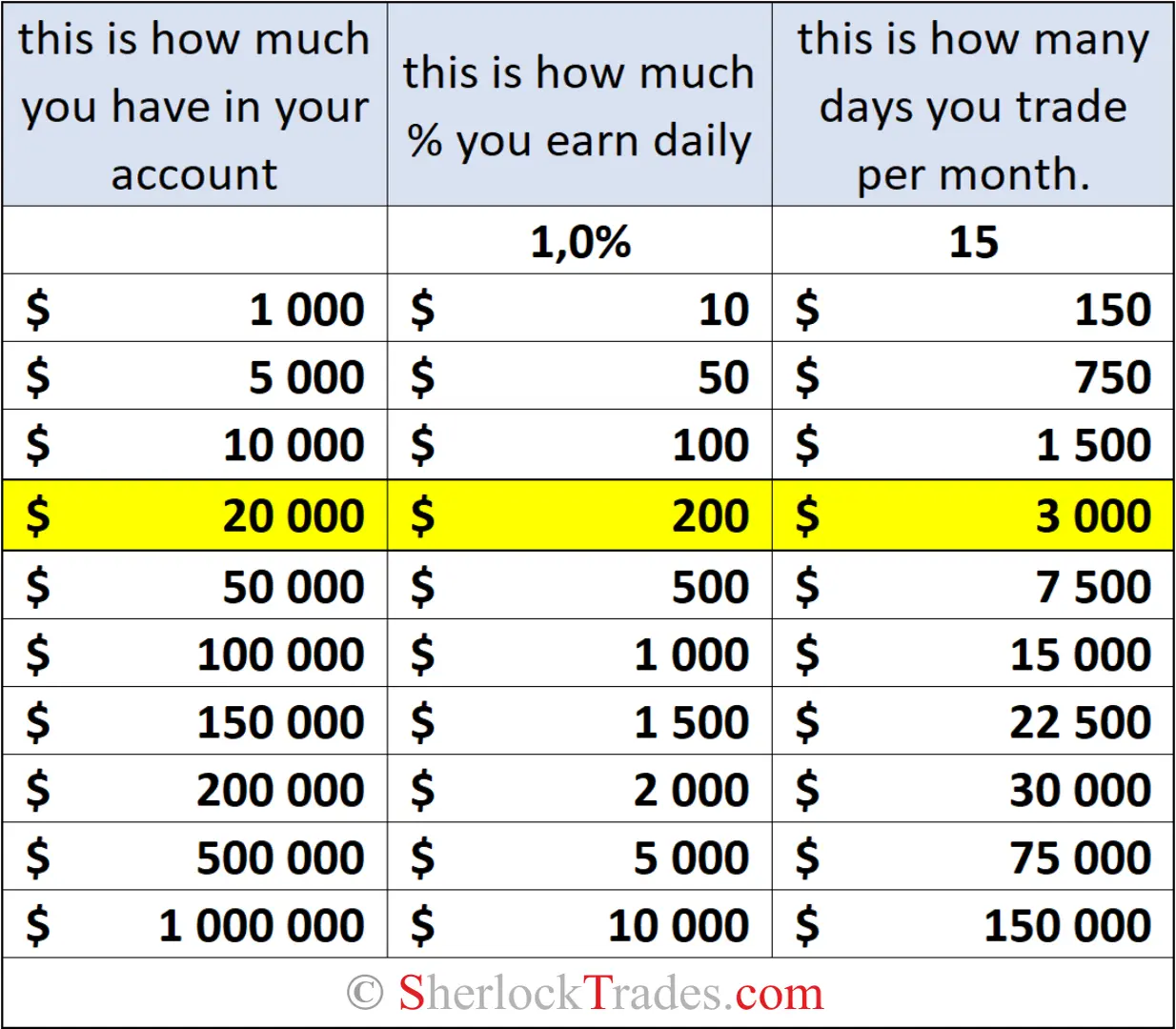
The table opens the chapter by presenting realistic estimates of trading profits based on a specific average daily rate of return.
It serves as a starting point for reflecting on the potential of trading as a way to finance our lives.
However, it is only one of many pieces that make up the full picture of trading.

Chapter: 10.2

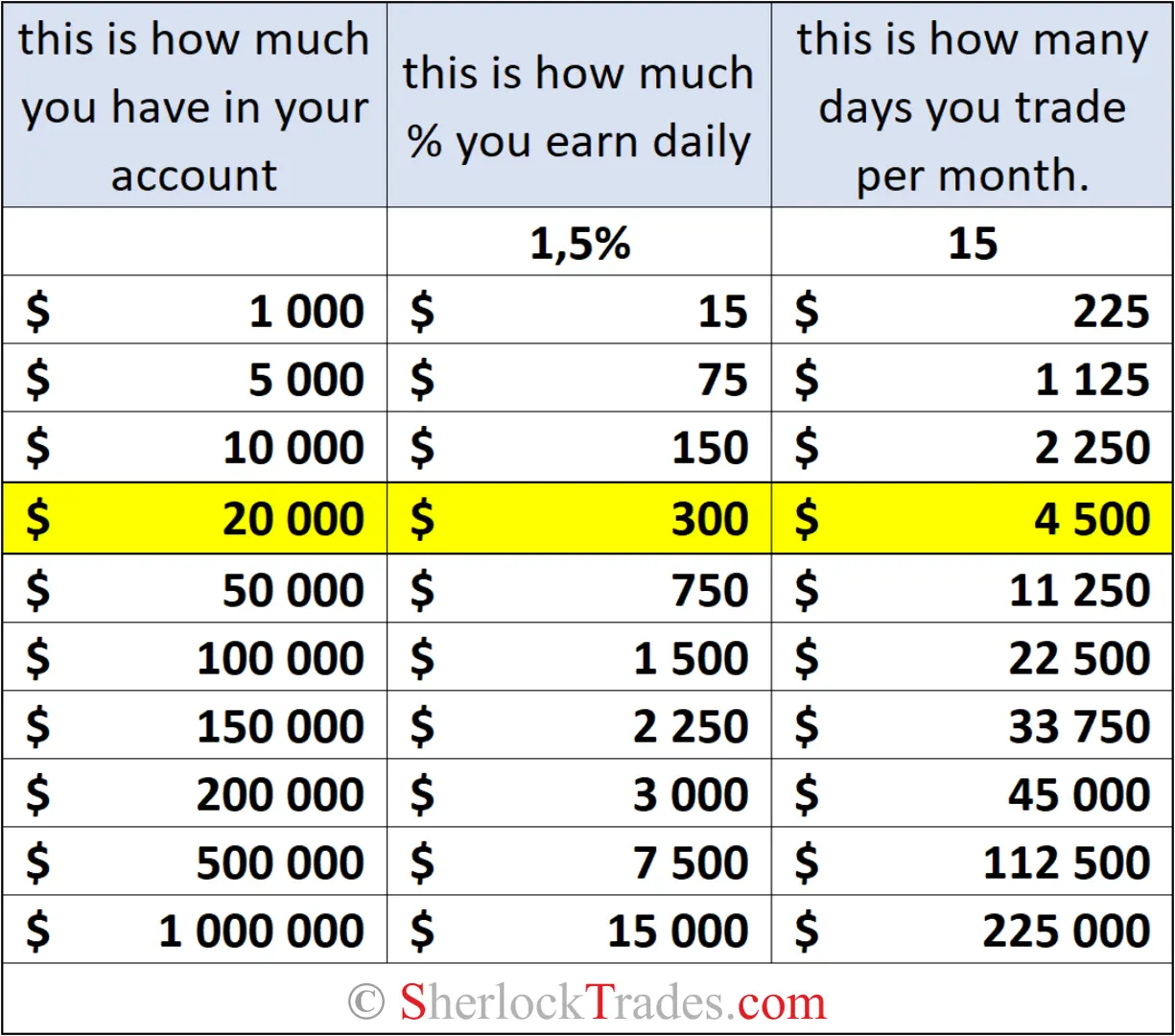
This chapter shows how a small daily percentage change can translate into a significant result over the course of a month.
It’s important to emphasize that the tables presented refer to a specific style of trading – Day Trading.
These are not results that can be achieved passively through long‑term investing.

Chapter: 10.3

The table presents a 12‑month plan for a Trader’s capital growth based on an initial capital of $20k, a fixed daily return rate of 1.5%, and monthly living expenses of $3k.
Your situation may differ from this example – perhaps you have lower living costs or can dedicate more than 15 days a month to trading. Create your own simulation and check your possibilities.
Remember, however, that 1% in the table may look modest, but in practice achieving such average results requires the highest level of professionalism. It’s impossible to maintain these results long‑term without deep work on yourself, strict adherence to risk control rules, money management, etc.
On paper it may look simple, but believe me – it is absolutely achievable, yet truly demanding.

Chapter: 10.3

Many beginner Traders dream of achieving financial freedom and a lifestyle independent of location or any other constraints.
Is everything possible? NO.
Can you achieve a lot? YES.

Diligent, disciplined, and consistent work, reinvesting profits, and constantly improving your effectiveness and profitability can take you very far.
In the book, I dedicate a lot of space to setting and achieving goals – which ones are good and motivating, and which are just illusions that don’t drive you to act.
This is a key part of working on yourself while building the mindset of a Trader.
Actually – not just a Trader. Most of the topics covered in this book apply to anyone, regardless of the profession they’ve chosen.
In a way, it’s a unique life handbook.

Chapter: 11.2

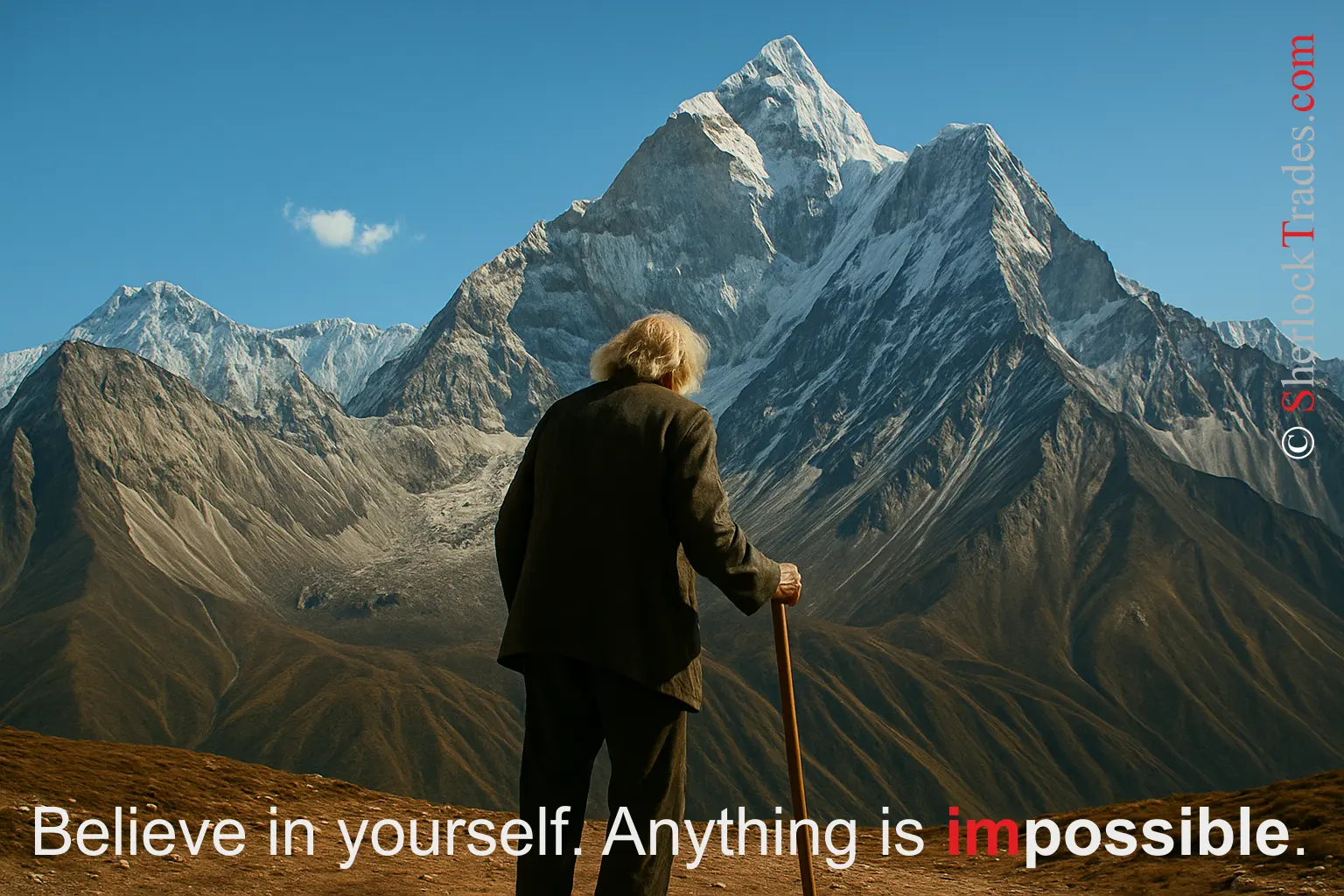
The illustration shows how powerful illusions can be.
We can convince ourselves that we will achieve something, that everything is possible. We can feed ourselves visions that once we achieve it, our life will suddenly change.
In this chapter, I say it plainly: simply staring at the goal and feeding on illusion achieves nothing.
Such dreams work like morphine – they temporarily numb the pain of existence but do not change reality.
The graphic symbolizes this very mechanism: big plans without concrete actions and real possibilities that remain nothing more than a comforting vision.
An illusion is not a goal – it’s an escape into fantasy.

Chapter: 11.2

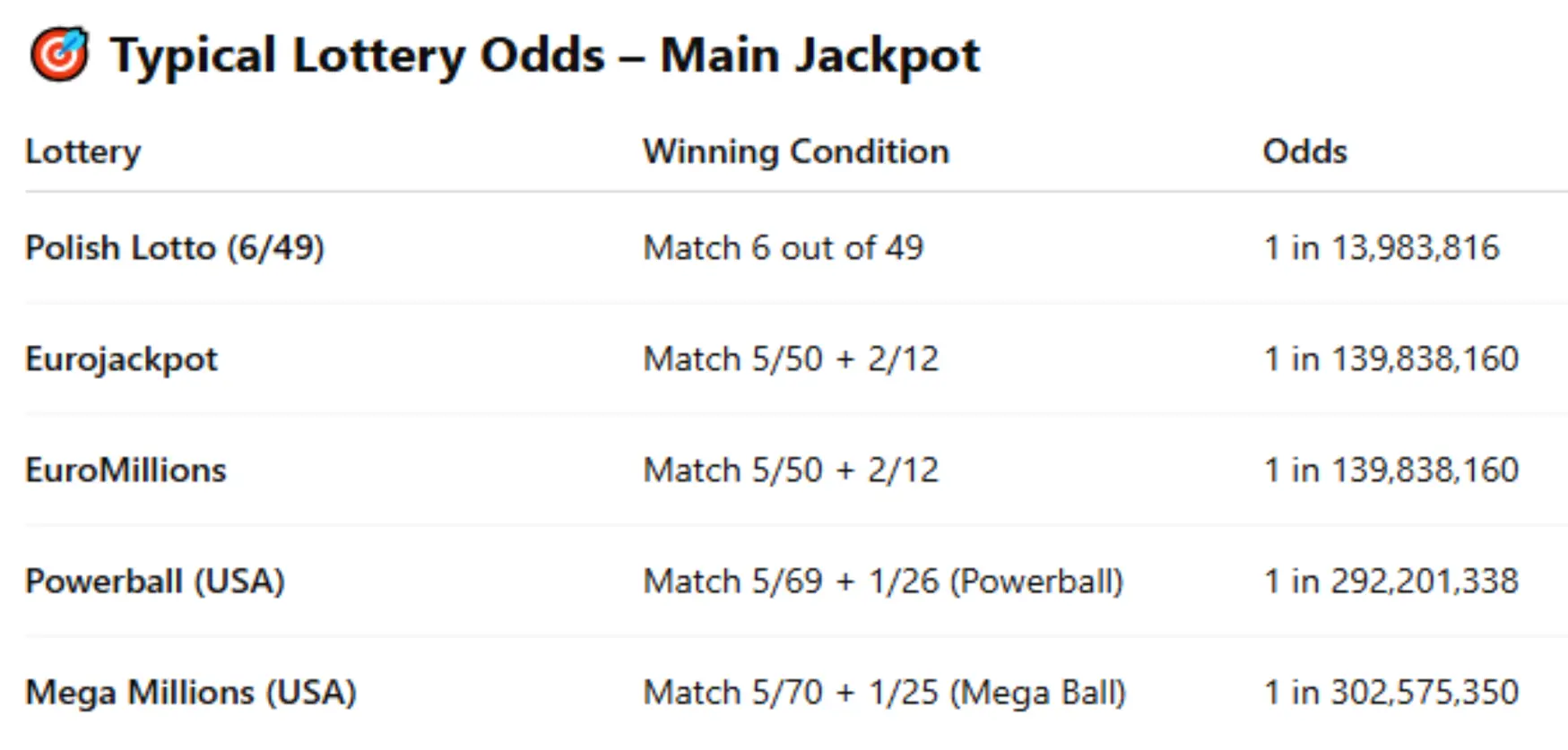
Dreams of making millions from trading can be just like dreaming of winning the lottery.
This comparison statistically shows how illusory such hopes can be. In the chapter, I explain how easily we deceive ourselves, believing that a stroke of luck will change our lives – even though the probability is close to zero.
The table is a brutal contrast to those dreams. Instead of wasting time fantasizing about a miracle, it’s better to invest your energy in actions that can truly make a difference – for example, developing yourself as a Trader.
Trading won’t change your life in a single day, but it does offer a real chance for change over the course of a few years.

Chapter: 11.3

Any great, even seemingly impossible challenge can be achieved if you break it down into small steps. Just as you can walk the distance from Lisbon to Beijing within a set time, the process of changing your life – through the Kaizen philosophy – becomes achievable.
A good goal, a solid plan, and consistent action step by step. You might be surprised how far you can go :)

Chapter: 11.5

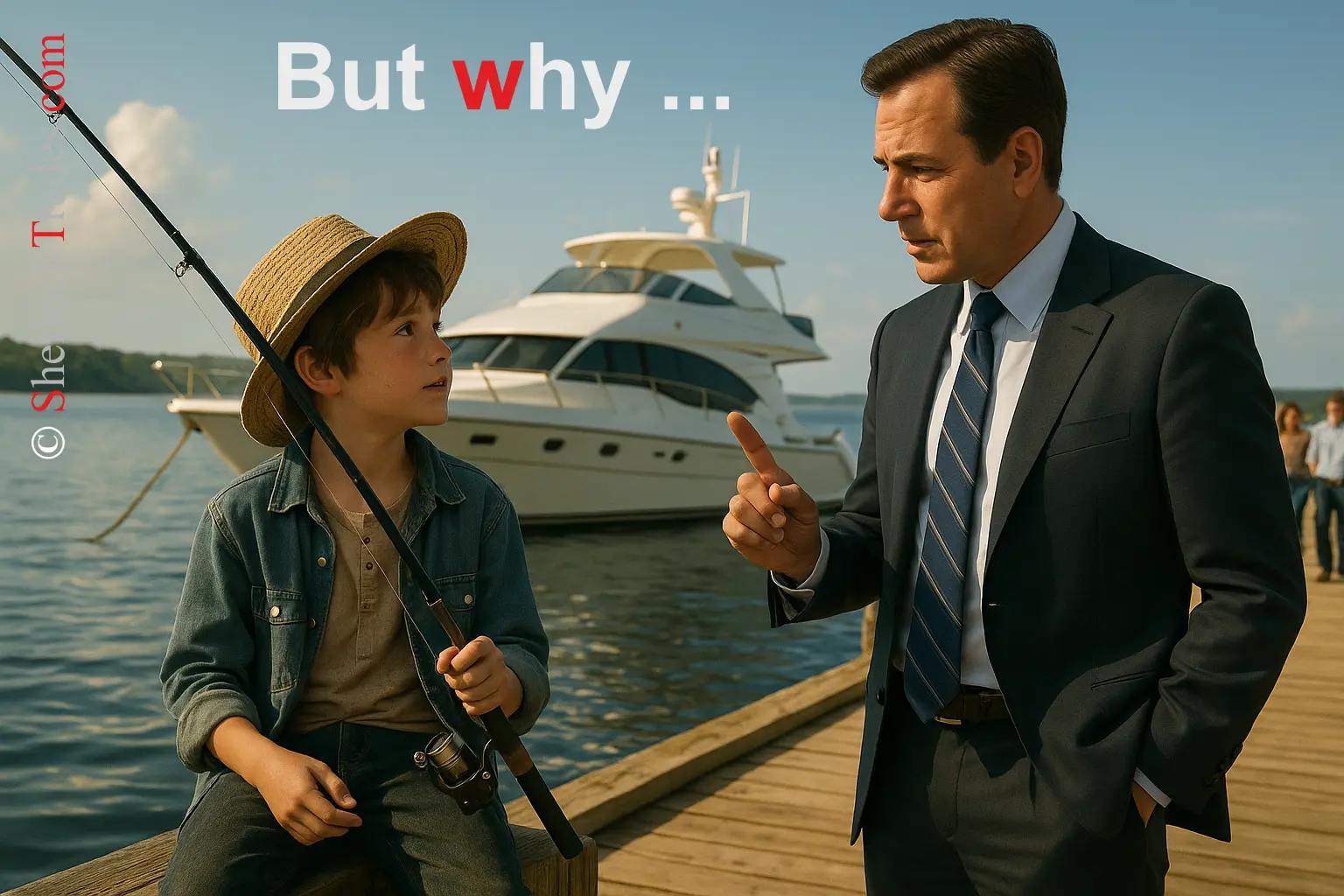
The illustration depicts a well‑known parable about the meaning of life goals. The contrast between the carefree boy and the ambitious businessman highlights the trap of thinking that we must earn more to live the life we dream of.
It’s worth reflecting on this so you don’t end up carrying out someone else’s plan for your life.
Everyone should know how they want to live, how much money they need to make it happen, and how they will earn it.
Once you’ve figured it all out, all that’s left is to execute the plan step by step.

Chapter: 13

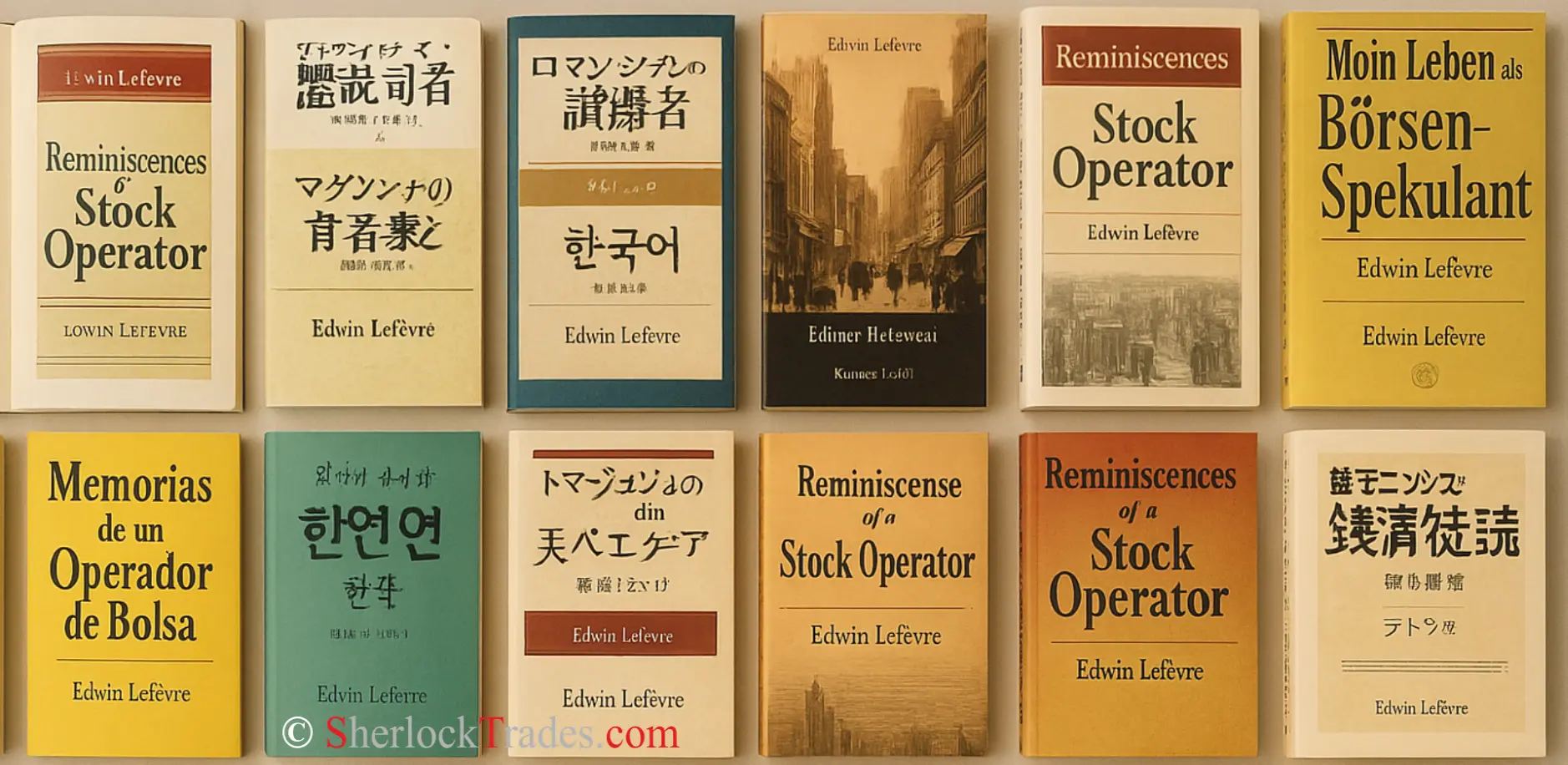
Lefèvre’s book is a classic of market literature. It shows how the story of Jesse Livermore has become a universal lesson for Traders around the world. The world changes, but the fundamental principles of a speculator’s psychology and risk management remain the same.
It is also a warning drawn from Livermore’s life.
To achieve spectacular success and build a fortune several times, only to go bankrupt and, in the end, take your own life… that is certainly not the scenario we want for ourselves. It’s worth learning from the mistakes of others.

Chapter: 14

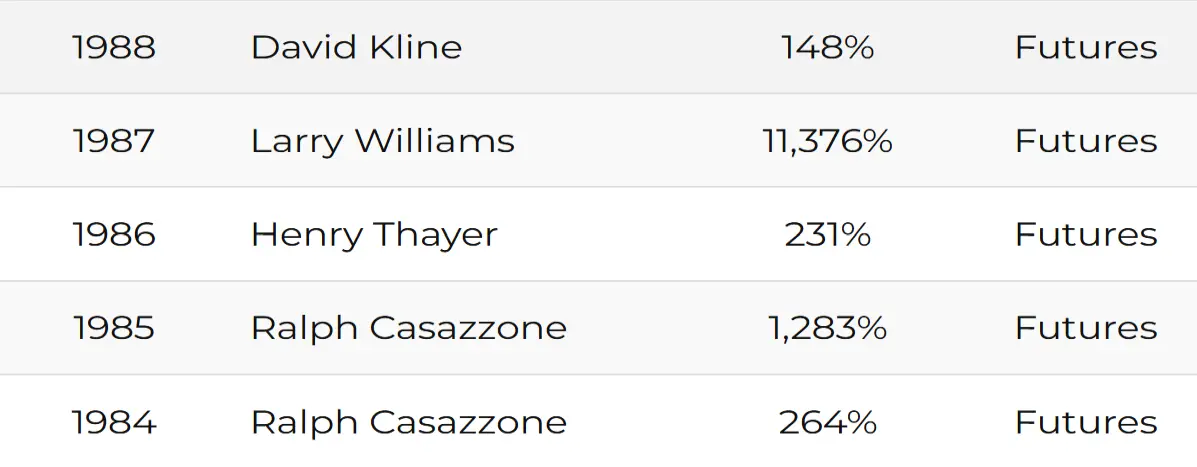
Larry Williams and his legendary result – 11,376% in one year.
You wonder if spectacular returns like 500% or 1000% are even possible?
Now you know the answer: possible – but extremely difficult.
Extreme effectiveness requires consistent work on your mindset and your technique.
Without the things I describe in this book, I can hardly imagine any lasting success.

Chapter: 15.2.3

The image clearly shows the contrast between a professional approach to trading and an amateurish, impulsive, and chaotic one.
The sniper symbolizes a Trader who patiently waits for the perfect opportunity – selective and disciplined.
The man with the Kalashnikov represents the overtrader – acting too often, without a strategy, firing blindly.
Who would you rather be?

Chapter: 15.2.4

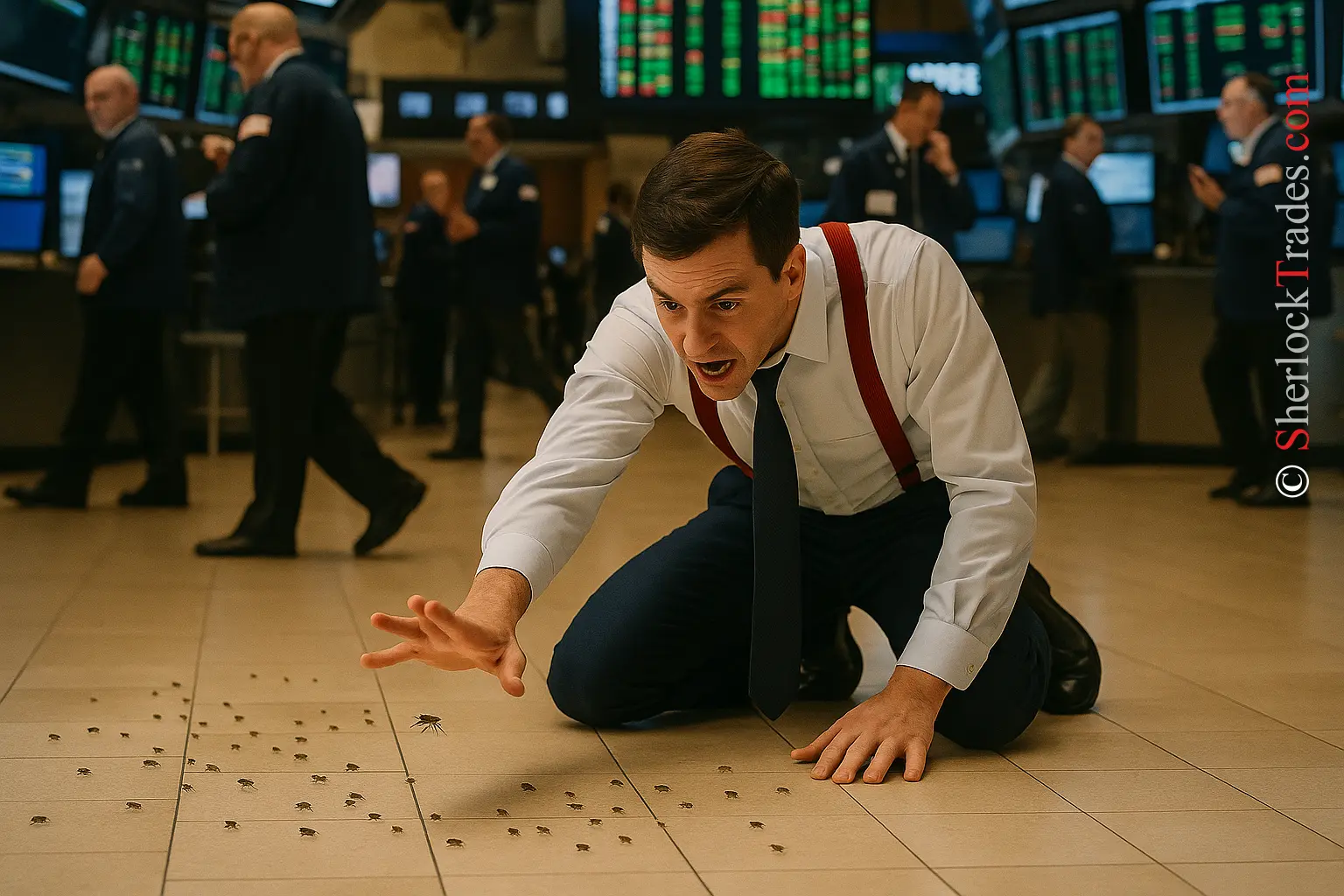
The image symbolically illustrates the emotions of FOMO in trading. The Trader kneeling and catching fleas is a metaphor for the panicked attempts to “catch every opportunity” on the market – without a strategy, driven solely by the fear of missing out on opportunities and potential profit.
This is not how we want to trade…

Chapter: 15.2.8

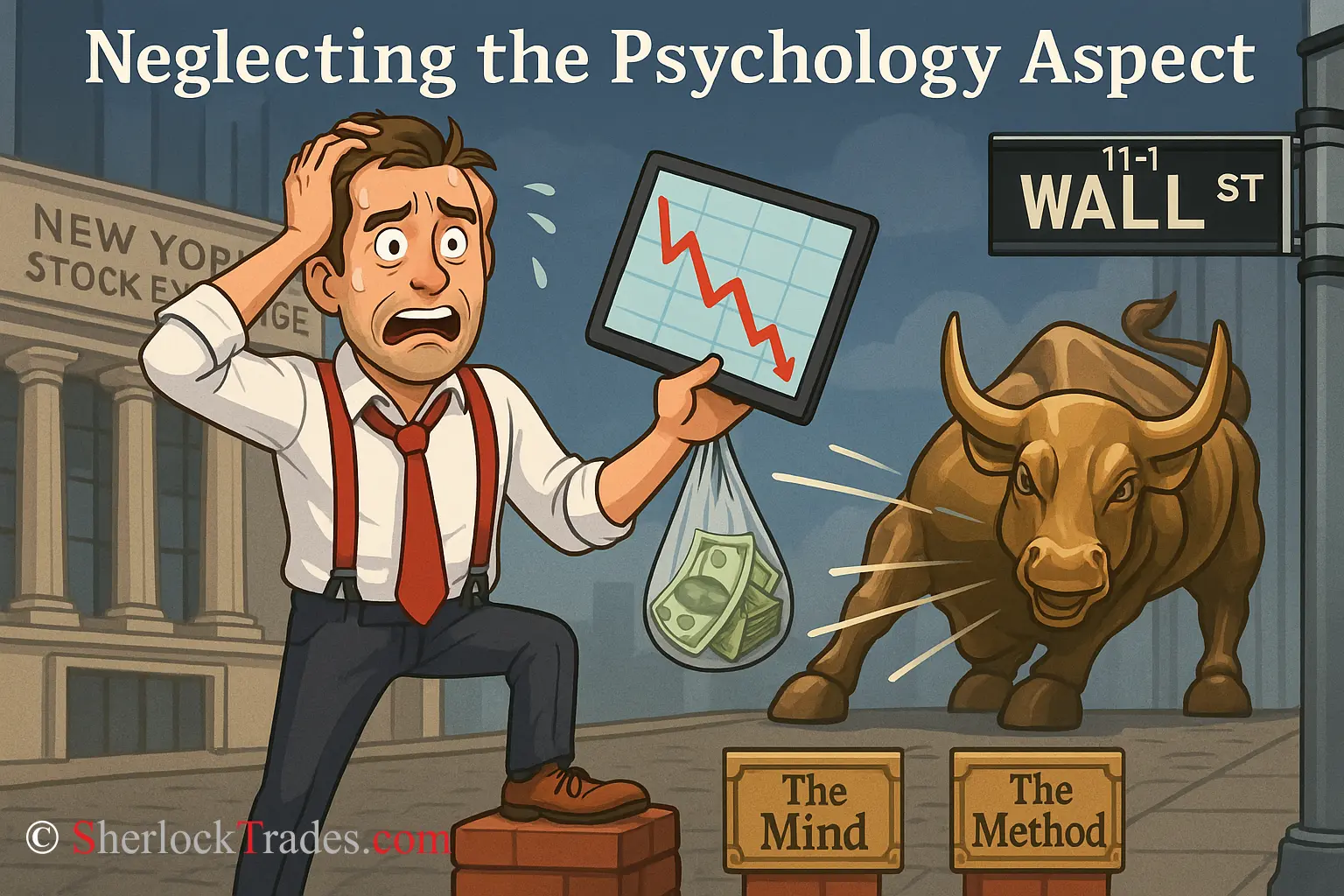
If you don’t stand firmly on both feet, it’s easy to fall.
All the Traders I know are clear about one thing: the foundation of good trading is mastering the mental aspect and trading technique. These are the two pillars on which we build our strength and stability as Traders.
In the book, I added risk management and money management to the mental sphere because, although it’s more of a technical issue, it’s closely connected to emotions, and I believed that separating these topics would create an incomplete solution for the reader.
That’s why in my book you’ll find “The Mind + MM,” and what remains is the easier part, “The Method,” though I also wrote a bit about it, leaving tips on what I chose and how I work.

Chapter: 16.7

The image was meant to depict the first public film screening. It symbolizes the illusion of reality and how easily the human mind accepts fiction as truth.
Illusion and false images are, on the one hand, a way of deceiving our brain, and on the other, a means of influencing what is imprinted in it.
It’s worth exploring this subject if we want to become a better version of ourselves.

Chapter: 16.7

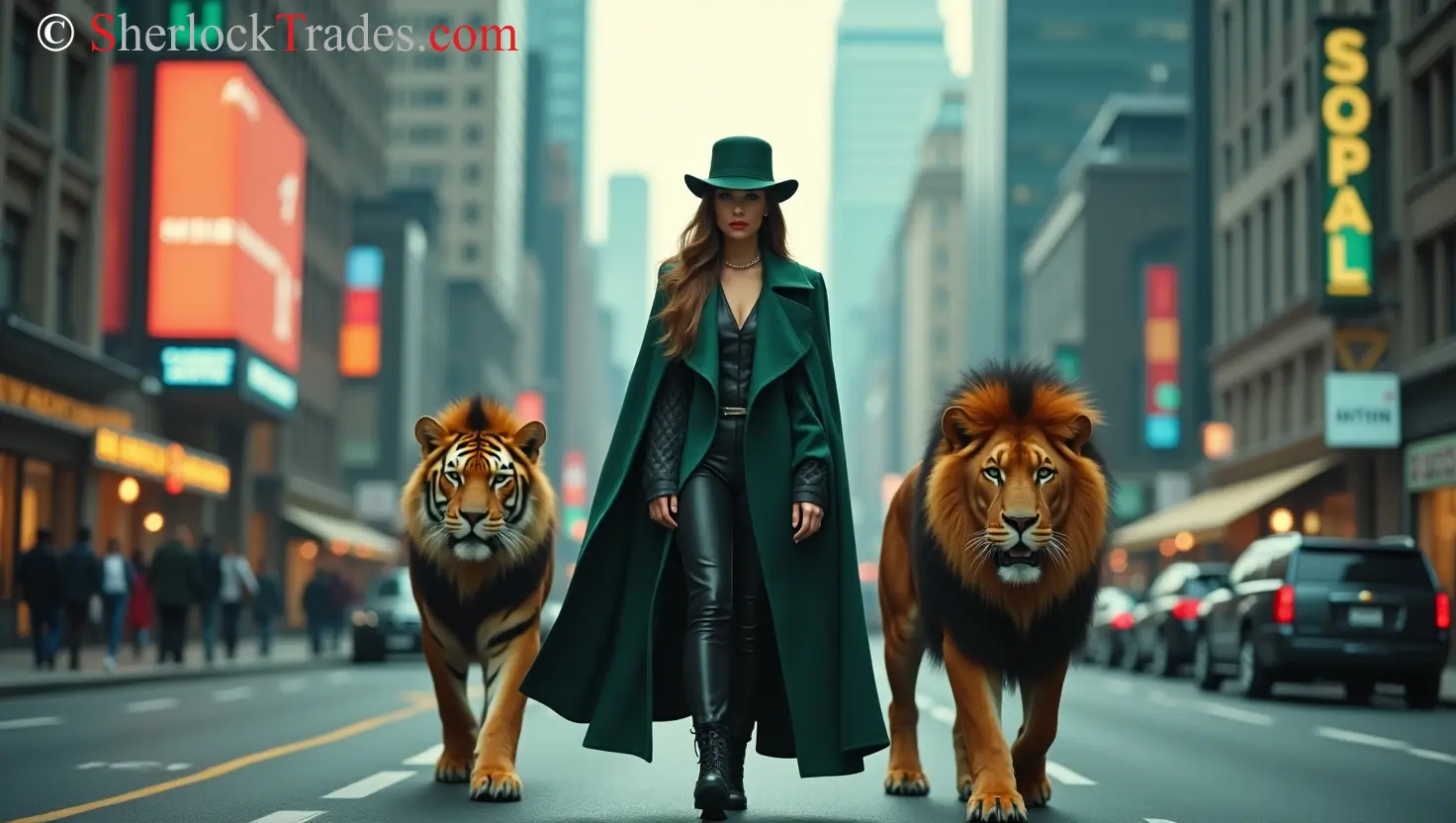
The illustrations perfectly capture the metaphor of the “mentor in your head.” They symbolize the inner image of strength, courage, and composure – qualities a Trader can “embed” in themselves by imagining the support of an authority figure.
The lion and the tiger are symbols of mastery over one’s own mind and instincts – key elements of trading psychology.
In this context, the images represent mental reinforcement through the imagined presence of a mentor or authority figure in moments of decision‑making.

Chapter: 16.7

The image expands on the previous visualization, showing that the role of the inner leader can be embraced not only by men but also by women.
It symbolizes the mental strength and self‑confidence that anyone – regardless of gender – can build within themselves through work on mindset and imagination.

Chapter: 16.8

The image symbolizes an unexpected discovery – a situation where, while searching for simple solutions, we end up finding something far more valuable. In the book, this refers to the moment when I discovered NLP (Neuro‑Linguistic Programming). Life often works the same way: we look for one thing and discover something completely different – and much more interesting. The worst thing is to sit idle and complain that a star hasn’t fallen from the sky :) When we get up off the couch, we might discover something wonderful.

Chapter: 16.8

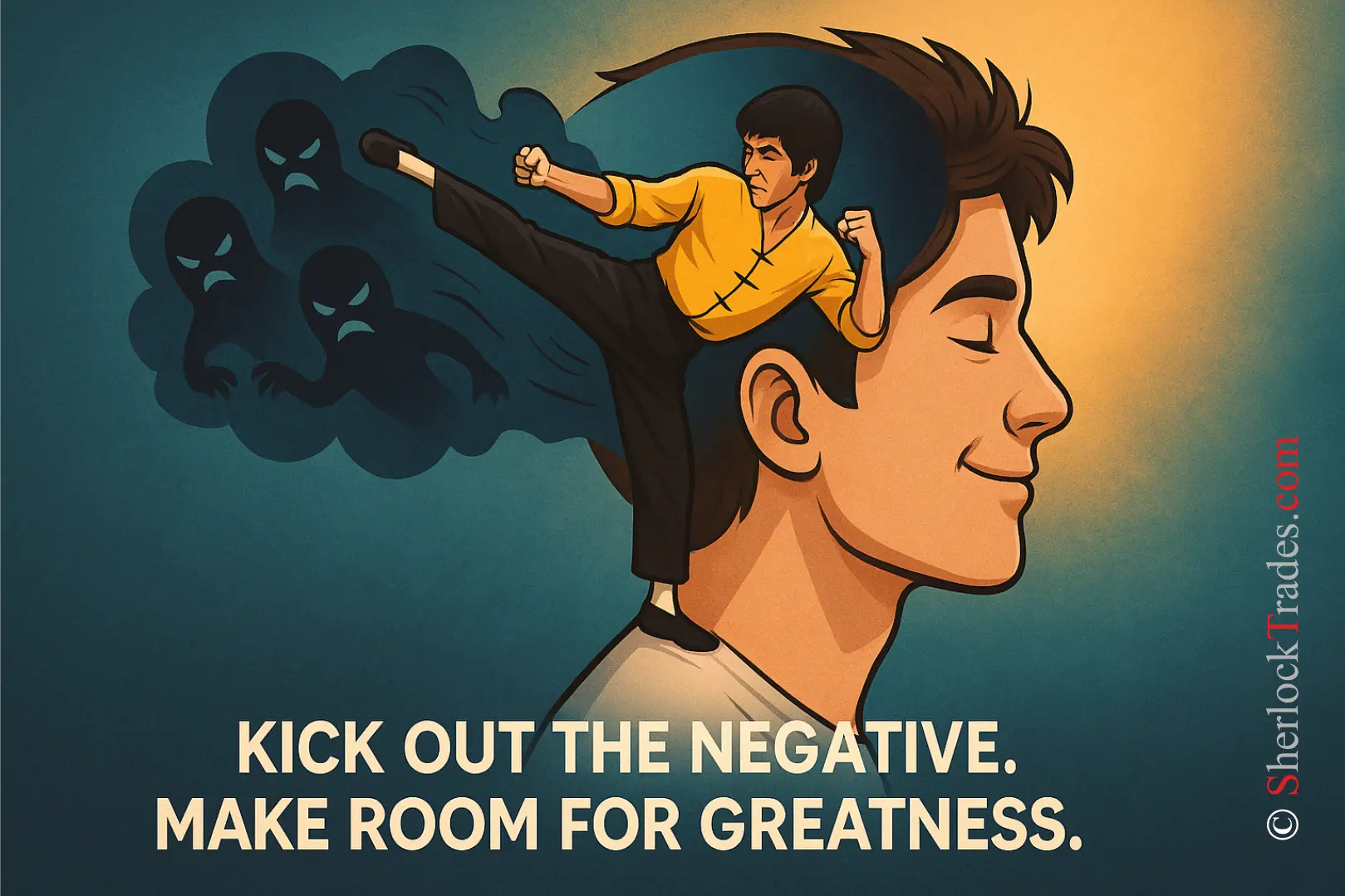
The graphic vividly illustrates the idea of clearing the mind of destructive beliefs, as discussed in the chapter. Just as Bruce Lee in the illustration literally “kicks out” negative thoughts, NLP techniques can help remove internal blockages and create space for mental strength and growth.
The image serves as a reminder of how important it is to actively work on your mindset. How can we succeed if we don’t first bring order to our own minds?

Chapter: 16.8

This is a book I recommend to Polish readers – it’s also available as an audiobook. In other countries, you’ll likely find similar titles, such as the film “The Secret” by Rhonda Byrne and Paul Harrington. Of course, you can doubt and question the supernatural aspects tied to the law of attraction. But think about it… if it costs nothing and does no harm, why not give it a try? :)
Personally, I believe this “magic” helps my brain clearly define and shape my goals in my mind.
The rest is up to my work and actions.

Chapter: 16.9

The graphic illustrates the concept of the triune brain, showing the inner battle between instincts, emotions, and rational thinking.
Being aware of how your brain works allows you to gain control over it.
We like to believe we are rational beings guided by reason, but after reading this book, you may be surprised at how little influence our rational brain actually has on our lives :)
In trading, this awareness is especially important.

Chapter: 16.9

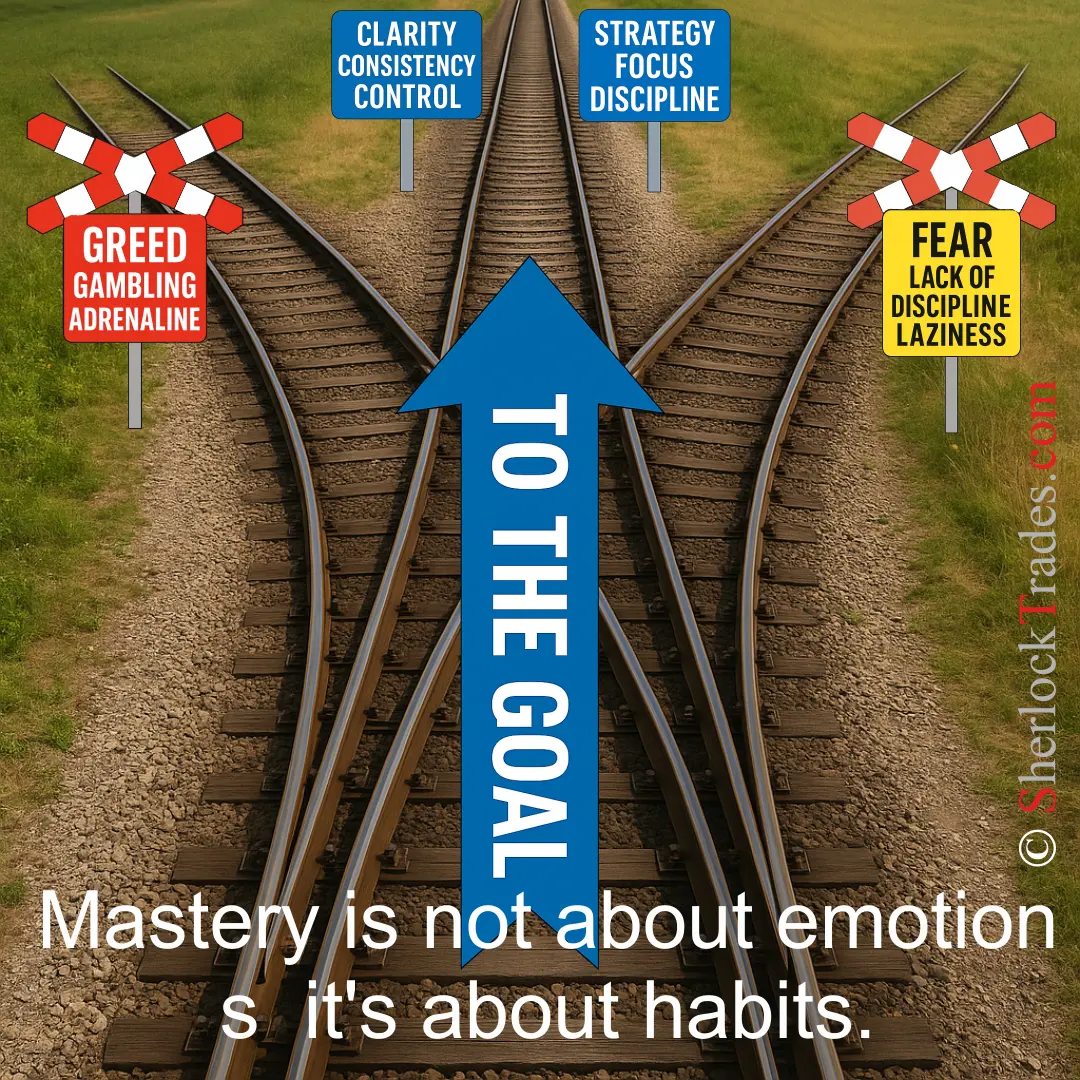
The straight road to the goal seems obvious, but in practice, powerful forces within a Trader’s mind often try to push them off that path.
We ourselves – and our own mind – are our greatest opponent.
It’s often said that a Trader fights the market and must beat it.
To me, that sounds amusing because the real battle is with our own mind and weaknesses. Only when we learn to overcome them do we have a chance to make money in the market. Making money “on the chart” is, in theory, very simple.
Look at old charts and ask yourself whether you would know where to enter and where to exit. In live trading, when emotions, fatigue, lack of focus, and many other negative states come into play, things suddenly get complicated :)
That’s why most of the real work is in psychology, not in trading techniques.

Chapter: 17.1.2

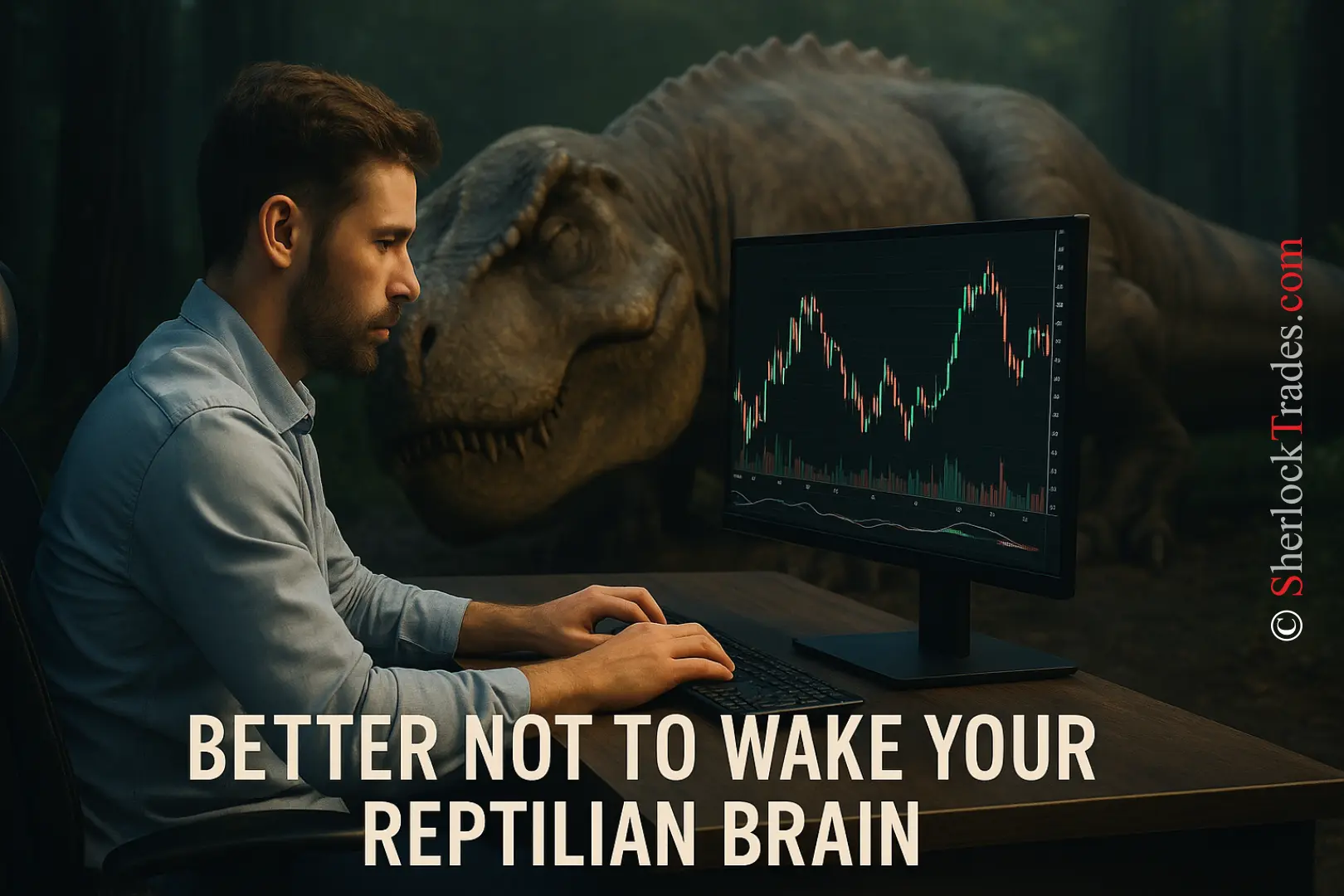
The illustration shows the risk of triggering the primitive reactions of the “reptilian brain” during stressful moments in trading. The reptilian brain – like a dinosaur lurking behind you – acts instinctively and destructively when we allow extreme emotions to take over.
A Trader’s job is not to stir up strong emotions and then fight them. The real skill is running your trading in a way that keeps emotions as low as possible.
That way, we don’t have to battle the T‑Rex in our head or the chemical storm that limits our ability to think rationally, analyze, and make decisions.

Chapter: 17.2

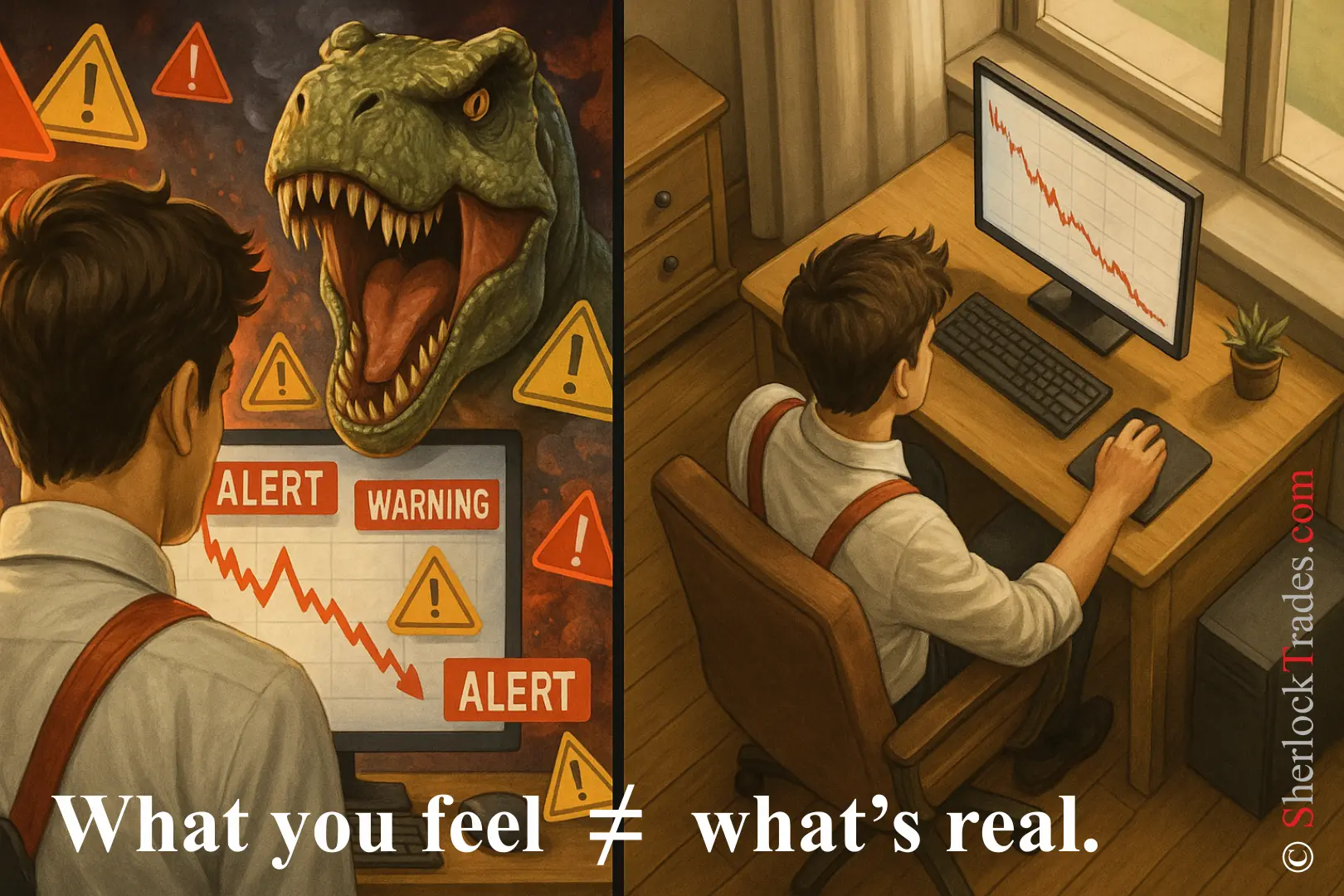
In the book, I dedicated a lot of space to how our brain works – how it reacts to different stimuli and how those reactions influence our ability to analyze situations and make the right decisions.
The graphic shows a Trader sitting in front of a chart and – on the left side – what is happening inside their head.
This type of situation occurs when a Trader is unprepared and doesn’t know how to respond to challenging moments.
The consequences are usually painful – both for us and for our portfolio.

Chapter: 17.2.2

The illustration symbolically represents the readiness to fight one’s inner fears and exaggerated imaginings. The smiling spider refers to an NLP technique – deliberately “mocking” a terrifying image in your imagination.
The boxing gloves are a metaphor for overpreparing to fight a threat that doesn’t actually exist.
A Trader has many such issues to sort out in their mind, and the various methods described in this book can be helpful in such situations.

Chapter: 17.2.3

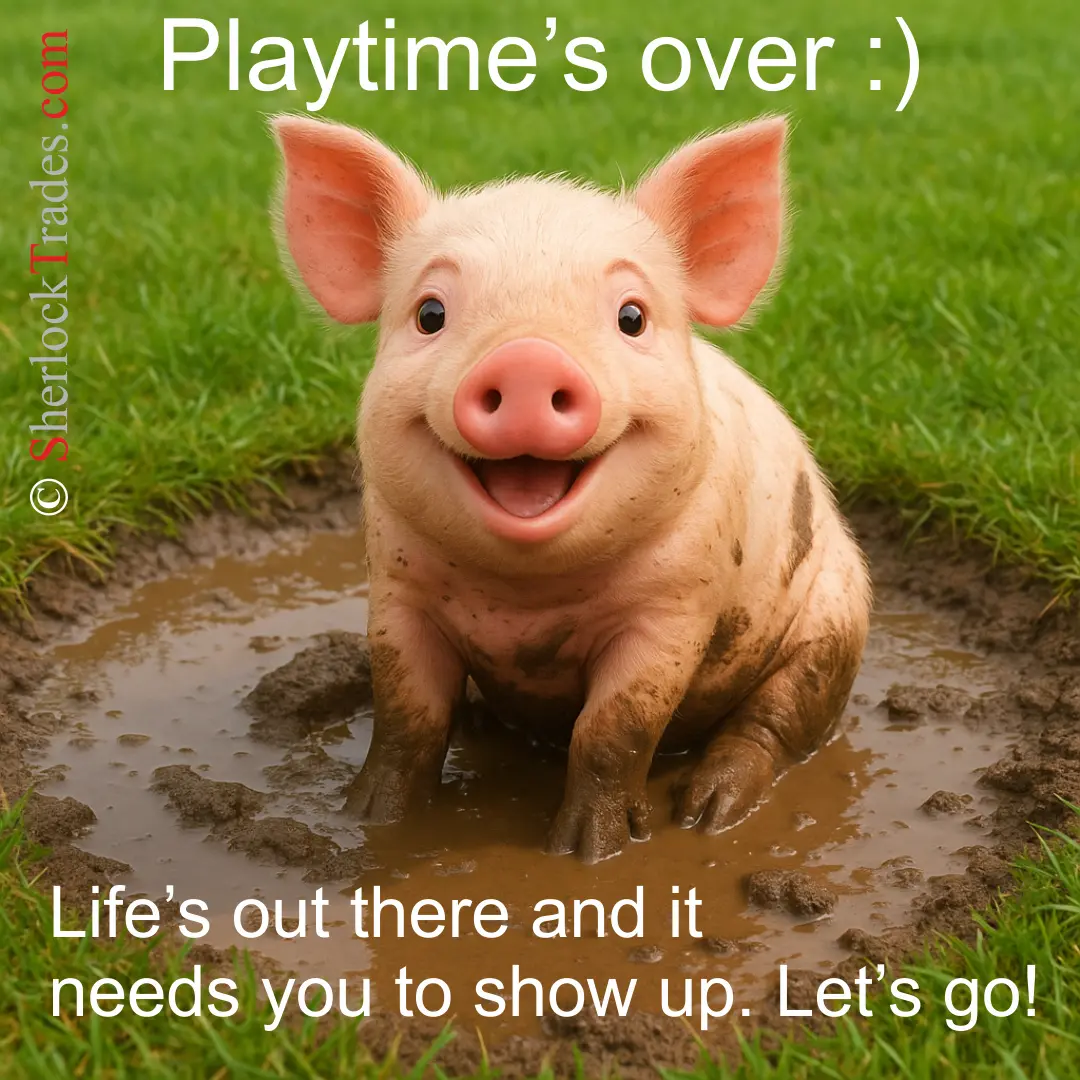
When a problem starts to weigh us down, I associate it with wallowing in the mud – a hopeless, depressing situation…
In such moments, I imagine that the mud is just like playing as a child, and then I tell myself, a bit wistfully: the game is over :)
You have to pull yourself together, find a solution, and keep moving toward your goal.

Chapter: 17.2.5

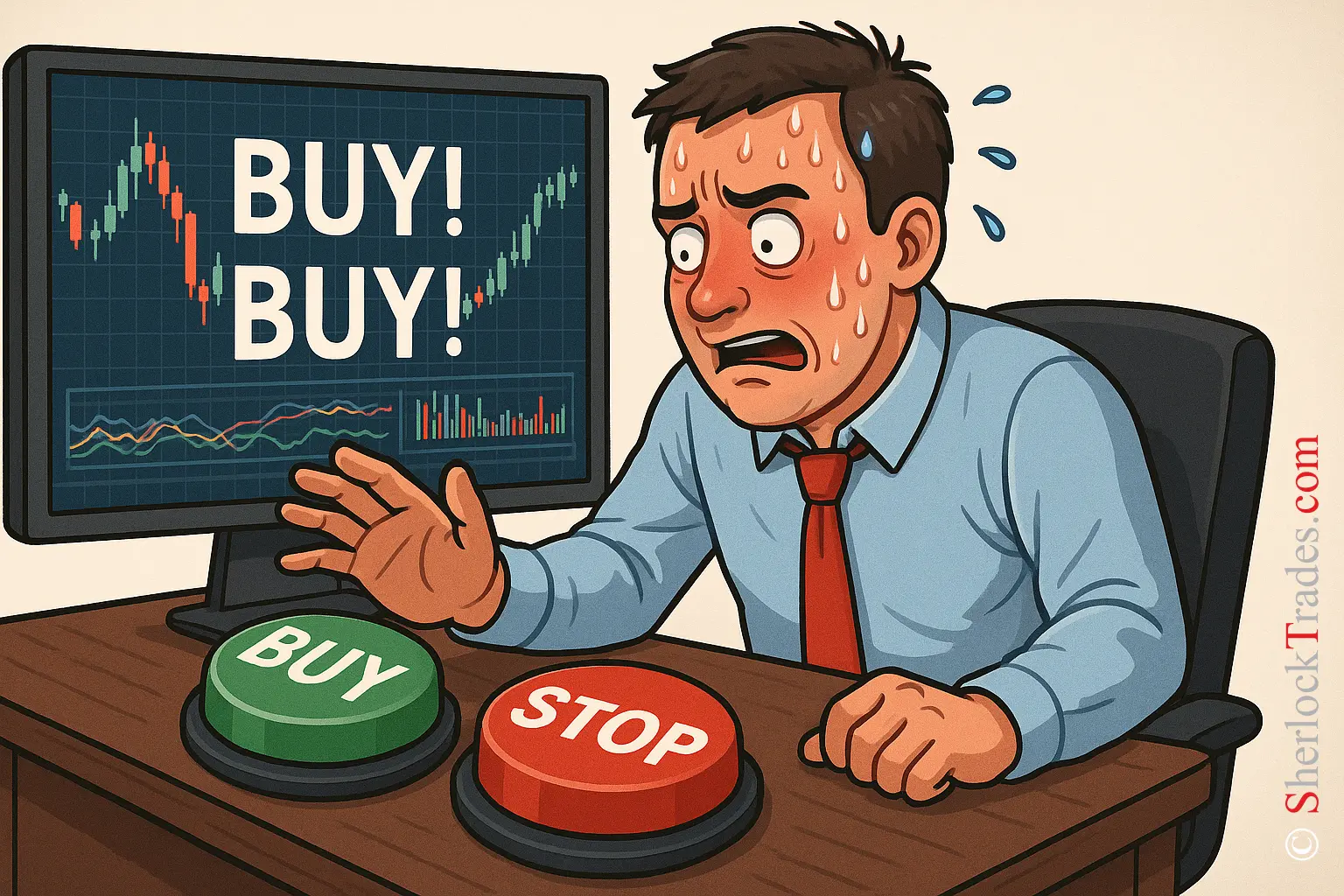
The illustration perfectly depicts a Trader’s emotional paralysis at the moment of making a decision. It’s a classic example of an undesirable emotional reaction that the Swish Pattern technique (described in the book) is designed to help reprogram.
In the context of the chapter, the image symbolizes the need to replace stress and fear with automatic action aligned with analysis and the plan.
This is the mental “switching of tracks” referred to in the text.

Chapter: 17.2.5

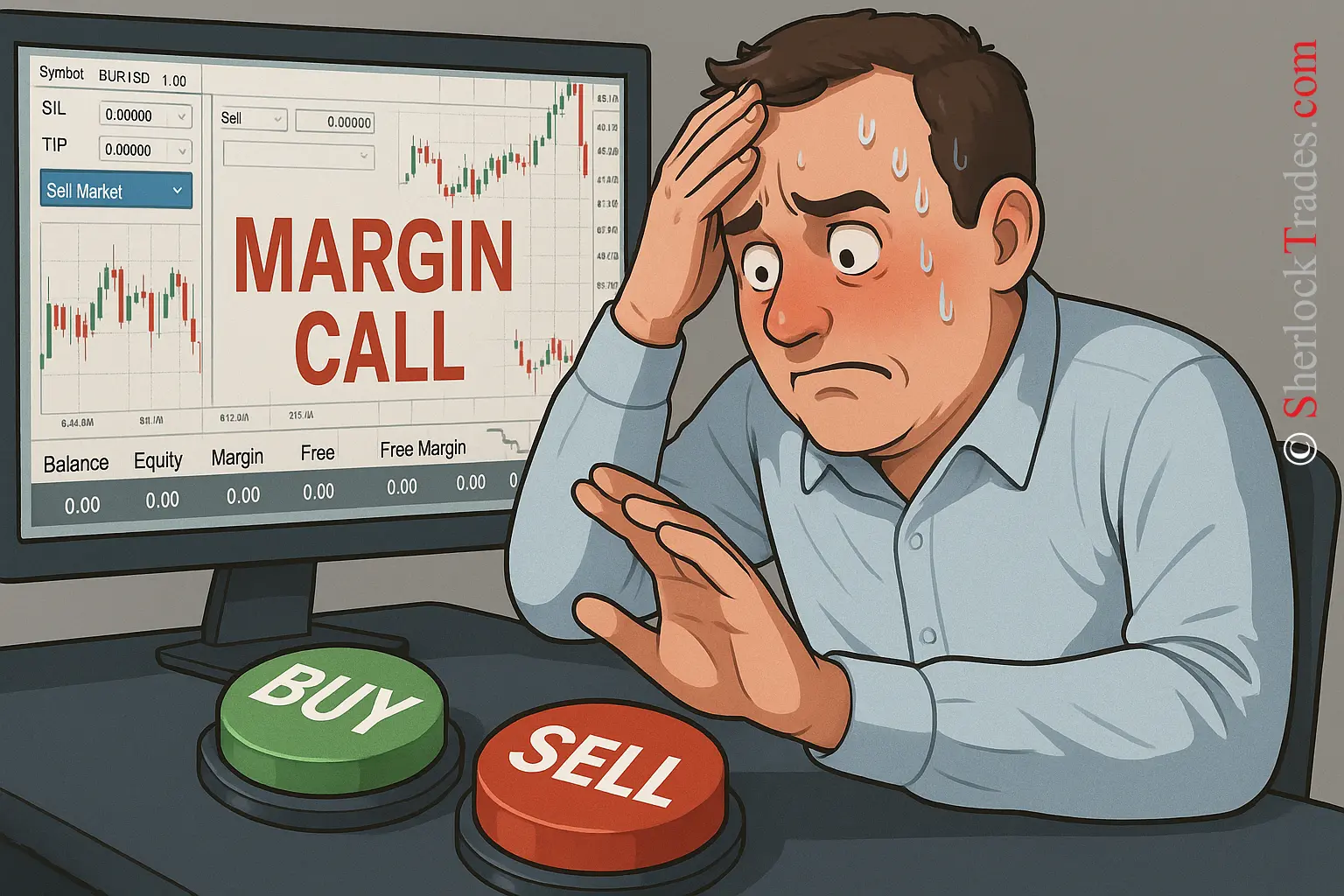
The next six graphics illustrate, step by step, the Swish Pattern technique described in the book.
This NLP method consists of quickly replacing an undesirable mental image (e.g. fear or a bad habit) with a new, positive image that leads to the desired state or behavior. By repeatedly practicing the visualization, the brain automatically begins to choose the new reaction instead of the old pattern.
STEP 1
The trigger that causes the Trader’s emotional block.
It shows the stress triggered by a shrinking account balance and the pressure to make a decision. This is the so‑called “start image” (trigger) that the Swish Pattern technique is designed to replace with the desired response pattern. It is the starting point for consciously reprogramming emotional habits in trading.
This is just an example.
Each of us may have different barriers and work with different images. It’s a method with universal application.

Chapter: 17.2.5

STEP 2 involves visualizing the desired emotional state you would like to be in at such a moment – calm, confident, and effective.
This becomes the visual anchor for a new, positive action pattern: entering according to plan, managing the position flawlessly, and achieving the final success. This emotional state is our goal.
The graphic supports the process of transforming the old habit of fear into a new response – confidence and focus in action.

Chapter: 17.2.5

STEP 3 is the key stage of the Swish Pattern technique – combining two images: the trigger – the stressful cue – and the new, positive emotional state.
Your gaze initially focuses on the stressful scene, but the presence of the small image of success triggers the process of replacing the undesirable mental image with the one you want to see in that moment.
Chapter: 17.2.5

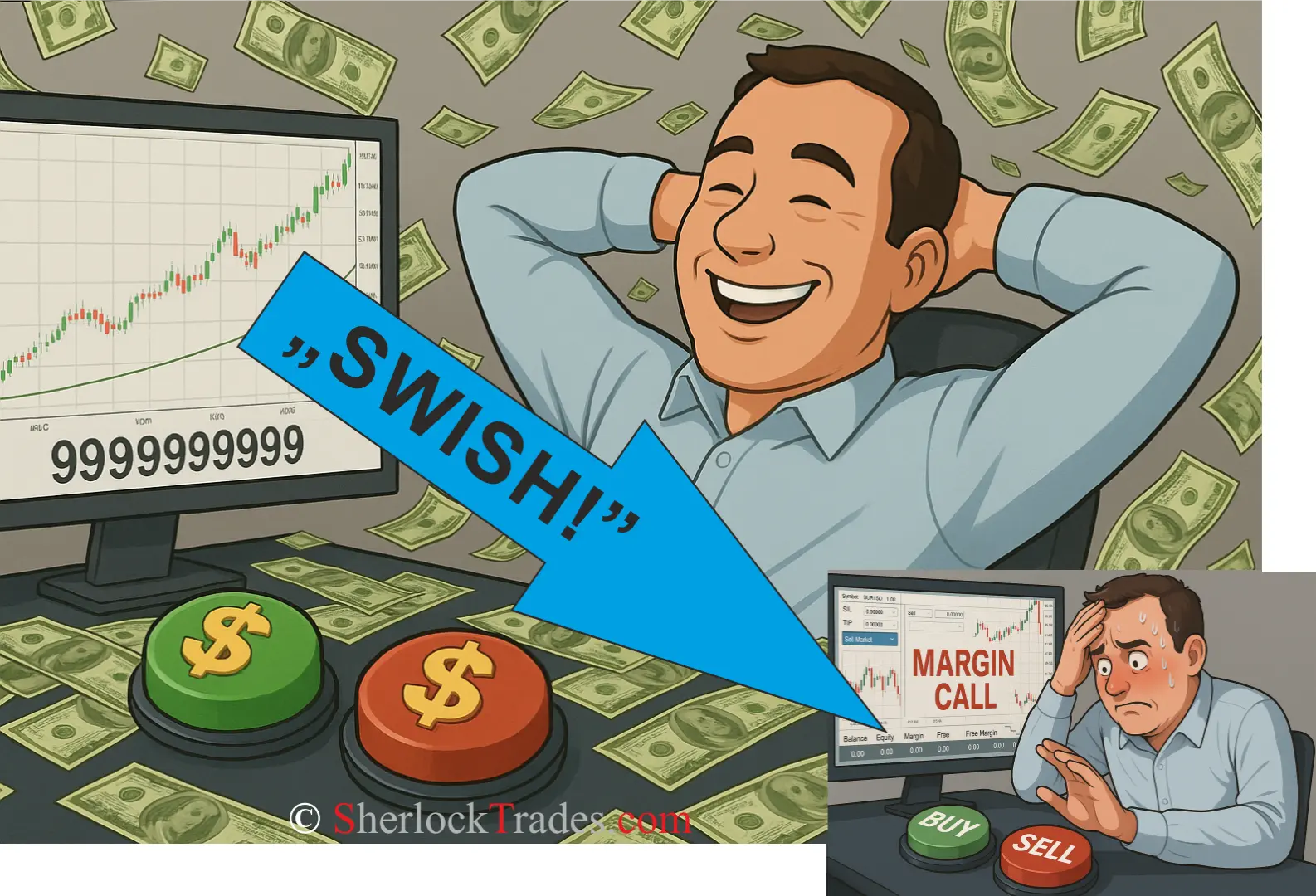
STEP 4 consists of three quick stages that follow one another in rapid succession.
The graphic shows the key moment of transformation in the Swish Pattern technique – the instant switch from the negative image to the positive one.
The “SWISH!” arrow symbolizes the mental shift that replaces the old, destructive image with the one we want to see in this situation – a state of calm and confident reaction instead of fear and paralysis.

Chapter: 17.2.5

The second phase of Step 4 marks the conclusion of the Swish Pattern process – the new, positive emotional state completely dominates the previous fear.
The old image is reduced to a tiny thumbnail, symbolizing the mental “pushing out” of the destructive pattern by the new, constructive habit of acting with confidence and calm.

Chapter: 17.2.5

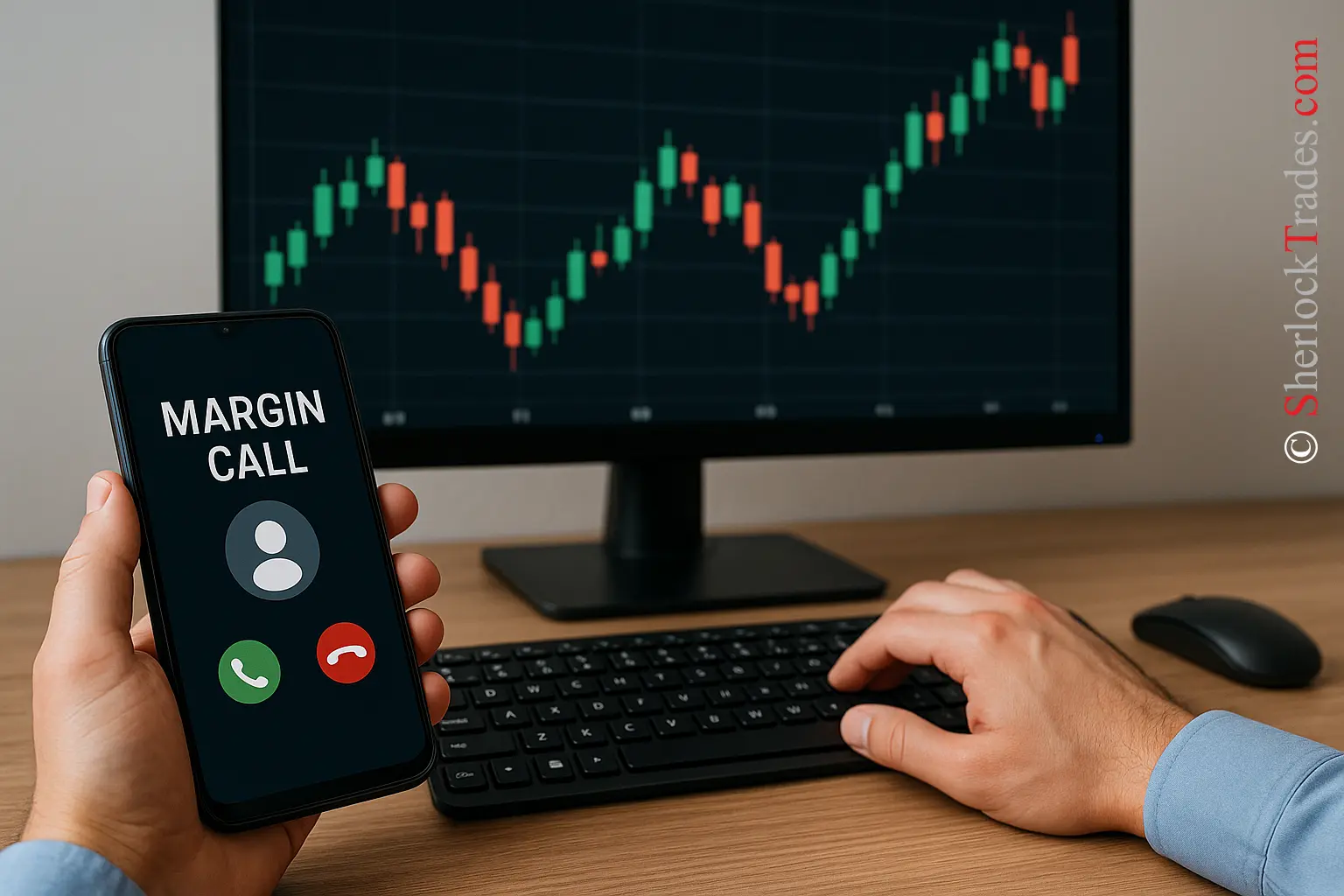
The final stage of Step 4 of the Swish Pattern technique is the visualization of the desired emotional state.
After transforming the fear response (the Margin Call image), a new mental pattern emerges: calm, confidence, and success as the result of proper, plan‑based action.
This is the mental anchor intended to permanently replace the destructive pattern.
Now, it’s simply a matter of reinforcing it and working on other aspects described in the book – so as "not to stress out our guy” :)

Chapter: 17.3

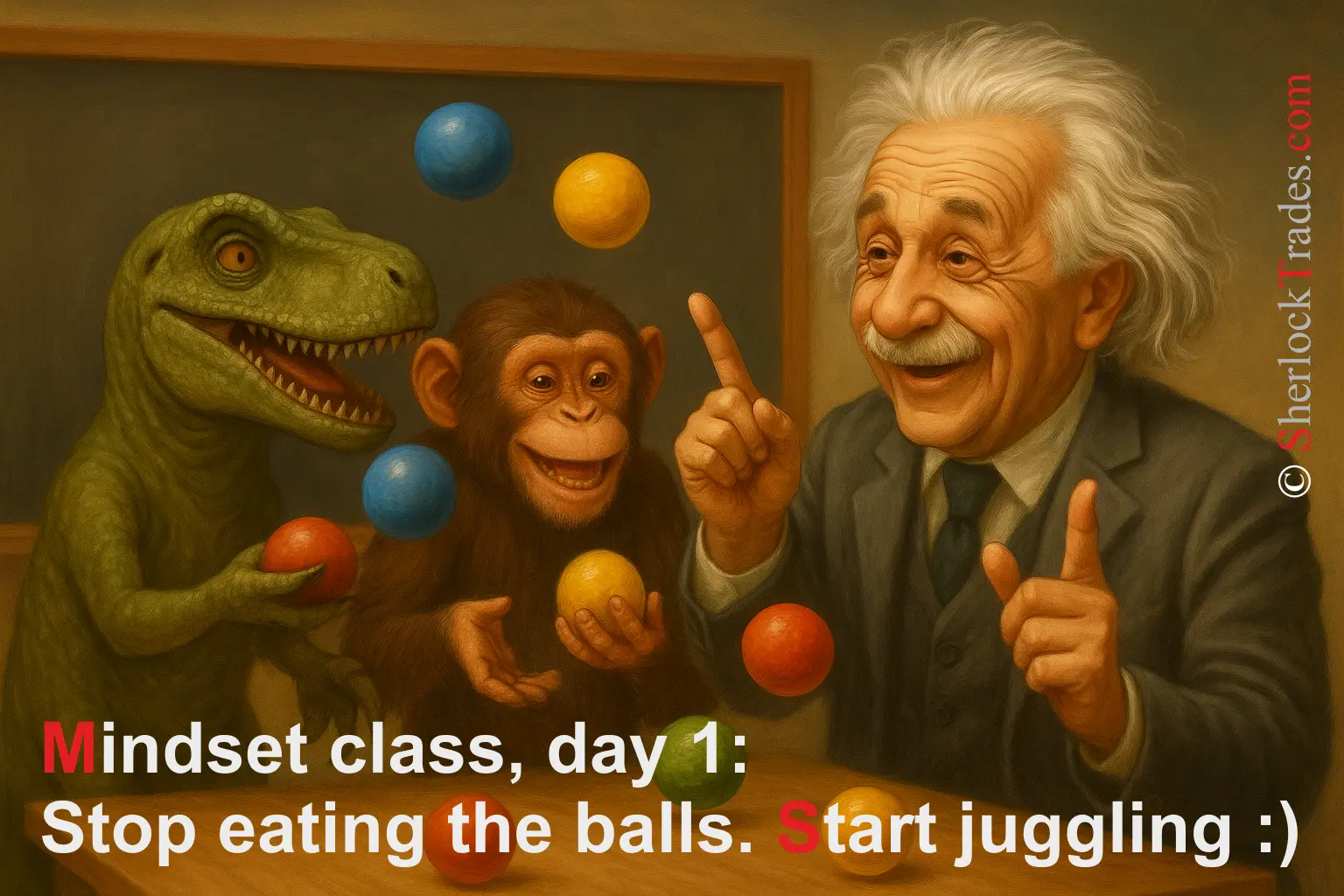
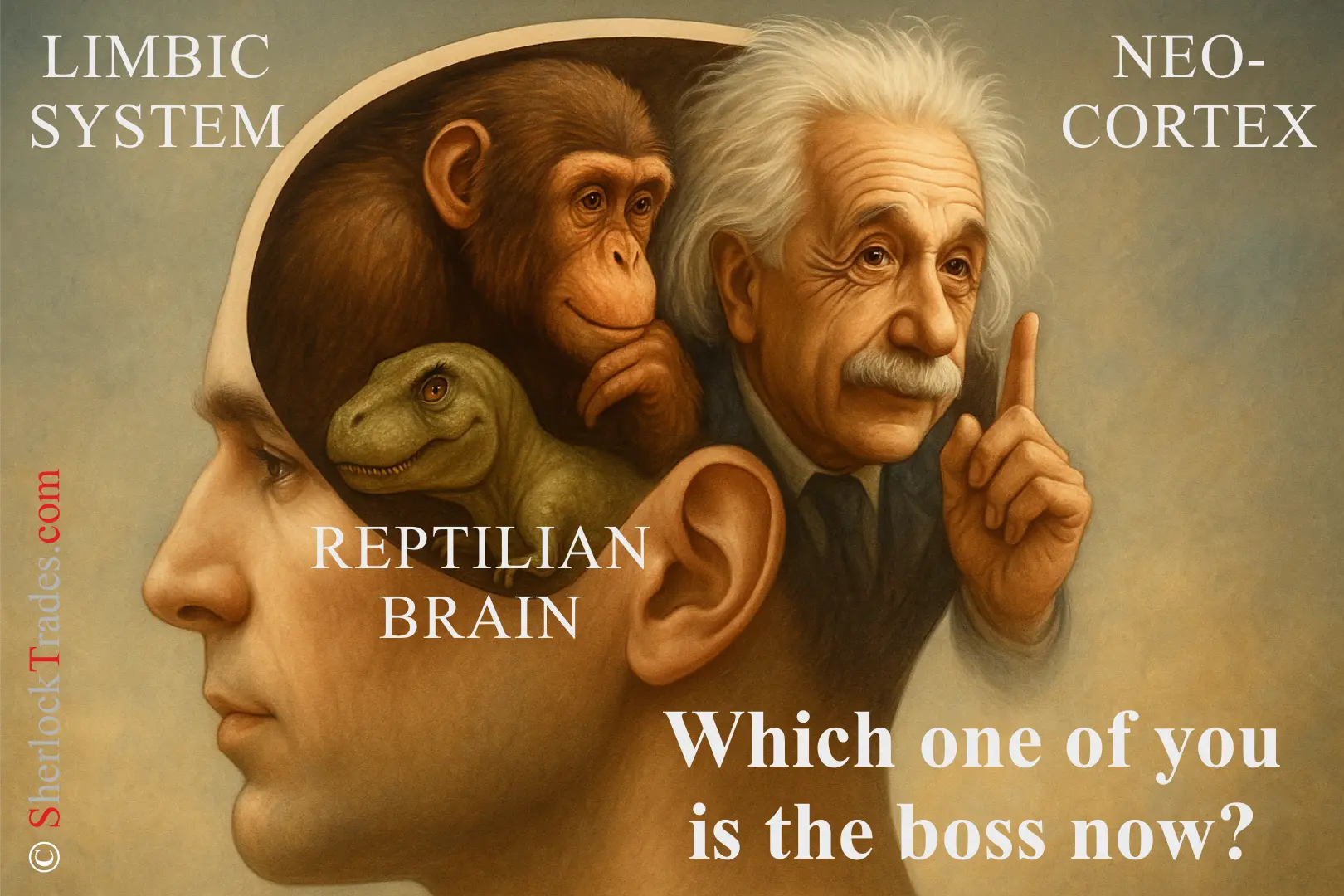
The illustration symbolically shows the three parts of the brain: the reptilian brain (dinosaur), the limbic system (monkey), and the neocortex (Einstein). To succeed in trading, we must stop relying on instinct and emotions and start acting consciously and rationally.
“Einstein” represents the neocortex – responsible for logic, planning, and control – and teaches the “lower” parts of the brain how to manage the impulses that activate them.
In practice, we are the ones teaching Einstein how to run trading in a way that minimizes the triggers activating our primal instincts :)

Chapter: 19

The image refers to the message of the book.
In short… if you just stand still and wait for something in your life to change for the better, don’t count on it happening.
At best, you’ll just get older :)

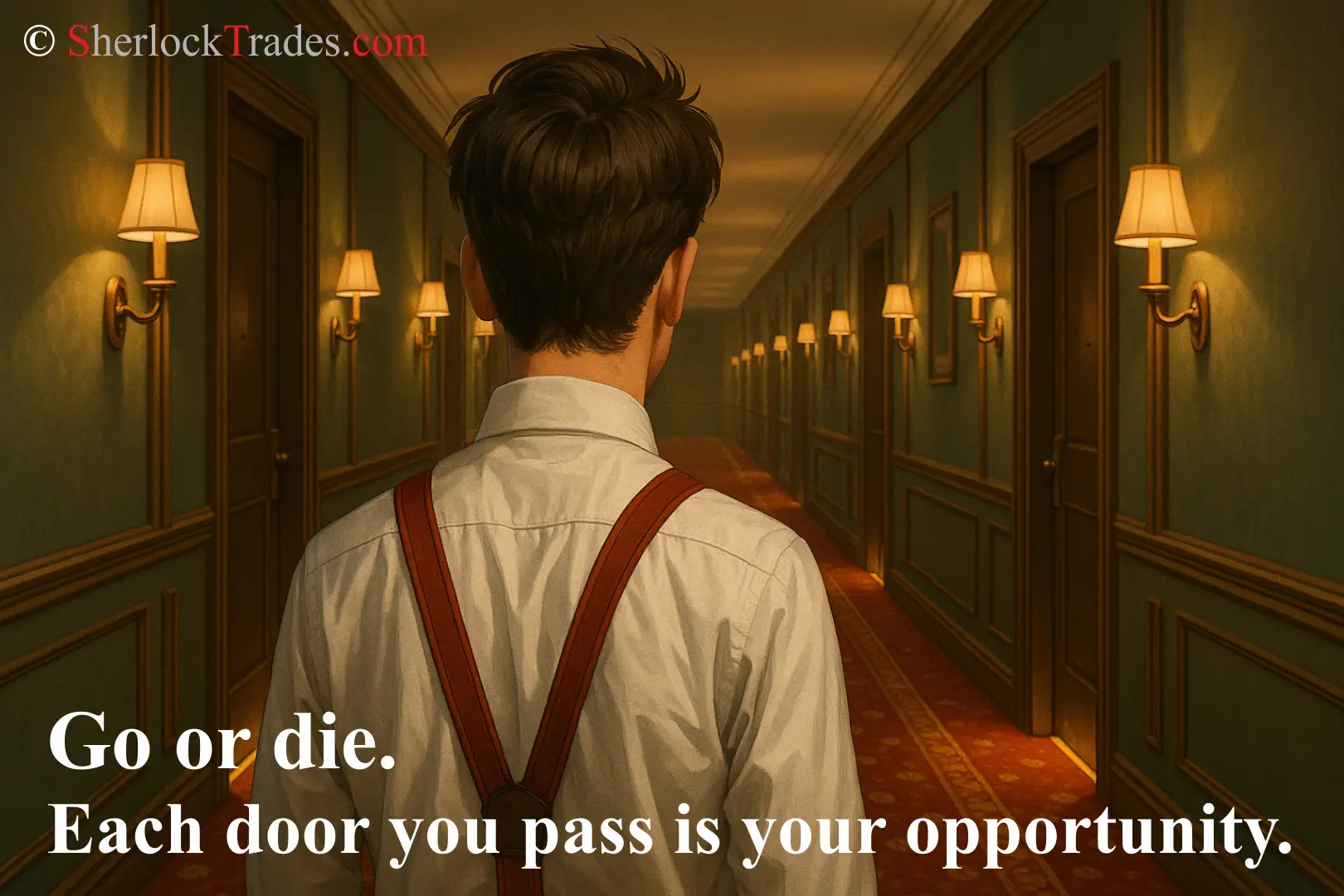
The corridor symbolizes the path of life or the Trader’s path of development. Along the way, doors appear, and each pair of doors represents a new chance, new opportunities. Somewhere behind them lies your way to a good life.
Standing still means stagnation, while taking action – even with mistakes – is the only way to make progress. The striking quote on the graphic, “Go or die,” emphasizes the need for activity – just like the great white shark, which must keep moving to survive.

Chapter: 19

This is a reference to the previous illustration, which further reinforces the metaphor from the text: the great white shark must stay in motion to survive.
A shark that stops cannot breathe – just like a Trader who stops improving their craft loses “oxygen”: energy, motivation, and the ability to grow.
The image is a reminder that stagnation – physical or mental – is the same as wasting your life.
For a Trader, it means only one thing: without making decisions and taking action, there is no chance of success.

Chapter: 21.1

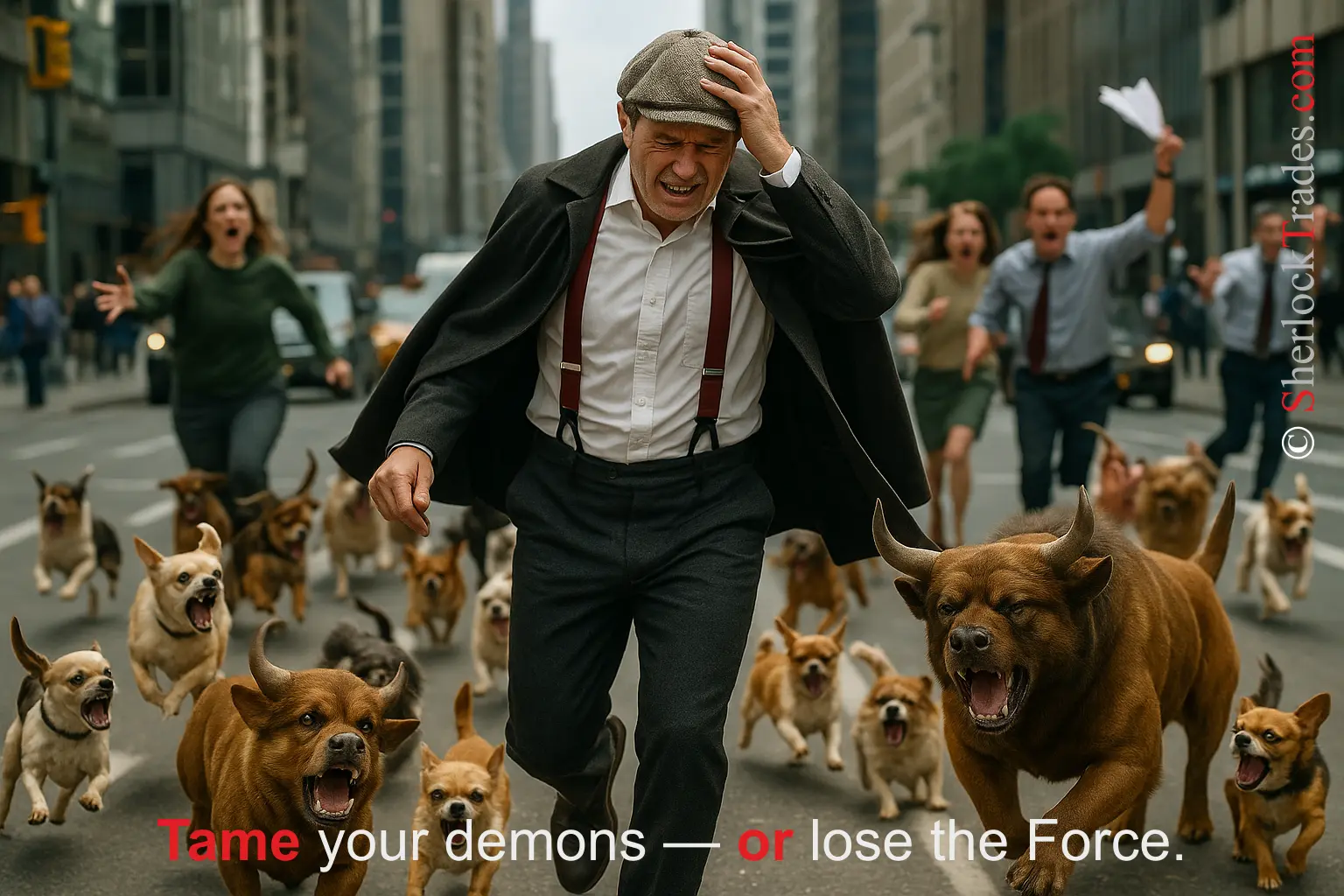
This is exactly the state a Trader falls into when trading without a plan. The illustration perfectly conveys the chapter’s message: without preparation, strategy, and emotional control, you are defenseless against the market – like someone running from a bear without any plan.
In this state, you are incapable of logical thinking because your reptilian brain is making the decisions, and it doesn’t care about your money… it’s fighting for survival.
At that moment, you wouldn’t even be able to recall how much 7×8 is, let alone analyze charts and make sound decisions.
Your state also makes it clear that you didn’t know how to make good decisions before – so why would you suddenly start now? :)

Chapter: 21.2

In contrast to the scene of running from the bear, this illustration shows the idea of small Traders living in symbiosis with the big market players.
The fish (Labroides dimidiatus) does not fight the shark – it benefits from its strength and presence.
A individual Trader should learn to follow the movement of large capital instead of opposing it.
It’s a metaphor for strategic thinking, skillful adaptation, and avoiding dangerous ignorance.

Chapter: 22

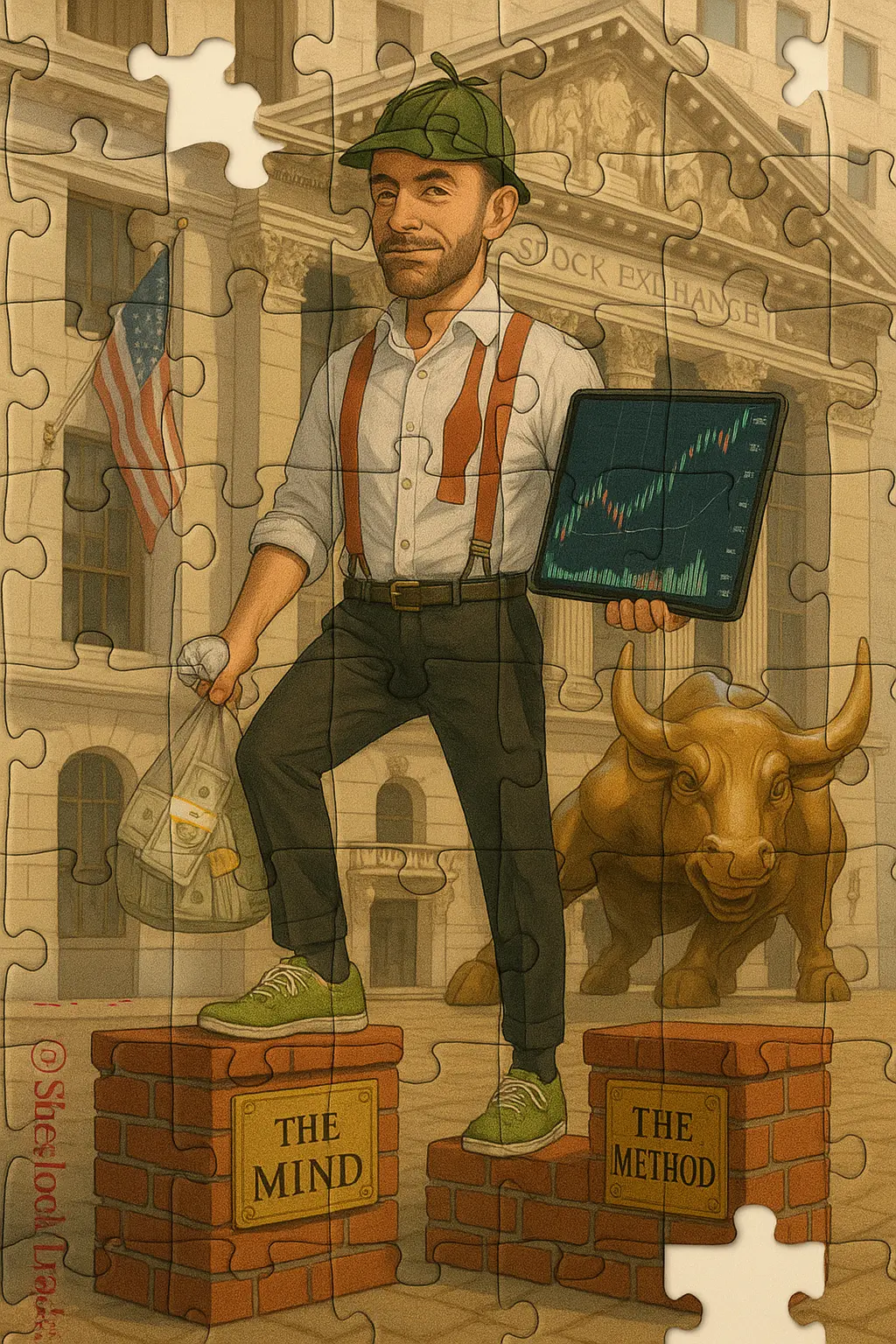
The foundations of successful trading rest on two pillars: the mind (psychology) and the method (strategy).
The puzzle pieces against the backdrop of the market symbolize the complexity of both a Trader’s life and the market itself.
The missing pieces represent areas of life or the mind that still need to be completed.
Altogether, it highlights how crucial harmony between the mental and technical sides is to achieving true success.

Chapter: 22.2

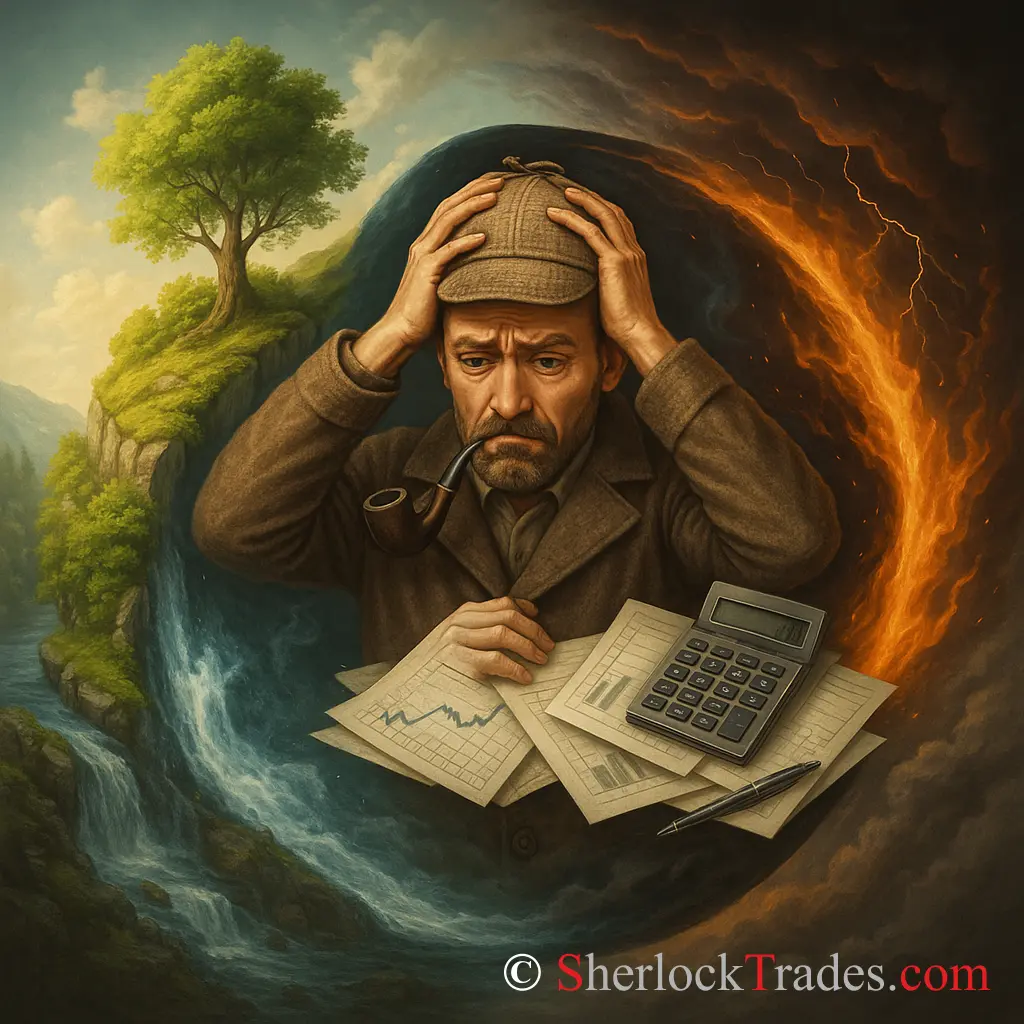
The image depicts the duality of a Trader’s life – balancing between calm and chaos, like Yin and Yang.
Professional and private life intertwine and are inseparably connected. Sherlock – as a symbol of the conscious mind – analyzes the situation, seeking to find balance between the pressure of the markets and the need for inner peace.
For a Trader, ending the session and returning to everyday life can feel like coming back from a mission filled with intense emotions. Yet, behind the door of the trading room, life awaits – family, loved ones, and everyday reality.
How can you train your mind to understand that once you cross that door, the fight for survival in the market is truly over?

Chapter: 22.3

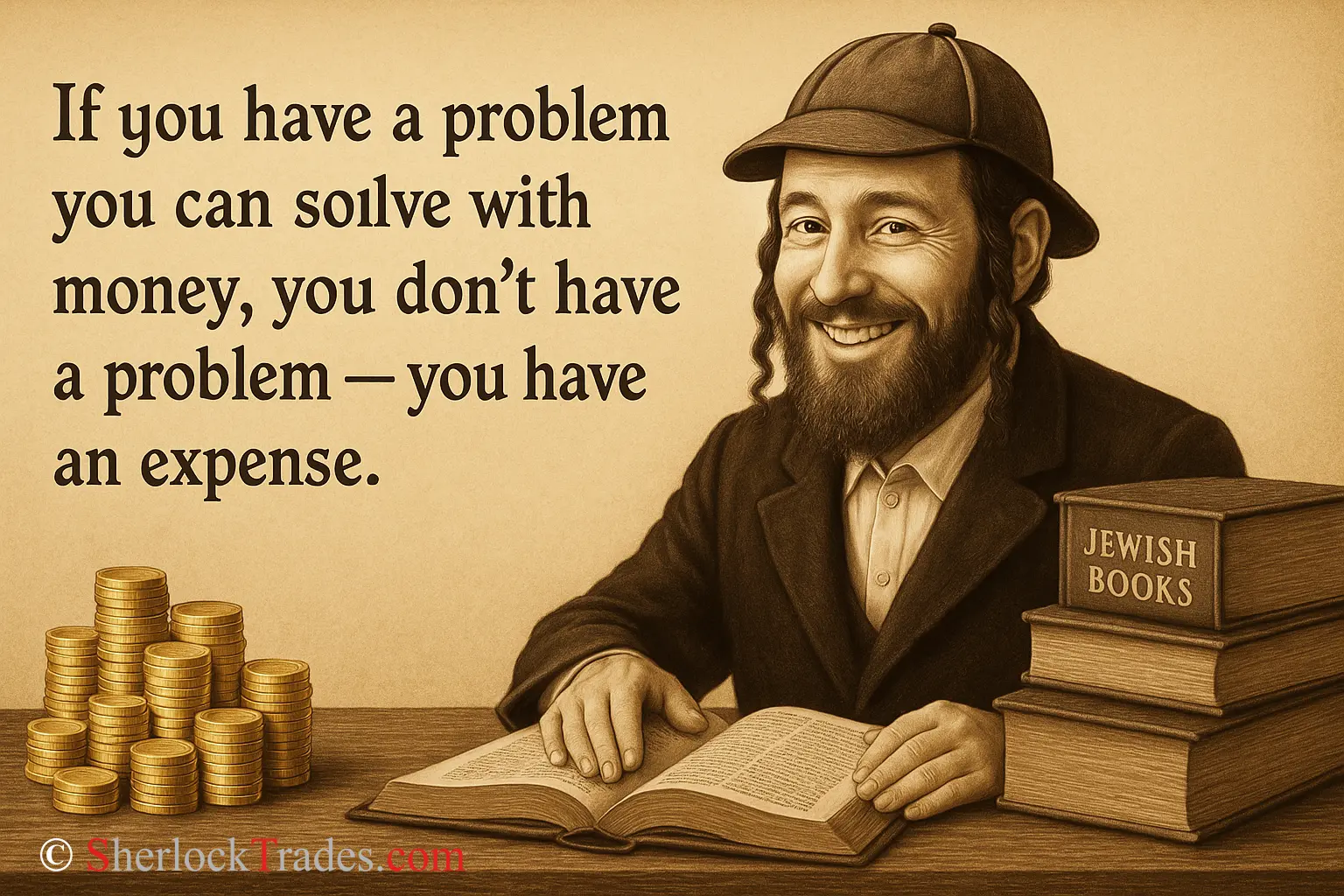
Money itself is not the goal – it is merely a tool, for example, to solve problems. The image draws on Jewish life wisdom and reminds us that true luxury is the ability to use financial resources to help ourselves and others, improve quality of life, or buy time and freedom – values far more precious than money itself.
Everyone has their own beliefs about money, often radically different. In truth, this only shows that few of us have ever truly reflected on the subject.
And you? 
Do you have any unusual beliefs about money?

Chapter: 22.4

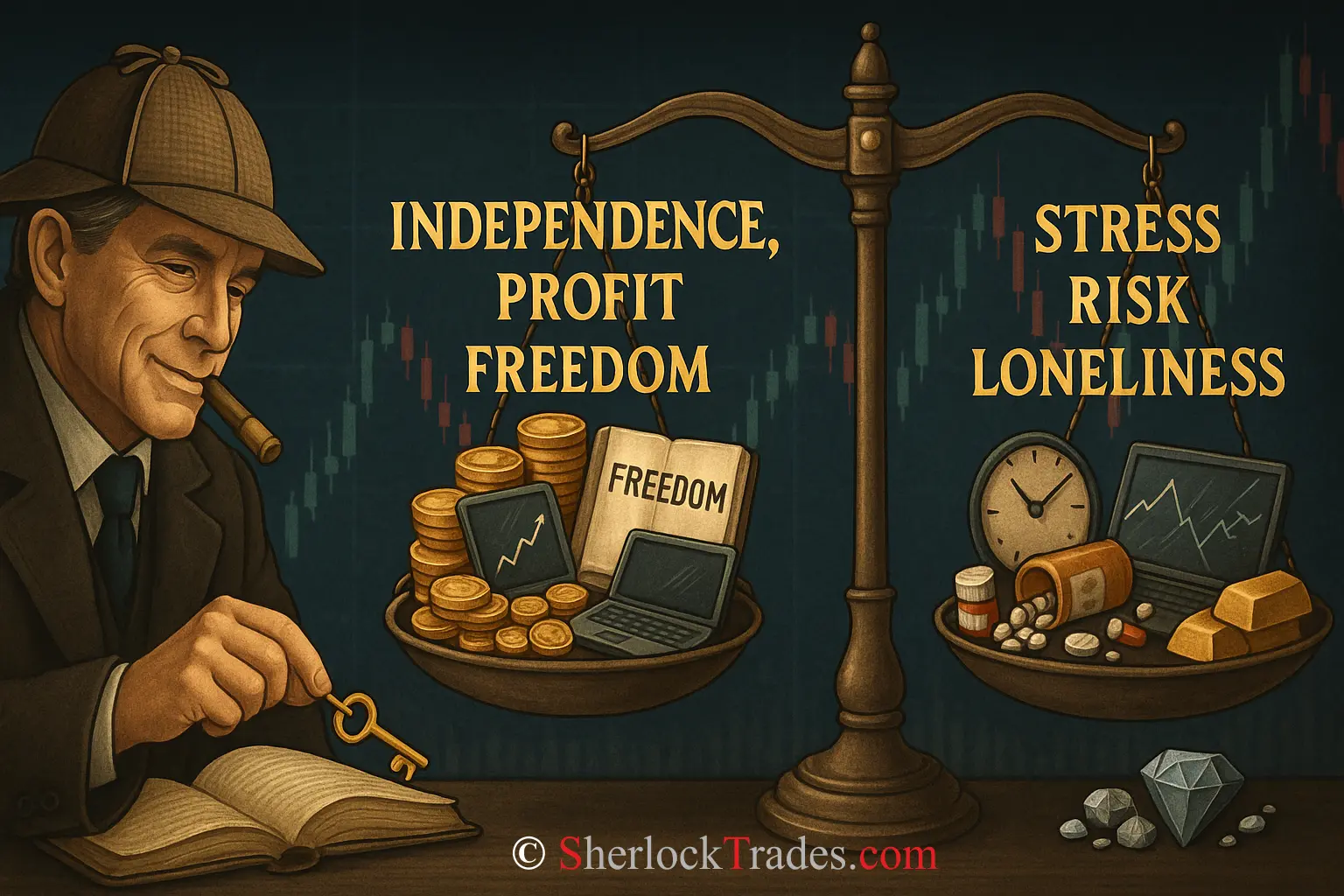
Nothing in this world comes for free.

Being a Trader has its price, and everyone must honestly consider whether the benefits outweigh the costs of this profession. Freedom and potential profits are tempting, but they come at the expense of stress, risk, and loneliness. The image highlights the clear contrast between the seemingly attractive independence and the very real psychological costs of this profession.
This is not a business you walk into with everything ready for you. Trading is not a franchise. Here, you have to build yourself and your skills from the ground up, and sometimes even level the ground first before you start building. In the beginning, the effort can be overwhelming, and the “scale” will clearly show a NO…
But if you don’t give up and consciously shape yourself, in time you will turn that weighing result into a resounding YES.
It may take a while… The choice is yours.

Chapter: 22.5.2

The graphic powerfully conveys the state of emotional overload and panic a Trader experiences when breaking their own rules or operating without any at all.
The overheated kettle symbolizes the mounting stress that turns into irrational decisions, capital loss, and mental burnout.
This serves as a summary of the chapter showing how mistakes in risk management can end in disaster and how costly the lesson of lacking rules and discipline can be.

Chapter: 22.5.3

Although I neither drink nor smoke, this image, to me, embodies the calm and satisfaction of an experienced Trader who acts according to plan – without emotional swings or chaotic decisions.
It symbolizes the reward for a professional approach: strategy, patience, and consistency lead to victory without unnecessary stress.
The photo sums up the chapter dedicated to trading based on cold analysis rather than emotions.
This vision stands in stark contrast to the overheated kettle from the previous chapter. In these sections, I showed two radically different approaches to the same situation – that of an impulsive amateur and a professional Trader.
I think I don’t need to ask which one you’d rather be :)
I don’t like it when someone interferes in my life, and I try not to interfere in others’ lives either…
However, here I’d like to pause for a moment and draw your attention to a certain danger.
If alcohol becomes the reward for good trading, that’s a very bad idea.
It creates emotional anchors for a harmful addiction and can end tragically.

Parents often make a similar mistake by rewarding their children with sweets. Combining a reward with an unhealthy treat means that later, when they want to lift their mood, they reach for sweets – they get a brief moment of pleasure, and their body gets a sugar rush.
This can be just as destructive as a glass of alcohol…
I strongly advise against it, even if it may look nice.

Chapter: 22.5.6

Most of us feel pressure in life. Some more, some less. The lucky ones have freed themselves from it. The image is a metaphor for the psychological burden of a Trader who sinks deeper and deeper under financial, social, and life pressure. The mountain peak symbolizes success, but often the path to the top leads through depths and real extremes. This refers to the section in which I analyze the internal sources of pressure we place on ourselves. It is worth consciously selecting what is truly important and what is worth and necessary to endure, and what is only an illusion.
Getting rid of unnecessary ballast can help reduce pressure.

Chapter: 22.5.17

No one said it would be easy :)
But don’t worry… if you approach trading wisely and consciously, the battle on the market won’t look like this for you :)
This is how those suffer who can’t be bothered to read books :)
But seriously… this whole book, the learning, the growth, and shaping yourself as a Trader is all about avoiding the fight. Who would want to live like that, battling monsters every day for bread and a Lambo? :)
We grow so that trading becomes a normal, fulfilling job after which we can walk away from the table and focus on our lives without trauma, exhaustion, and PTSD.

Chapter: 22.5.19

The graphic vividly illustrates the loss of the dollar’s purchasing power since it lost its gold backing in 1971. The illustration is a commentary on the Hunt brothers’ silver speculation and shows the false sense of security behind so‑called “sure investments.”
And it raises a question…
If that ounce of gold used to cost $35 and that tiny fraction of a gram today also costs $35, then who stole the rest of that gold from us?

Chapter: 23.1

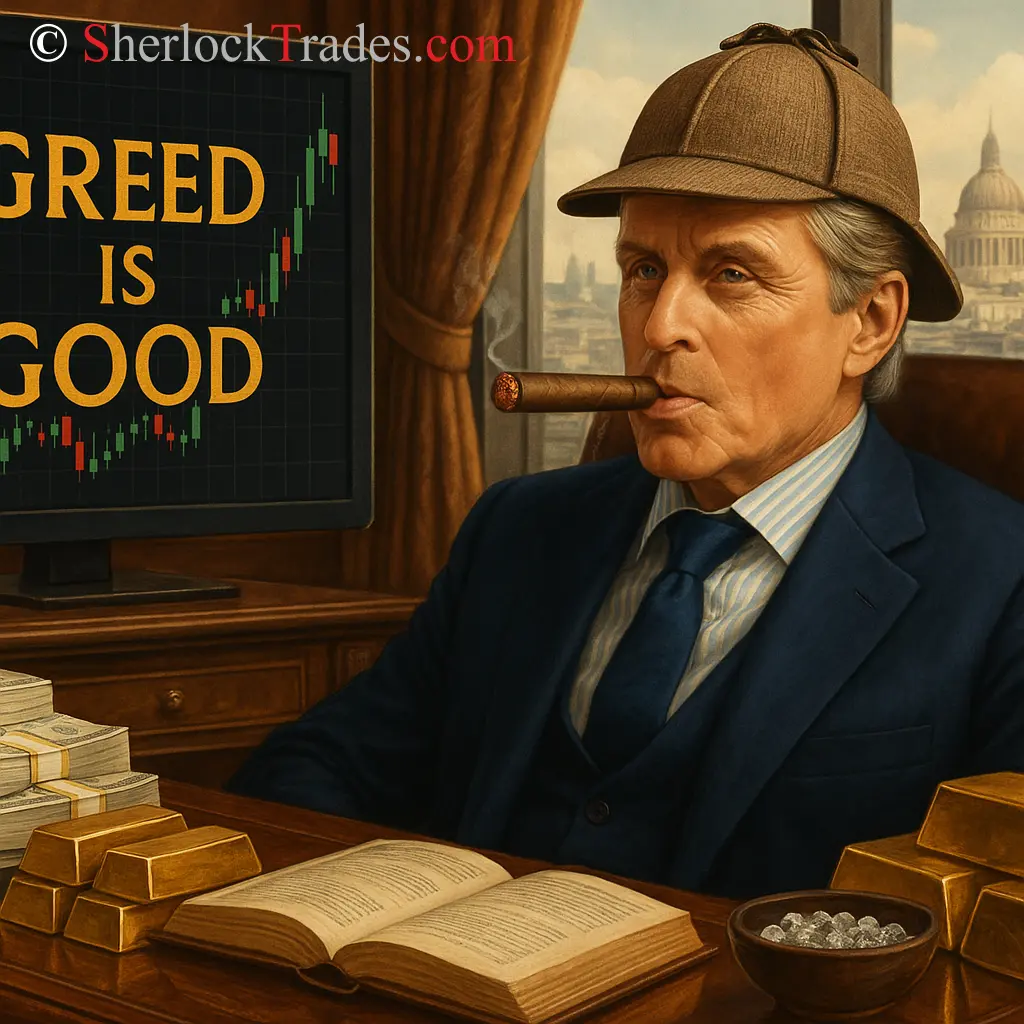
“GREED IS GOOD” – the famous line by Gordon Gekko from the movie Wall Street. We all know that you’re “supposed” to criticize greed – because that’s what the crowd expects. But let’s be honest… who wouldn’t want more? A lot more? I would. You probably would too. And there’s nothing wrong with that – until you ask yourself one question: at what cost?
What is your true, ultimate goal in life?
Money only matters when you don’t have enough. Once you have too much, it suddenly loses its importance.
So… what really matters to you?
How much money is enough for you to live fully and pursue your dreams?
If greed takes over and you work only to have more than you truly need, you will pay the highest price – your time.
And you may even waste your entire life chasing money you won’t be able to take with you to the other side.
A wise Trader approaches it differently. He thinks. Analyzes. Designs the best possible strategy… a strategy for his life.

Chapter: 24

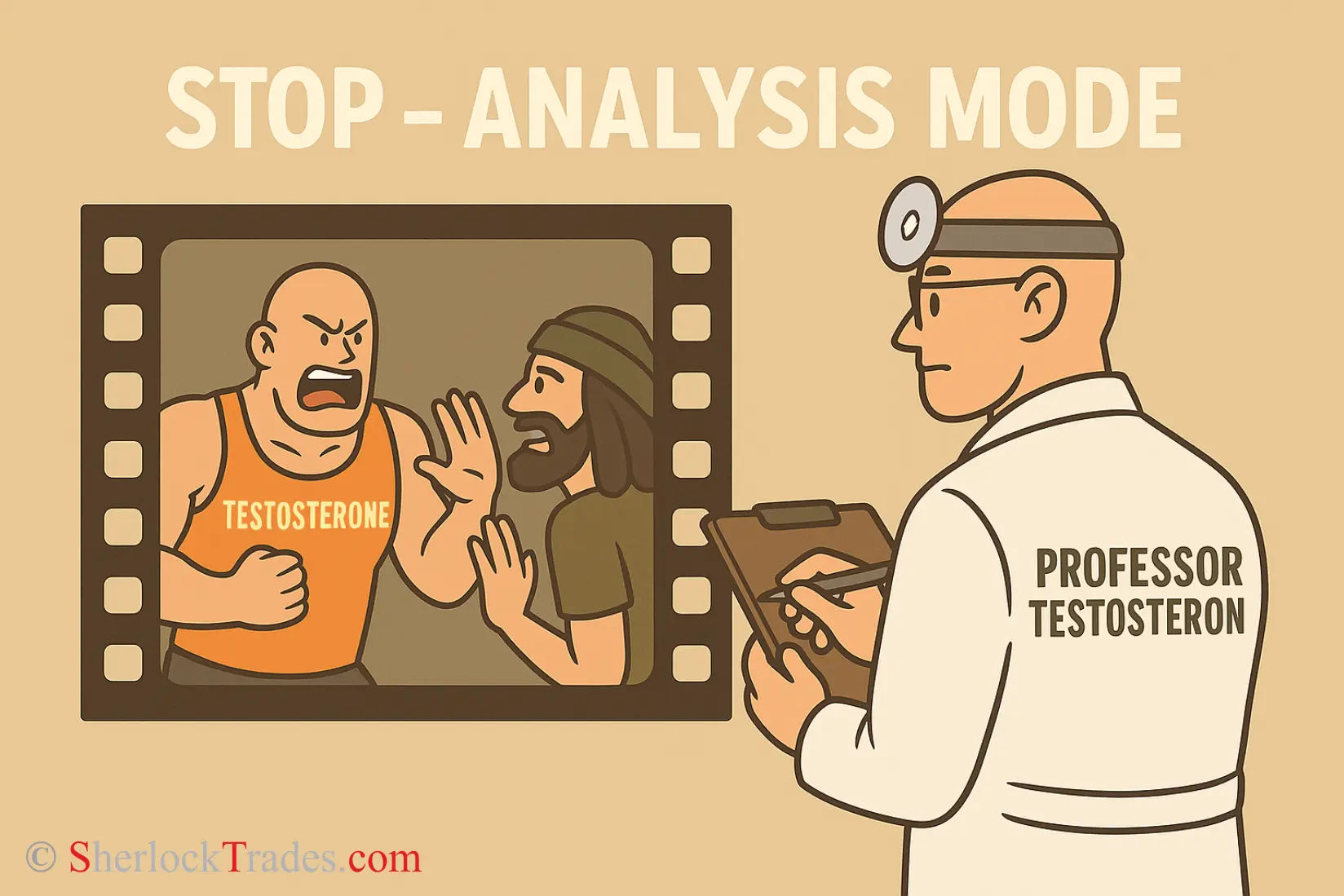
There are moments in life that simply happen. We have no control over them – they’ve already occurred and nothing can undo them. The only question that remains is: what now?
And for that “what now,” we bear full responsibility. Because our reaction is entirely ours.
In trading, a gigantic candle can suddenly explode on the chart. And then the key question arises… were we prepared for it? And how will we react when it happens?
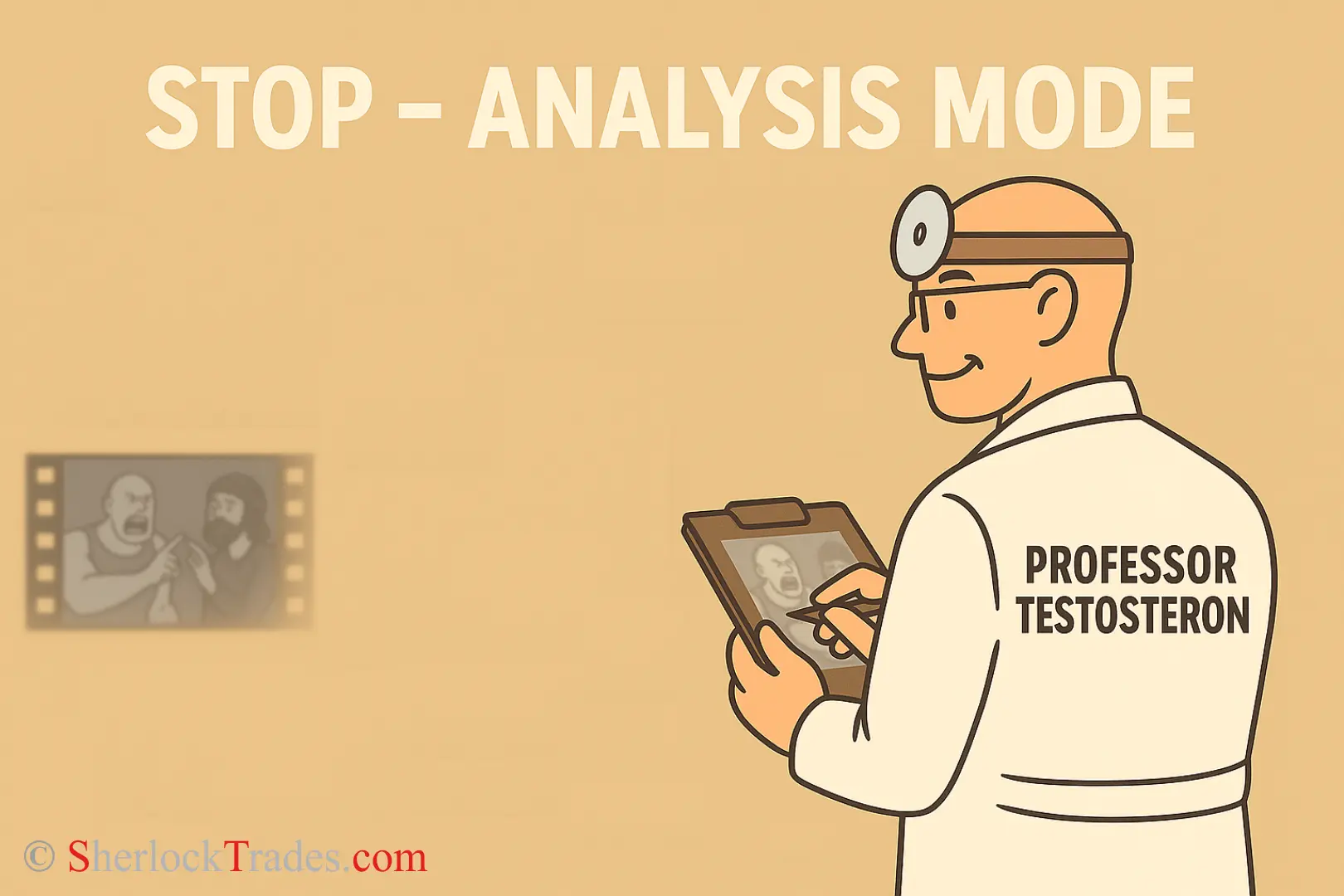
That reaction is entirely up to us. Just like in the graphic – two “patients” under observation. One flooded with testosterone, the other a fan of natural relaxants. Whatever happens next, their reactions will be completely different.
And you? Are you satisfied with how you react?

Chapter: 24.1

Few professions in the world demand such deep work on oneself. Our strength is not in the muscles you can train at the gym. Our strength lies in our mind… we have to turn our psyche into a professional commando capable of handling any battle. It’s about using intelligence, cunning, and consistency… not just toughness to take hits, but the ability to anticipate where the blow might land and to dodge it before it does.
What is this image and chapter about?
About analyzing your own reactions and the methods you can use to master them.

Chapter: 24.1

The illustration shows the final stage of an emotional control exercise – distancing yourself and extinguishing the emotional impulse.
This technique for dealing with emotions is based on NLP methods and is highly practical and universal.
It can be used to handle impulses and emotions arising in the present moment as well as images and emotions from the past that interfere with our lives.

Chapter: 24.3

This is what the emotional state of sadness and depression described in the chapter looks like. The dog in this pose perfectly illustrates the physical symptoms of our inner state – slumped posture, stillness, and facial expression.
Overcoming sadness in your head is often quite difficult. Changing your mindset as if by a magic wand is almost impossible. But there is something each of us can do – and it works instantly :)

Chapter: 24.3

This is a lightning-fast shift from the state of sadness and resignation we saw in the previous image – the dog, instead of being downcast, now radiates energy and joy. A simple change in physical state – movement, expression – can instantly shift emotions. It’s proof that even the deepest sadness can turn into enthusiasm.
All it takes is to stand up and consciously “move” your body.
If you’re feeling sad right now, try laughing. Stand up and pretend you’re King Kong on top of a mountain. Jump, run, go for a walk skipping like a little kid. Act like a happy maniac who’s delighted by absolutely everything he sees.
I bet you won’t be able to jump, laugh, and feel deep sadness all at the same time.
Of course, a little sense of timing is advised… not every situation will be the right one for such an outburst of joy :)

Chapter: 25

This chapter takes a look inside our head – not into our thoughts, but into pure chemistry. Depending on the situation and emotions, the body triggers the production of different chemical compounds. For millions of years of evolution, this system worked perfectly – it increased our chances of survival and of passing on our genes.
The problem is that the brain doesn’t distinguish a stock chart from a real-life threat. It doesn’t understand that at this moment we don’t need chemical boosters, but calmness and clear thinking. It doesn’t realize that what it does in such situations often gets in the way rather than helps.
Being aware of these mechanisms is a huge advantage – because once we know how they work, we can learn to respond the right way.

Chapter: 25.4.6

There are also natural, proven ways to support a Trader’s brain. One example? L-theanine – it works subtly but effectively: it helps manage stress, stay alert, and improves sleep quality. And these are the very foundations of daily mental hygiene for anyone living in the rhythm of the markets.
It’s worth exploring topics like this, because even small changes can make a massive difference. Remember – we are not computers. If something genuinely works for us, the effect is often amplified by our belief in its power.
Sometimes that belief alone can work wonders :)
On one hand, the supplement truly helps, but it’s our conviction that it helps which delivers the greatest impact.

Chapter: 25.4.6

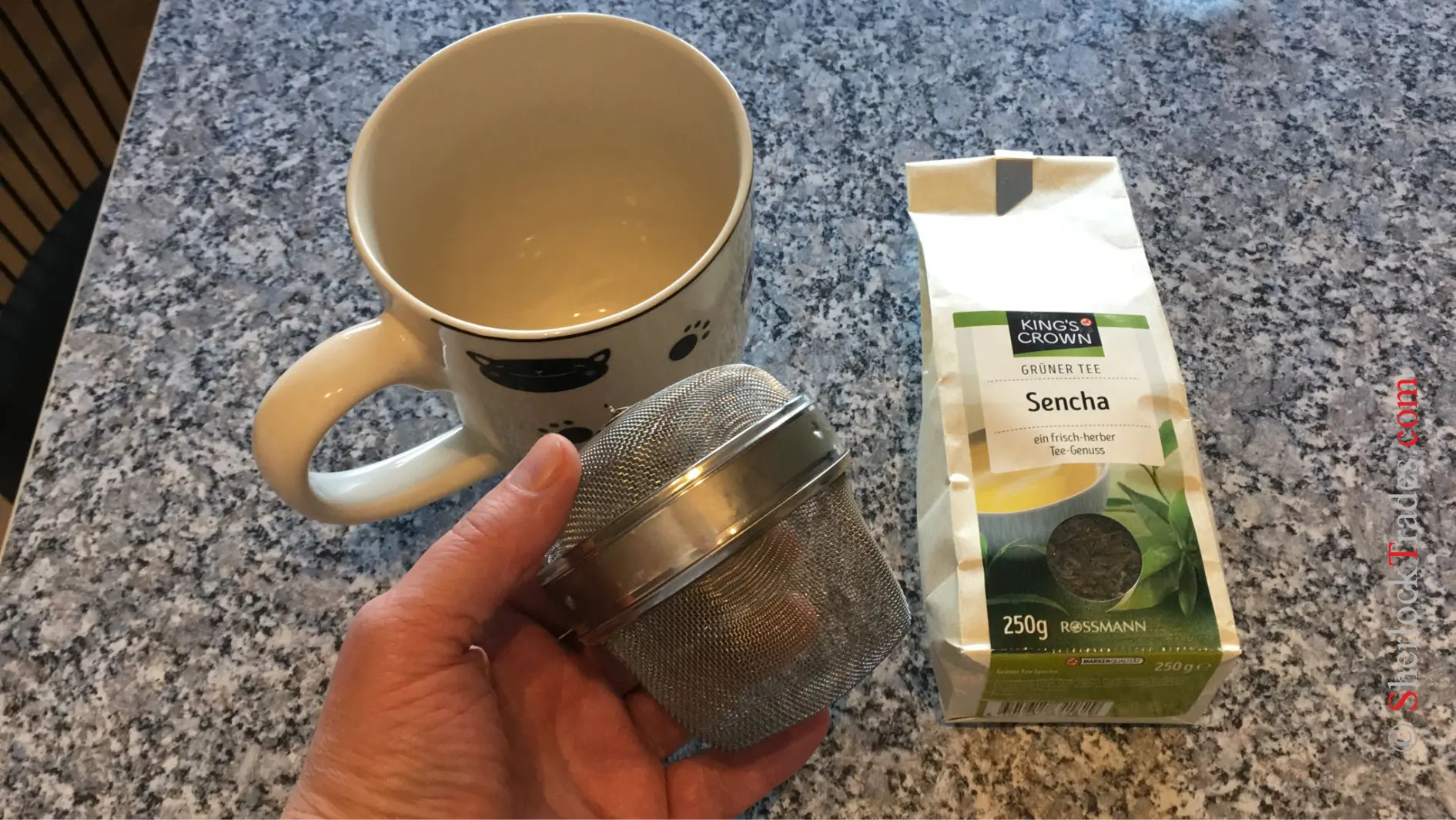
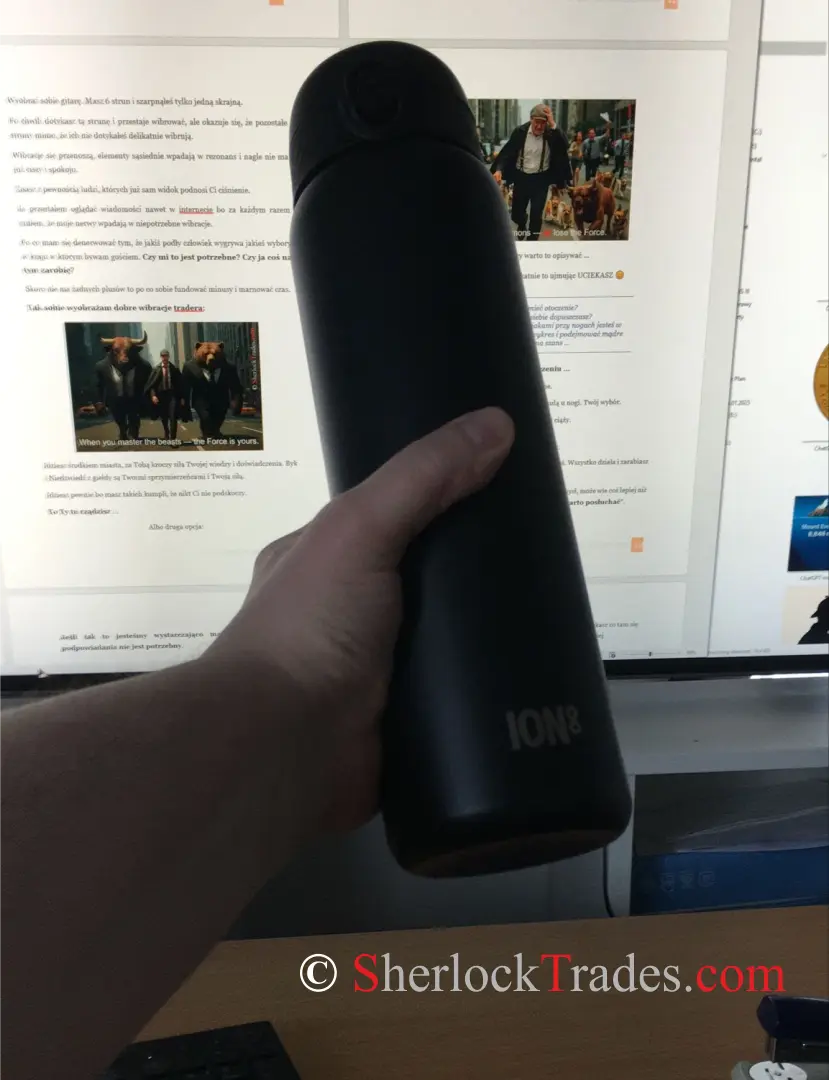
This is not a magic graphic, just my green tea brewing set.
Because I like cold drinks and don’t like tearing myself away from the charts during trading, this mug has a capacity of 1 liter :) It’s a solid serving of a good drink rich in L-theanine.

Chapter: 26

If you think you can handle stress, pressure, and emotions every single day and still trade effectively, I’m afraid that’s a false perception of your abilities.
If something feels too heavy, you can’t keep doing it day after day, year after year – at some point, you’ll have had enough.
It’s like a wind-up toy (I know… they hardly make those anymore). If you wind it up too tightly, eventually the spring will snap. It’s the same with Traders. :)

Chapter: 28.3

Imagine spending six hours a day watching charts. That’s not even an exceptionally long workday…
One of the key topics covered in the book is managing your level of focus. You simply can’t stay fully concentrated for hours on end. On the other hand, if you let your attention slip at the crucial moments, you’ll miss the best opportunities.
A Trader needs a personal system for managing focus and clear triggers that switch them into a state of maximum readiness.
This way, they avoid burnout and can give 100% concentration exactly when it matters most.

Chapter: 29.2

I’ve always believed that in life, just like in accounting, things should balance out. I always feel uncomfortable when someone gives me something and I can’t return the favor.
That’s why I set up this account for receiving “tips”—so that people with a similar mindset to mine have the chance to send me a few dollars if they feel that what they’ve received truly has value for them.
On the other hand, it’s a really nice feeling to see that something I’ve done has given someone so much value that they went out of their way to send me a few dollars.
If any funds do appear there, I’ll gladly use them to grow the YouTube channel—I dream of producing high-quality content where I can share practical knowledge with viewers.
I mentioned this in the book—as a thank-you for the “coffee,” everyone will be able to download my trade management cards.
It’s my way of giving something back for a kind gesture.

Chapter: 29.3

In legends, sirens lure sailors with their deceptive songs, leading them to their doom. A Trader often experiences similar illusions when looking at the charts. You watch, see signals one after another, and think: “I’ll jump in now because the market will take off and it’ll be too late.” If you risk big money under such an illusion, it can end in disaster.
A professional Trader doesn’t give in to such temptations. They wait until the situation meets all the criteria of their setups. Only when the checklists are ticked off, point by point, do they put their money into the market.
And of course, they do so following proper money management rules—because that’s how professionals trade. We don’t send the entire ship just to check where those beautiful songs are coming from. :)

Chapter: 33.3.1

Something no Trader ever wants to see…
Trading without the limits imposed by rules, without reading books or learning, feels very enjoyable.
Until the moment a Trader sees a message like this.
That’s when the realization sets in that this is not a game…

Chapter: 34

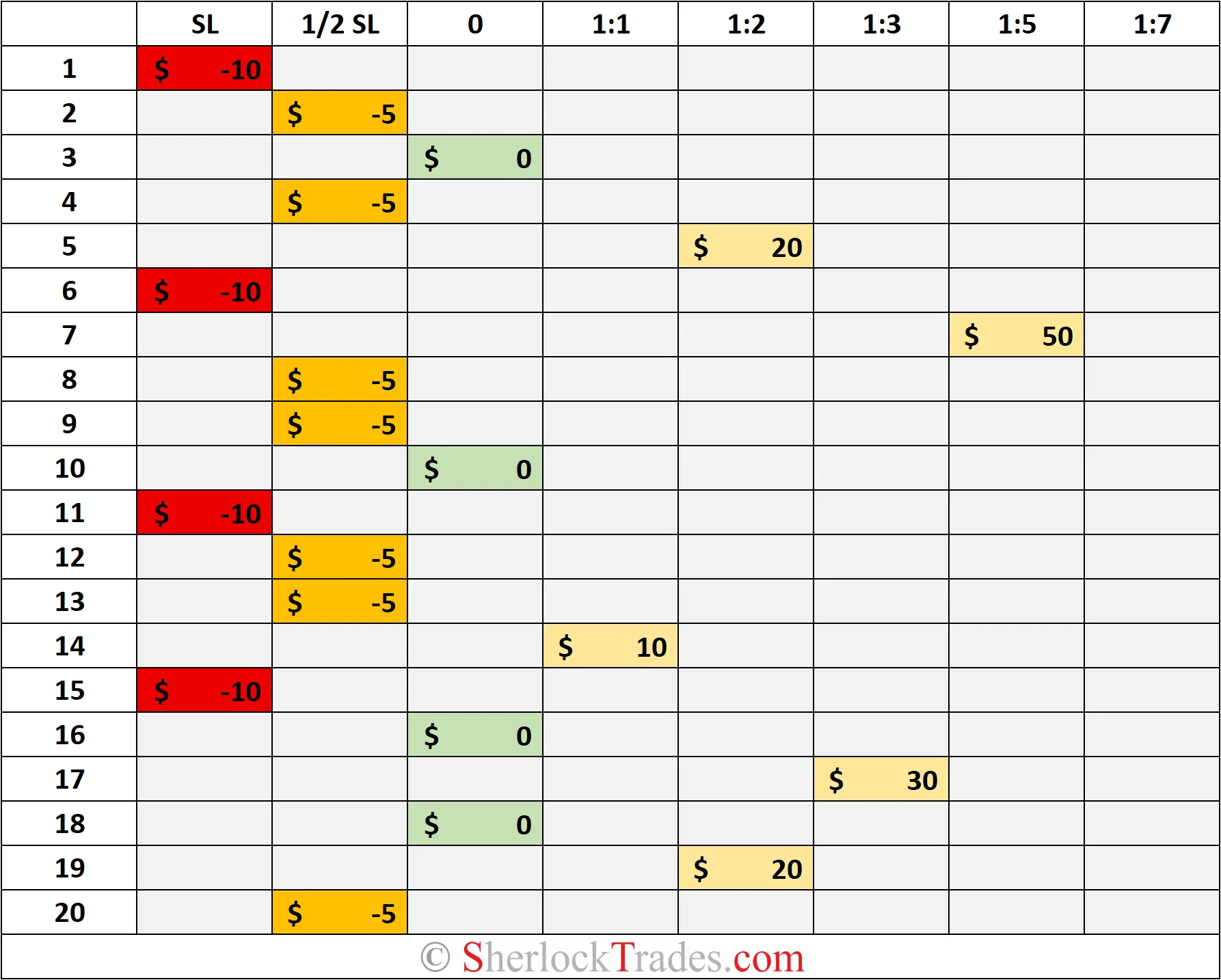
The table shows poor results – a lot of losing trades.
At first glance, it looks like a straight path to bankruptcy…
That’s why in the book I emphasize so strongly the importance of strategy and risk management.
Without clear rules and proper mental preparation, a Trader is doomed to fail.
And the opposite is also true – even a Trader with average accuracy, if they approach the game wisely, can squeeze solid profits from results like those in the table.
This is explained in detail from the ground up in the book.

Chapter: 34.1

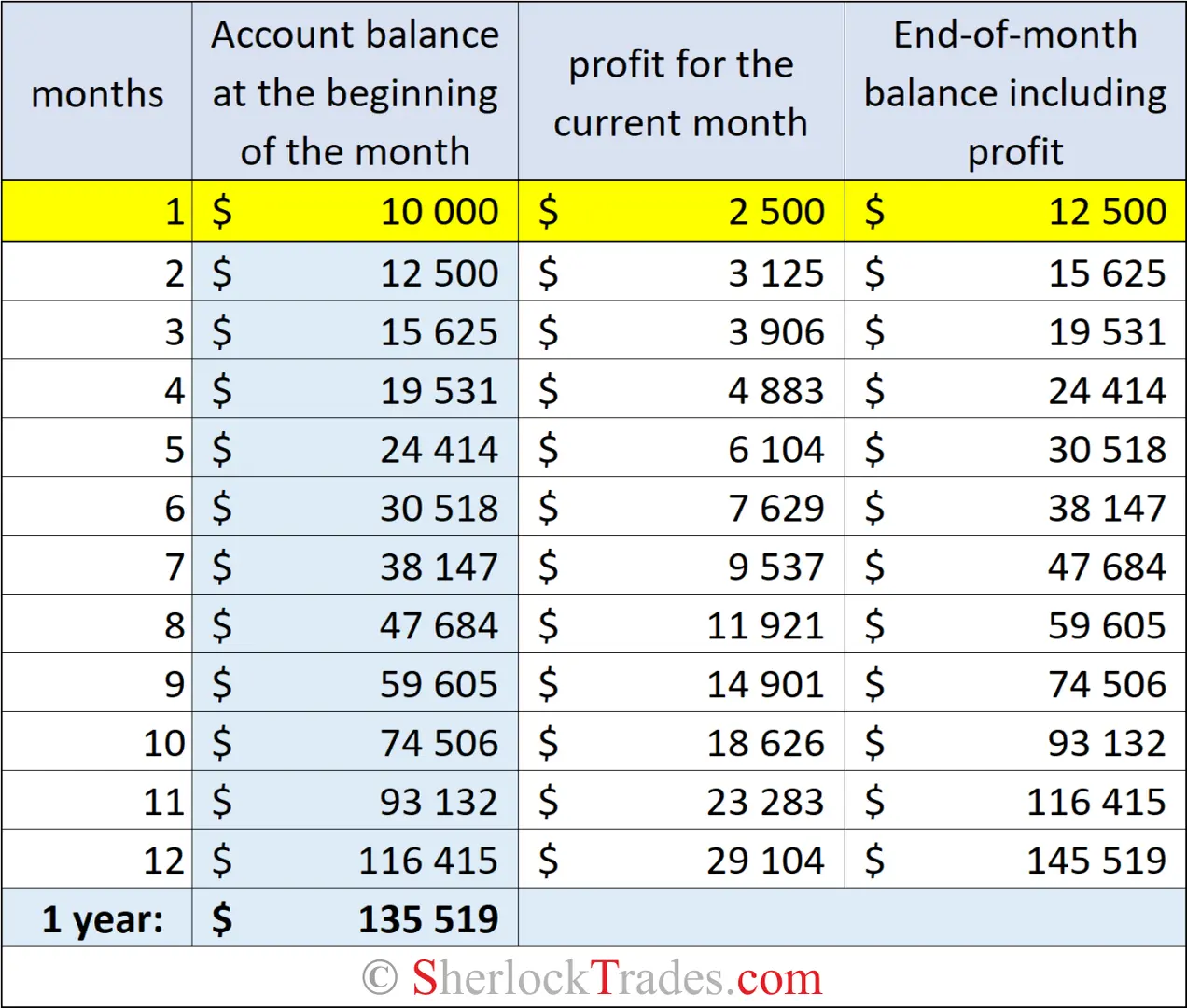
This table refers to the earlier one where I showed a set of 20 rather poor trades…
It proves that even a beginner Trader, whose technical skills are still average but who is mentally prepared as described in the book, has the chance to achieve excellent results over time.
This best illustrates the power of compound interest in trading. Even a “modest” monthly profit of 25%, with a consistent approach, can lead to around a 1,000% increase in capital over a year – already after taxes.

Chapter: 34.1

And in the following year…

Chapter: 34.1

By the end of the third year, you might start to feel truly wealthy.
But can you handle that level of effort, consistency, and discipline…?
In the book, I mentioned the spectacular result achieved by Larry Williams in the prestigious World Cup Trading Championships — what took two years in these tables, he accomplished in just one year.
Or do you still insist it’s unrealistic? :)

Chapter: 35.1

This is my order panel, which I use when trading on the MT4 platform. I won’t bore you with technical details here.
I just want to highlight what’s most important to me.
Every trade, at the moment of opening a position, must immediately have an SL set that fits the situation and strategy.
This panel was created precisely for that reason – so that with a single click I can set the appropriate SL, TP, and position size in line with MM rules, and so on.

Chapter: 35.2

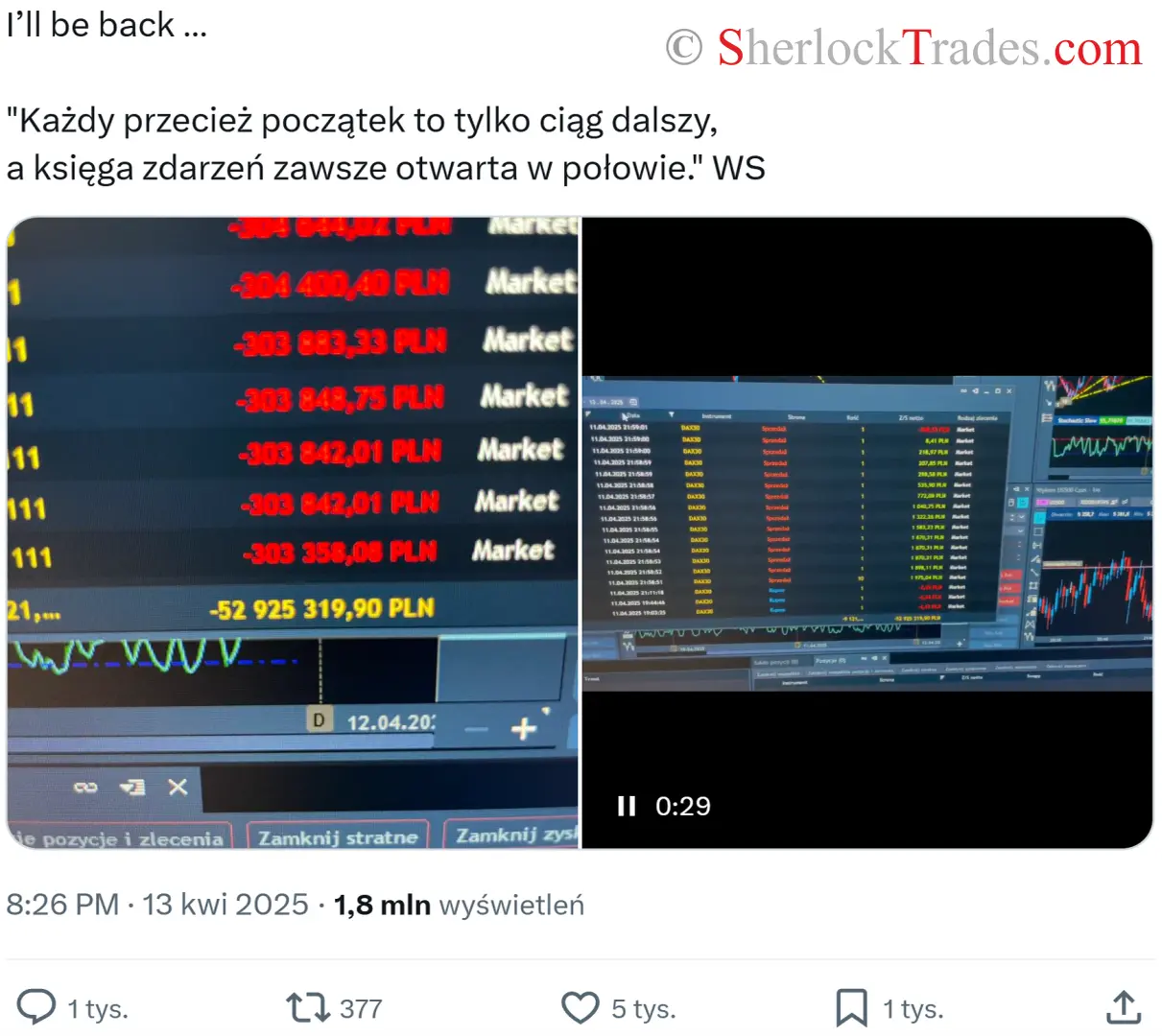
A screenshot from Rafał Zaorski’s profile and his post after finishing a series of trades with a record loss.
I respect the fact that Rafał shares not only his successes but also his failures with other Traders. Each of us wins and loses, though not everyone on such a scale…
An SL of around 14 million dollars – that’s not for my account size or my nerves :)
https://x.com/rafal_zaorski/status/1911486280052916243
Click Here

Chapter: 35.2

The photo shows the outcome of the trades described in Rafał Zaorski’s post – this is exactly what a loss of around 53 million PLN looks like on a broker’s platform screen. It powerfully illustrates the scale of risk and the consequences of emotional or poorly thought-out decisions.
Interestingly, the rules we follow are exactly the same whether we’re trading with small or large amounts of money.
Of course, some rules start to change when our capital begins to influence the market, but let’s be honest – at this stage, we don’t need to worry about that :)

Chapter: 35.4

The illustration contrasts an emotional, chaotic approach (Katyusha) with cold precision in trading. The Trader with the launcher symbolizes a well-prepared trade with clearly defined parameters: low SL, high R:R, and precise TP. The image reinforces the main idea of the chapter – effectiveness in trading is a repeatable, statistically proven strategy.

Chapter: 36.1

There you’ll find the book I mentioned.
Tom Williams developed and popularized the VSA technique, which has had a huge impact on me and many Traders around the world.
My book is not about trading techniques, but for those looking for not only psychology but also technique, this is, in my opinion, a very good recommendation.

Chapter: 37.1

In life, we make different choices, guided by various criteria and points of view…
This illustration shows how it’s worth looking at costs and value in the context of what they truly give us. How to buy something inexpensive that brings great value instead of spending a fortune on something that changes very little.
It’s also a reference to the tuning example – only this time not tuning a 5.7 Hemi engine, but tuning a Trader :)
And the picture on the left? That’s a pheasant my little Chrysler “hunted down” as a thank-you for a great ride :)

Chapter: 38.1

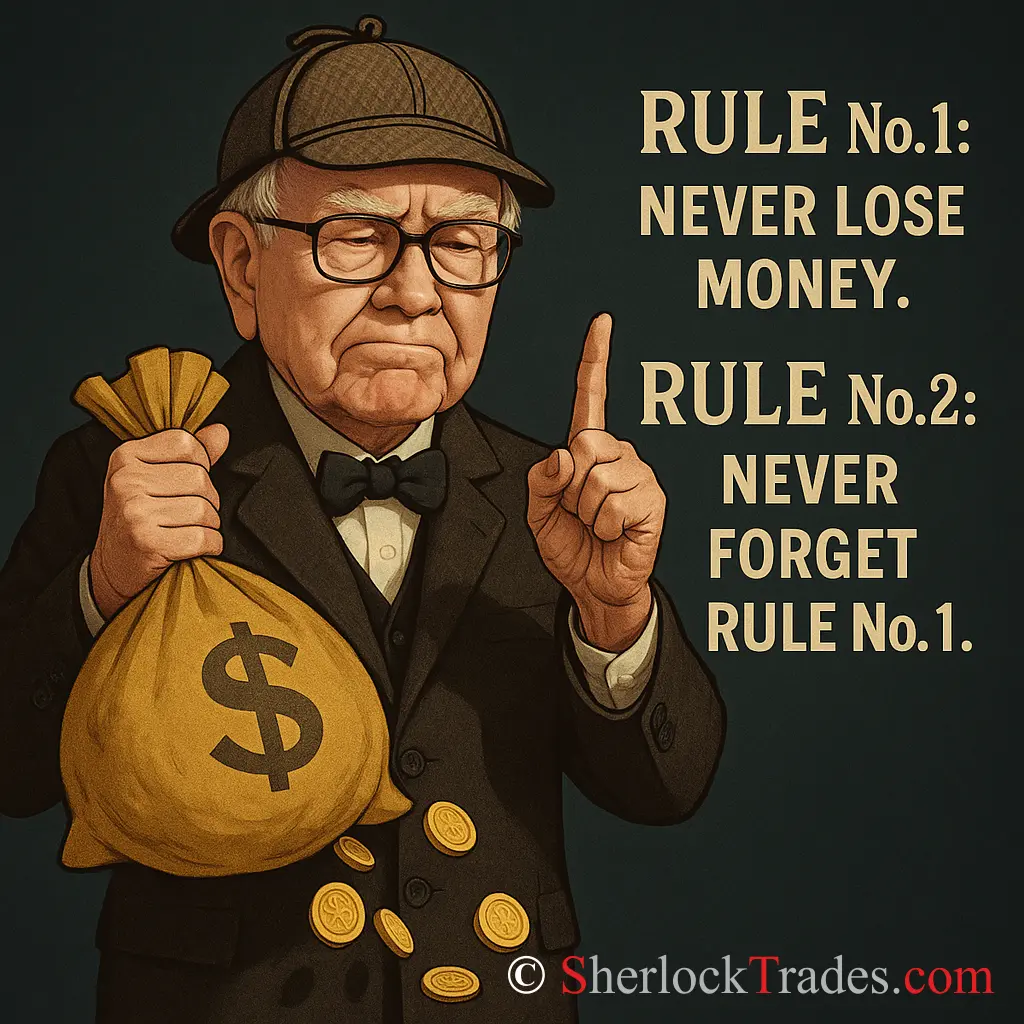
This is the golden rule of the legendary investor Warren Buffett.
It doesn’t matter if you are a Day Trader or a passive, long-term investor – this rule is always the foundation.
For Traders like me, this means proper risk and capital management. If we know the statistics of our trading, we can adjust the level of risk so that losses become statistically unlikely over the long term.
However, the greatest threat to our financial results is ourselves – the human factor.

Chapter: 39.1

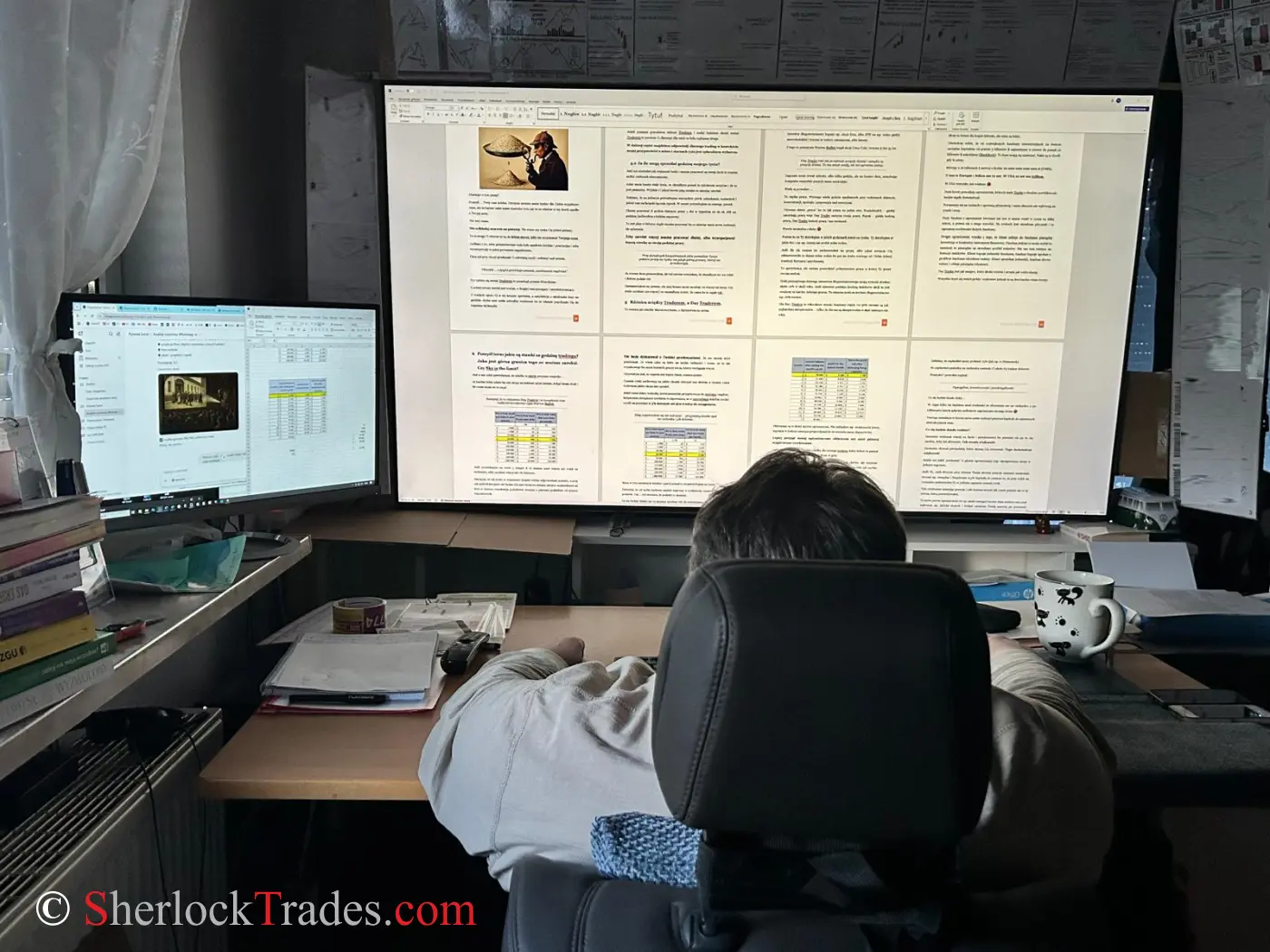
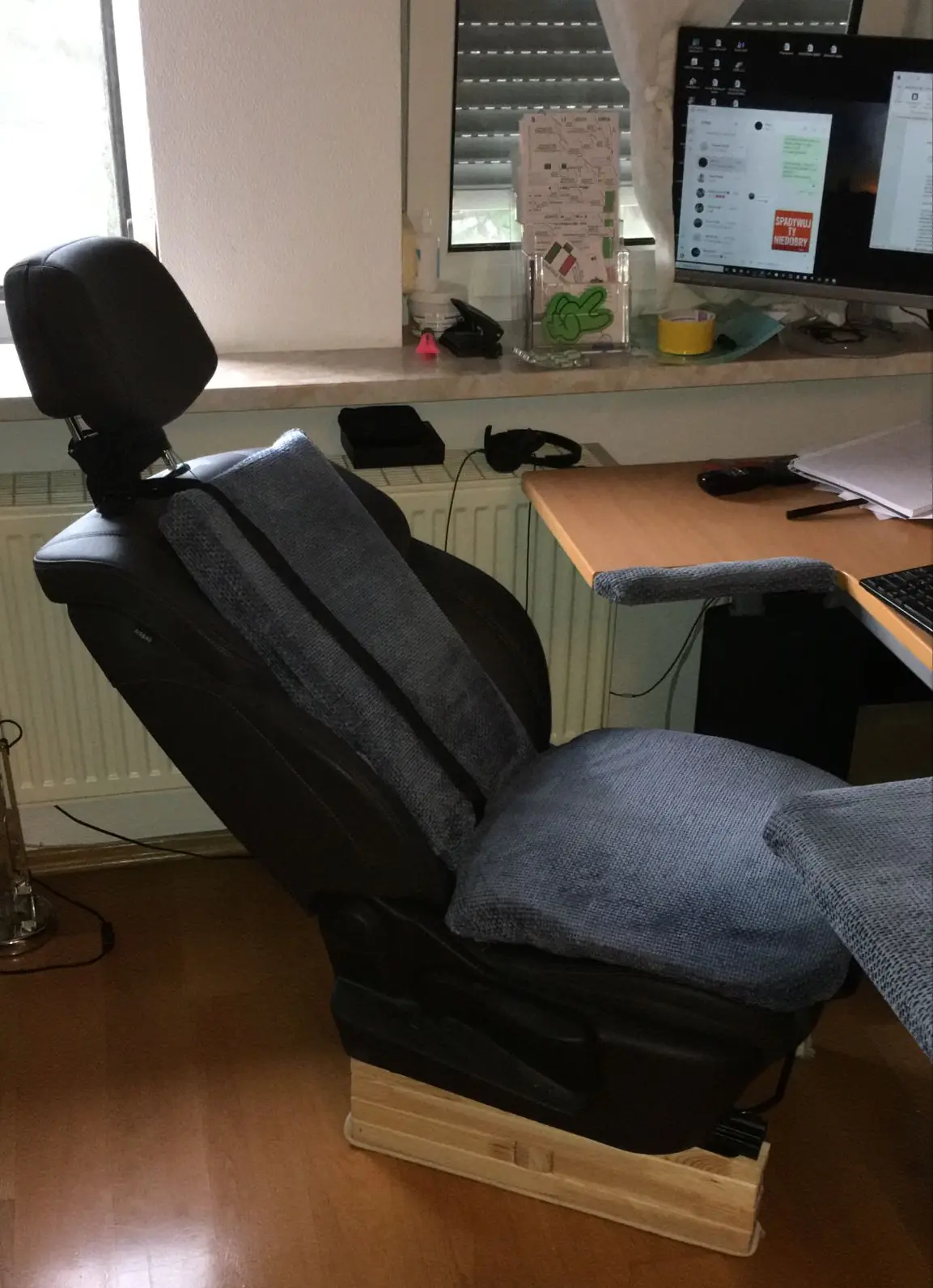
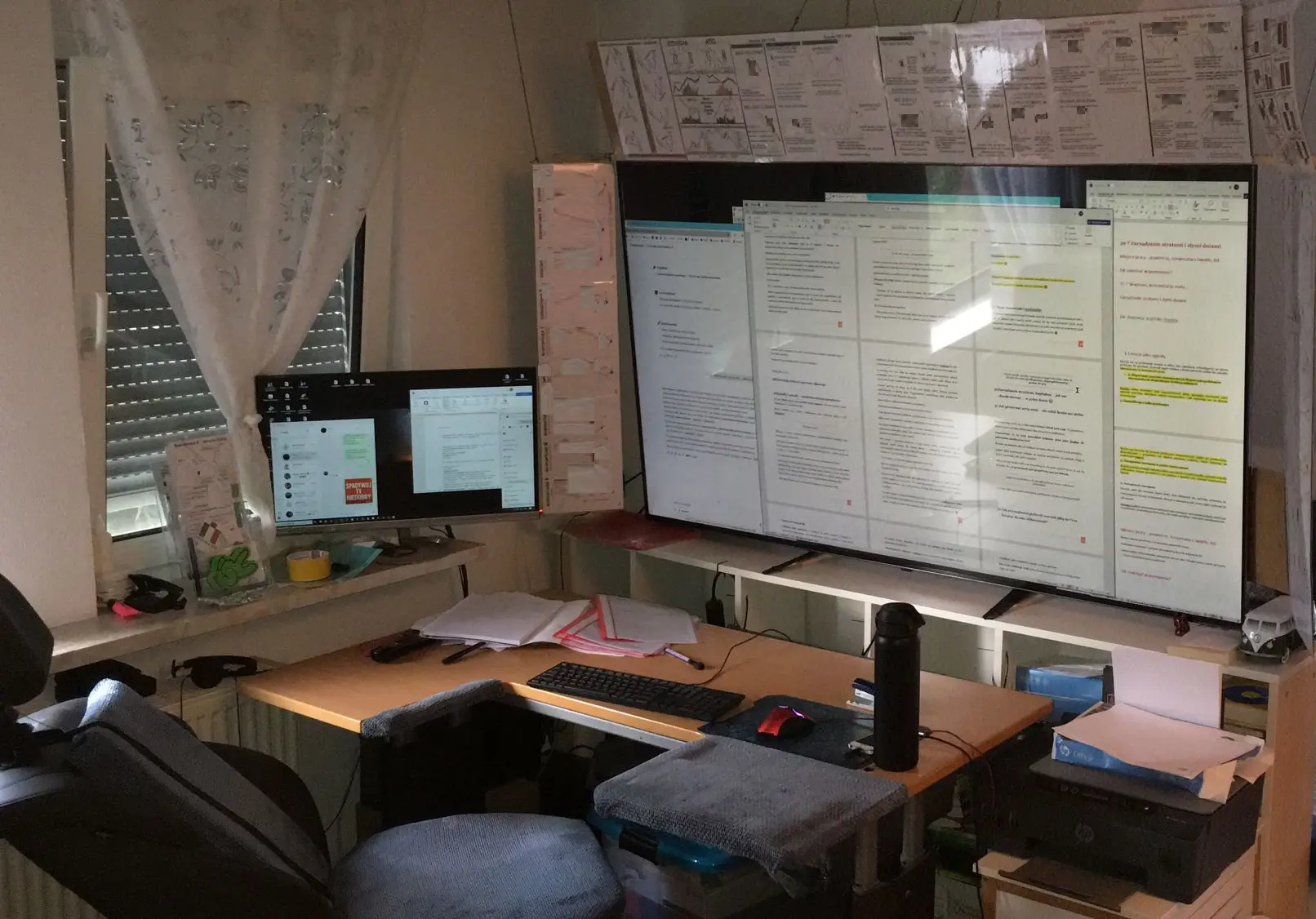
The photo shows a real home trading workstation – no retouching, no artificial staging, and no marketing tricks. The desk, adapted for trading by hand, provides comfort, ergonomics, and a well-organized workspace. It’s a practical proof that you can ensure comfortable computer work cheaply and effectively, without expensive gadgets or an “Instagram” look.

Chapter: 39.2

When you spend long hours in front of the charts, you quickly discover the limitations of typical office solutions. Just as quickly, you notice the health consequences of sitting in front of a screen for hours on end.
Everyone sets up their workstation in their own way. Mine may not be pretty, but it’s well thought out and works great in practice.
I know it doesn’t make much of a visual impression, but in this book I focus on honesty.
You’ll take exactly as much value from it as you want.
I promised to speak openly about my experiences – about what truly matters in a Trader’s work.

Chapter: 39.3

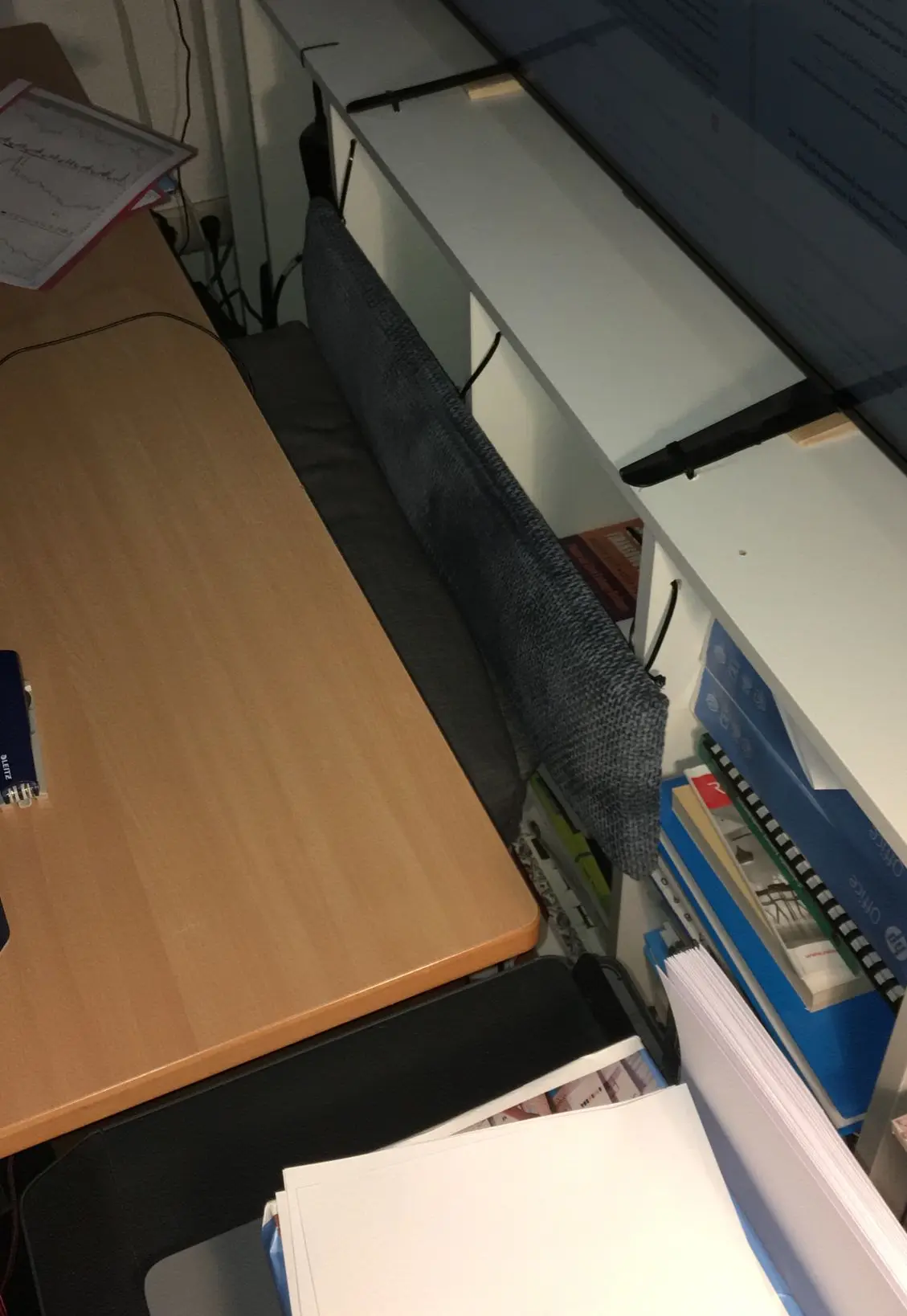
The footrest and the cushion for leg support complement the desk and chair setup.
I don’t want to go into too many details here – you’ll find more of them in the book. Here, I’m focusing only on what directly relates to the photos to explain their meaning and value for the message.
I hope this isn’t boring :)

Chapter: 39.4

This is the full view of my workspace. The main monitor is 75”, with a distance of about 150 cm from my eyes. On the left side is a smaller 27” screen. This setup is very comfortable – there’s no problem with lack of space, charts being too small, or figuring out how to arrange chart windows on the monitors. One large monitor offers incredible working comfort.
I tested many different configurations, and only this one turned out to be fully satisfying. A height-adjustable desk and a desktop shape that provides good arm support… The setup works so well that I finally stopped thinking about what else could be improved.
Chapter: 40.2

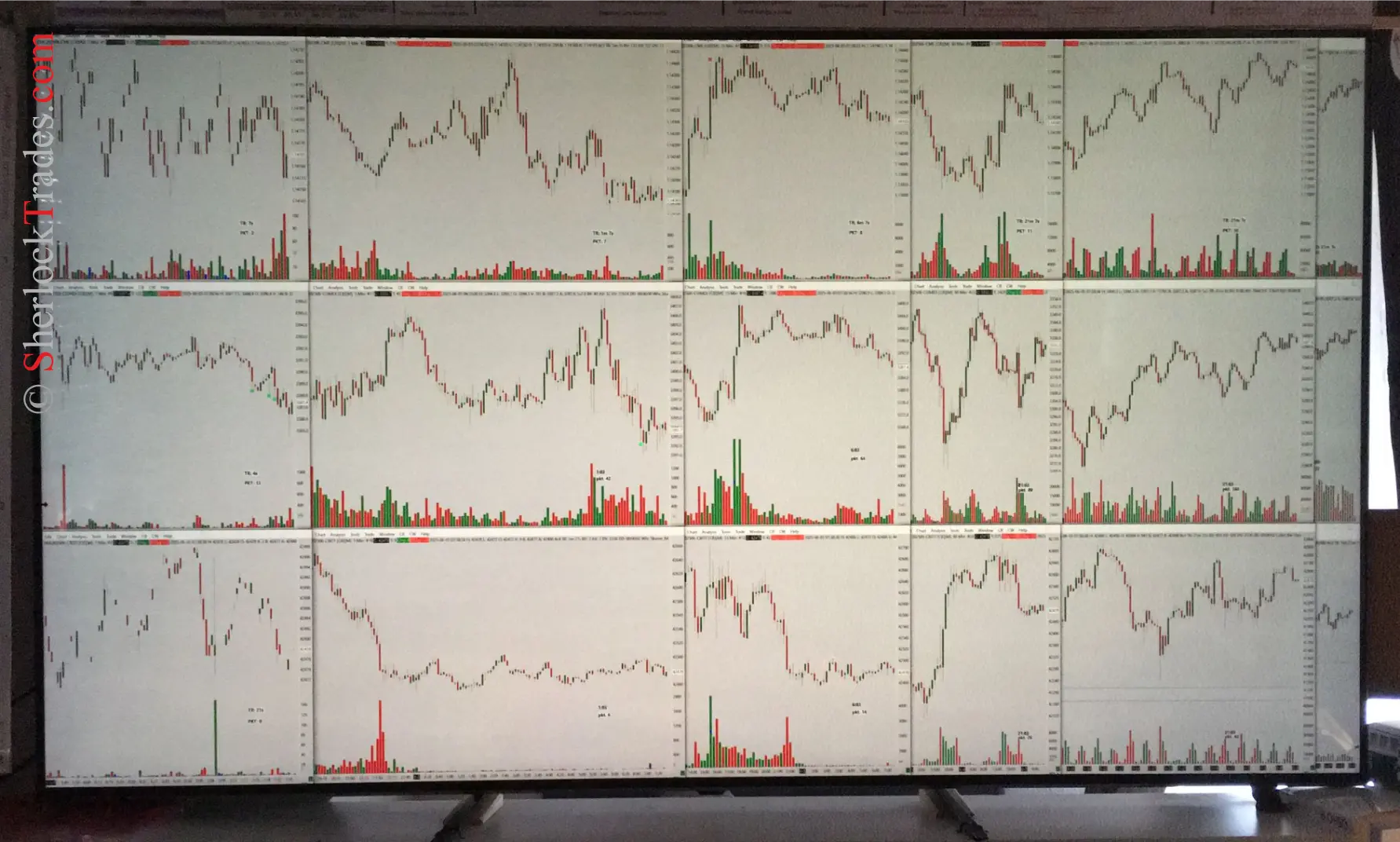
My monitor with charts – Sierra Chart platform. In this case, it’s 3 instruments, although I often work with 2, in which case I use a different window layout.
The timeframes from left to right are: 1, 5, 15, 60, 240 minutes, and 1D at the end.

Chapter: 40.2

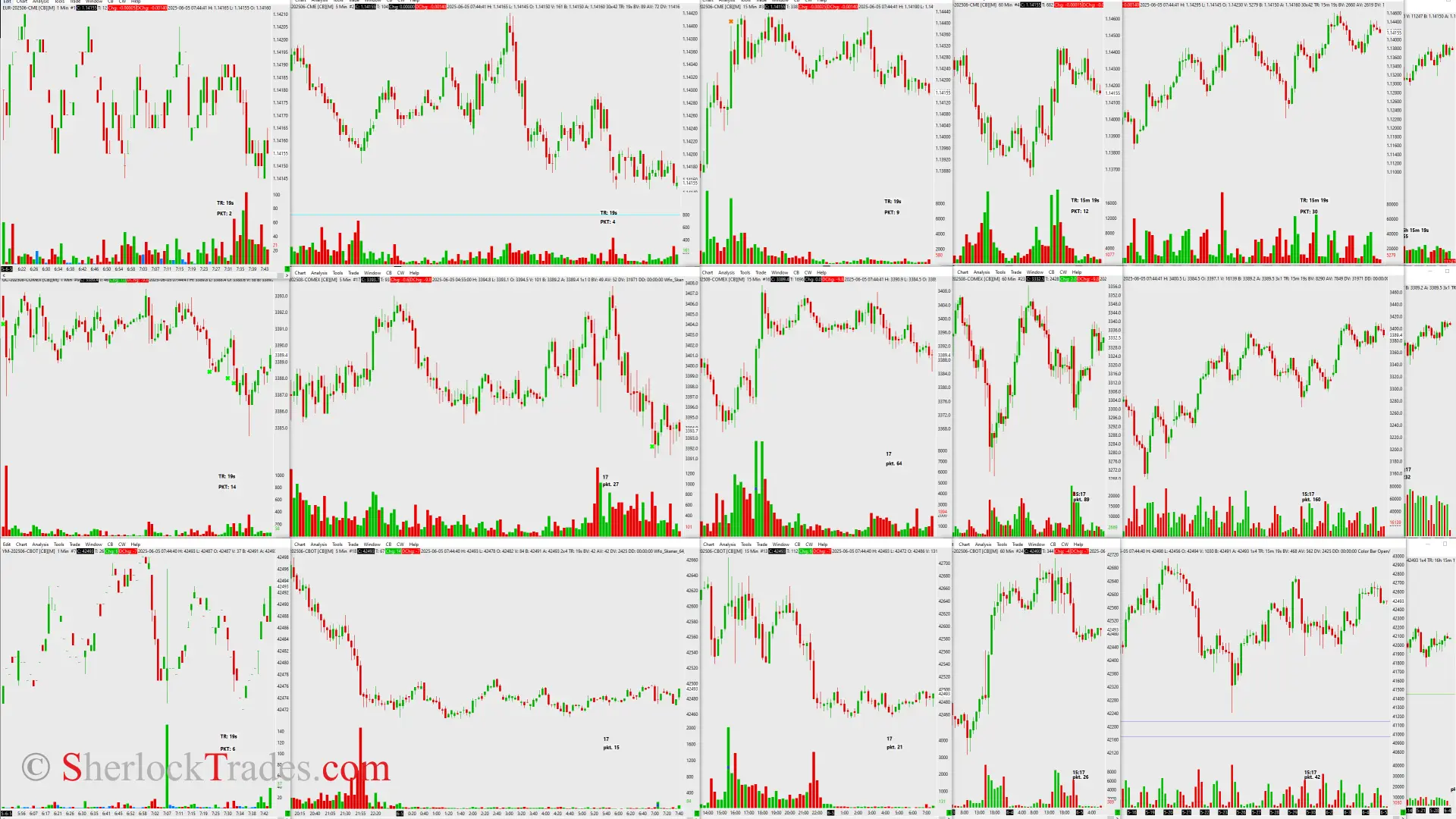
This is a digital screenshot that shows the chart readability a bit better. In reality, the image is much clearer than in this screenshot – from a distance of 1.5 m, every detail is clearly visible: candles, wicks, and volume.

Chapter: 40.2.1

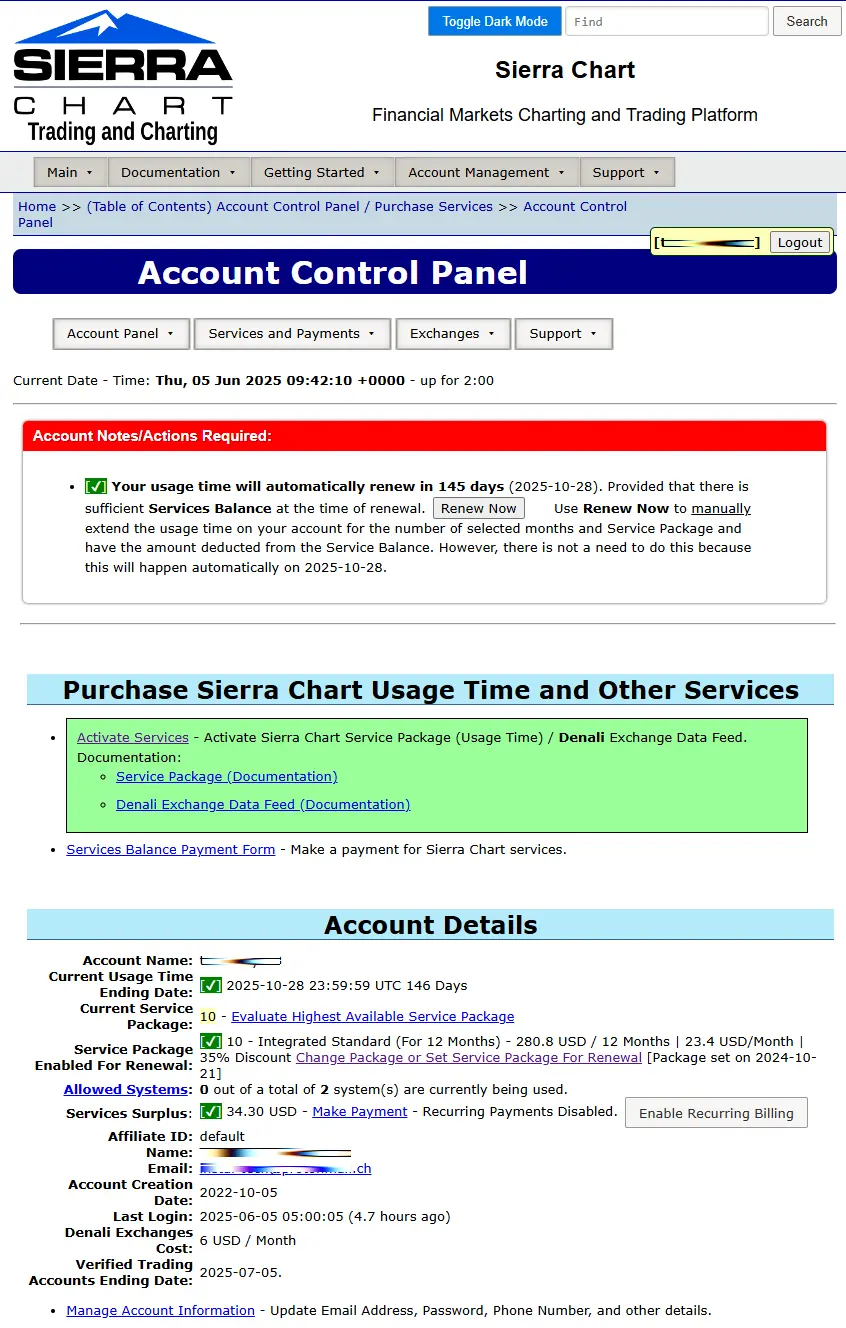
This is not an ad :) I get nothing from it, but I use this solution and it works. If you want professional charts and data, you need to be ready to spend a few dollars a month. The quality of data and charts directly impacts our money, so it’s not something worth saving on.
A tip for beginners: if you’re interested in volume, make sure you have access to real volume, not some kind of simulation, such as so-called tick volume.
Analyzing charts based on fake volumes makes it hard to expect good results.

Chapter: 44

This photograph comes from the chapter dedicated to concentration methods.

Chapter: 47

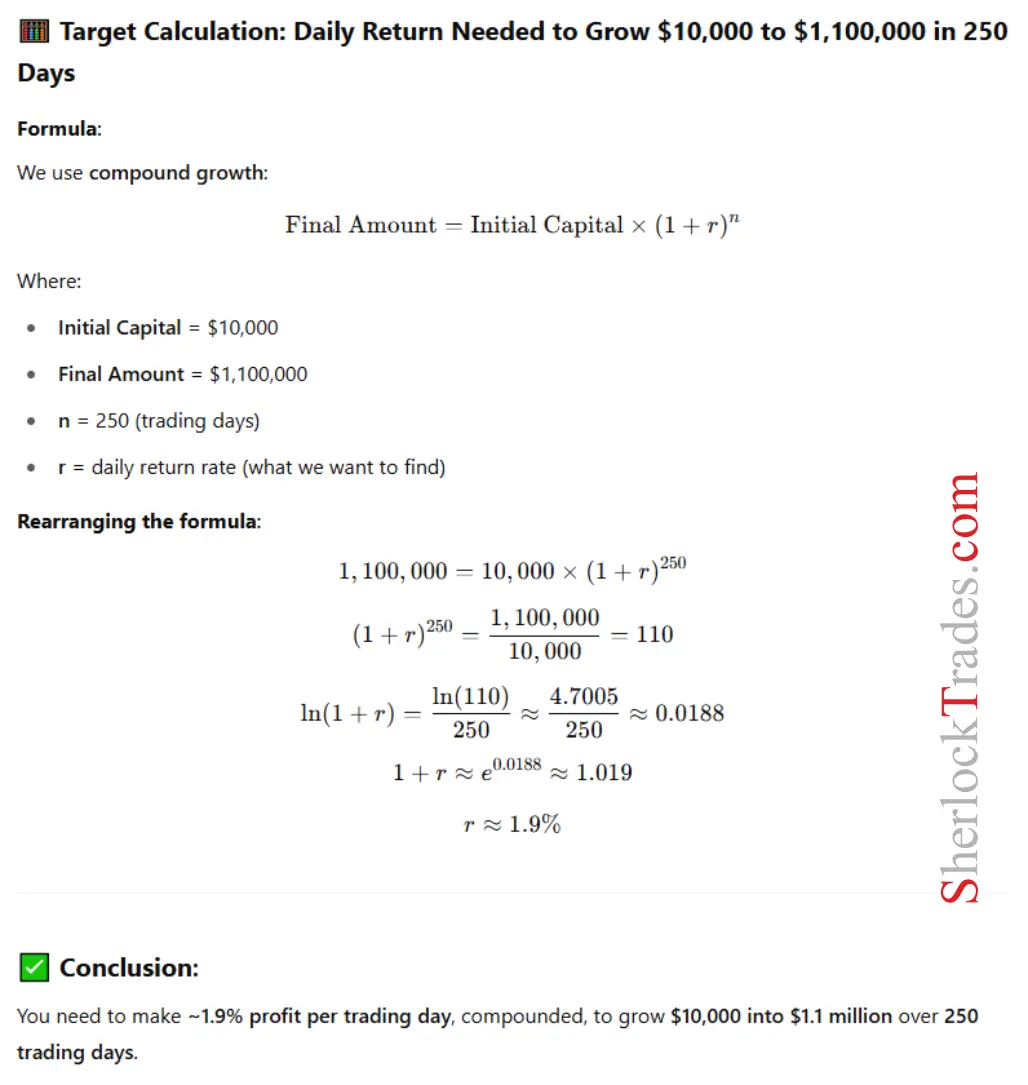
Do you remember Larry Williams’ result? Have you ever wondered how much you would need to earn on average day after day to achieve such a result?
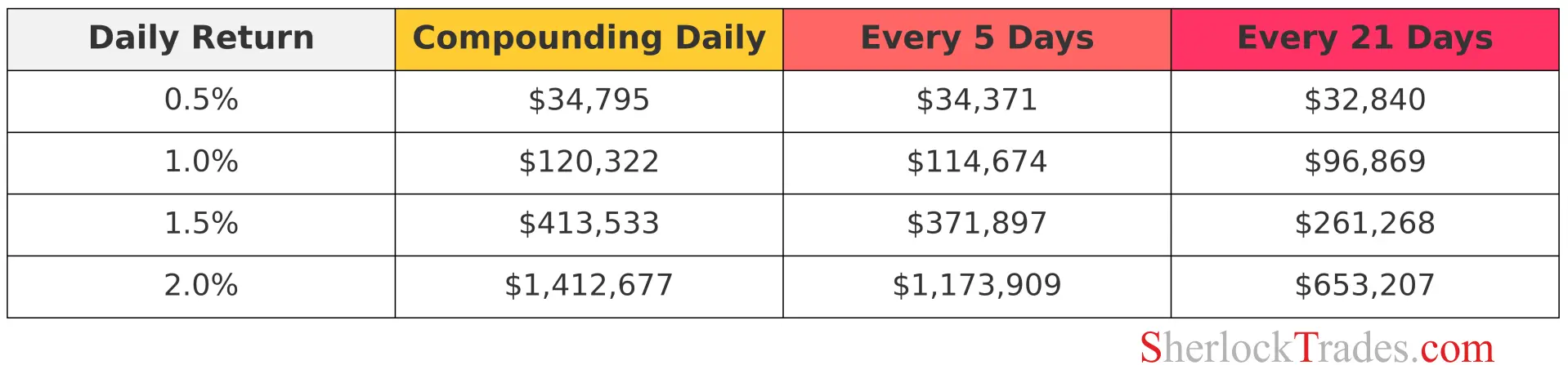
Turning $10,000 into over a million in a year requires consistent gains of around 1.9% per day – mathematically possible, but extremely difficult in practice.

Chapter: 47.2

In the book, I describe several ways to increase profits without raising risk or improving trade quality. This table shows how the frequency of reinvesting profits affects the final result.
It emphasizes that even without changing the entry and exit strategy, simply implementing a systematic, daily update of position size can significantly boost profits – without any additional cost or effort.

Chapter: 47.2

This table expands on the earlier comparison, showing in detail how reinvesting profits every 1, 5, or 21 days affects the final result. It’s an ideal tool for Traders who want to model different scenarios and better understand the power of compound interest depending on the consistency of their actions.
It’s one of the simple yet smart ways to achieve much better results without any additional work.

Chapter: 47.3

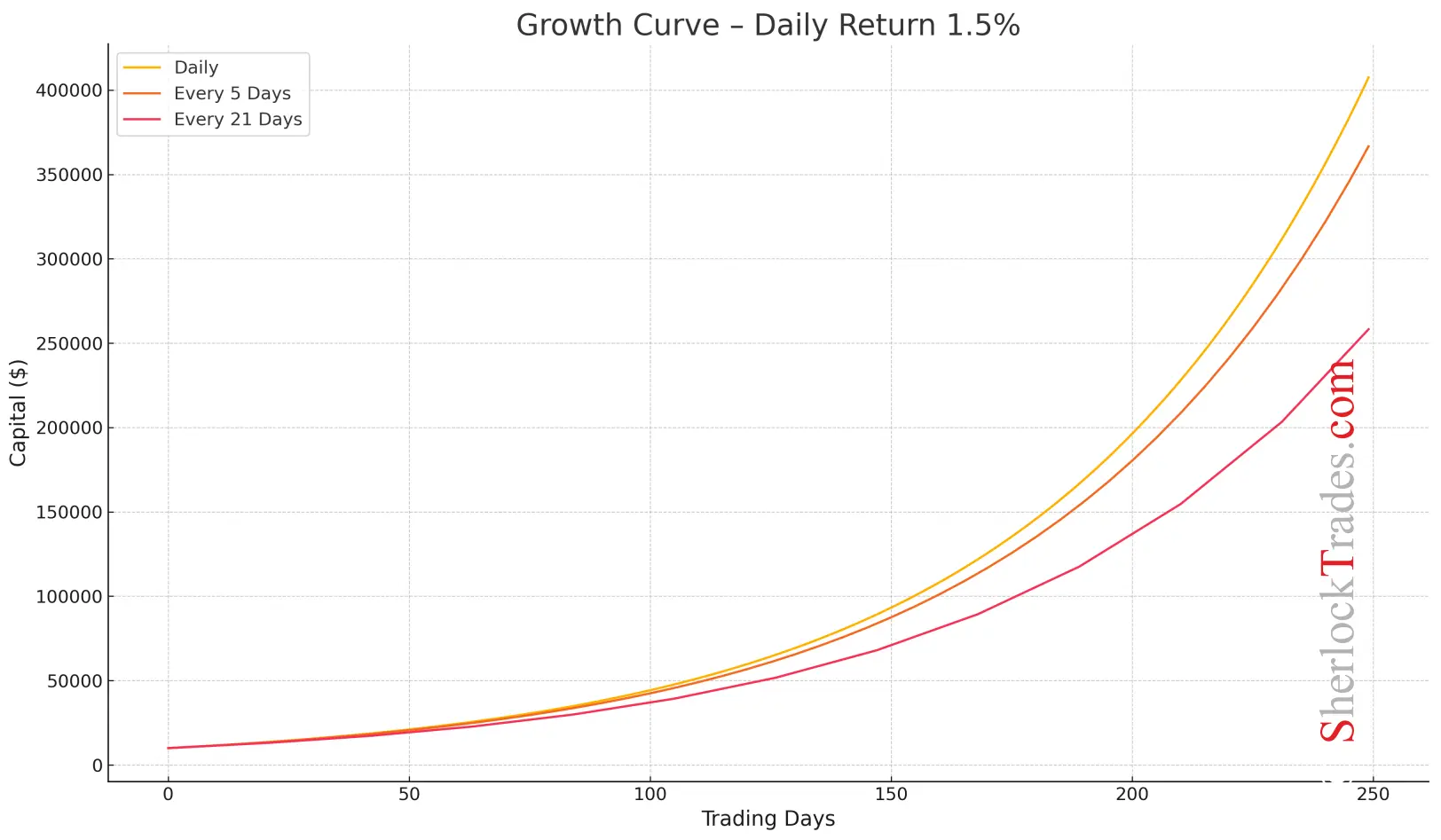
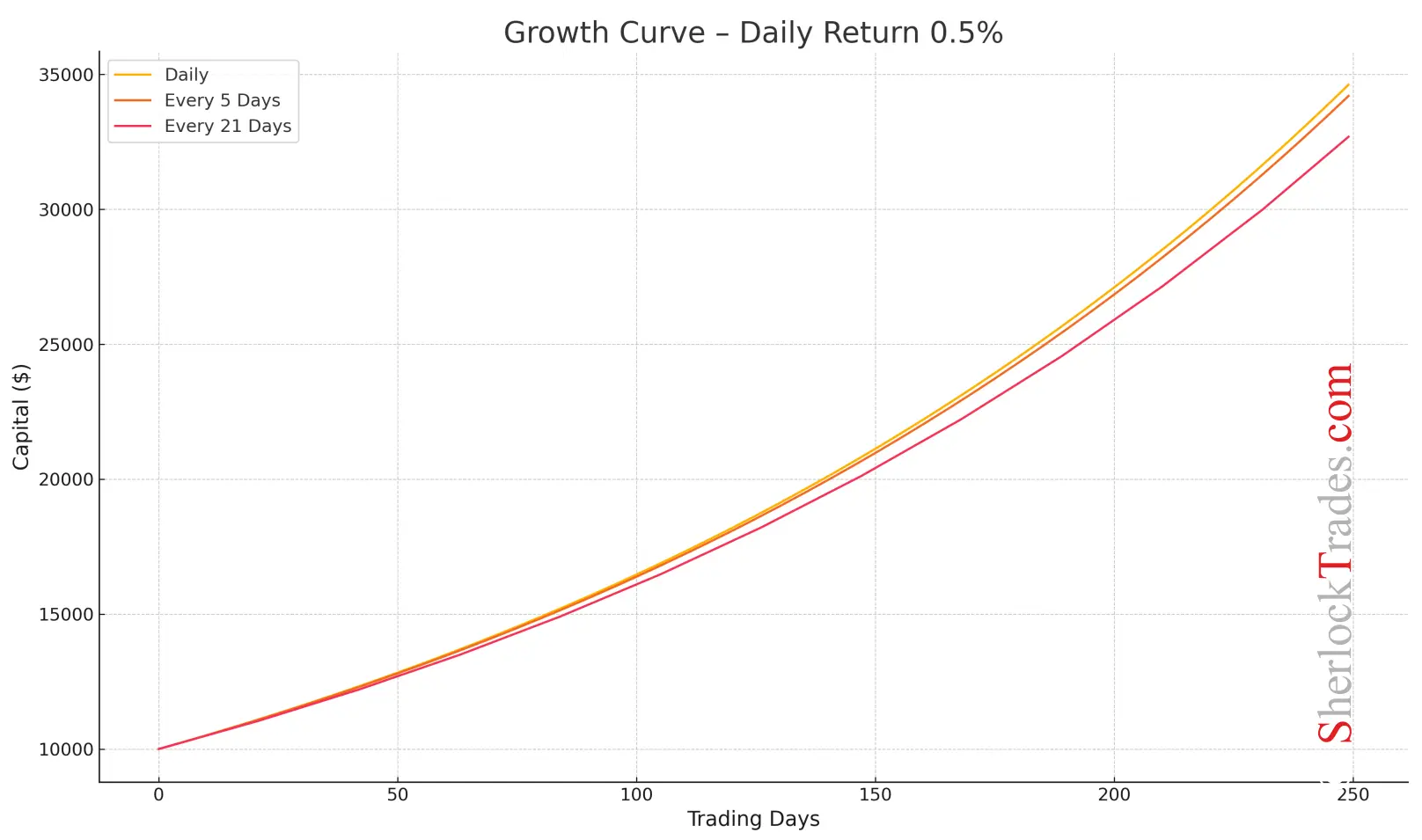
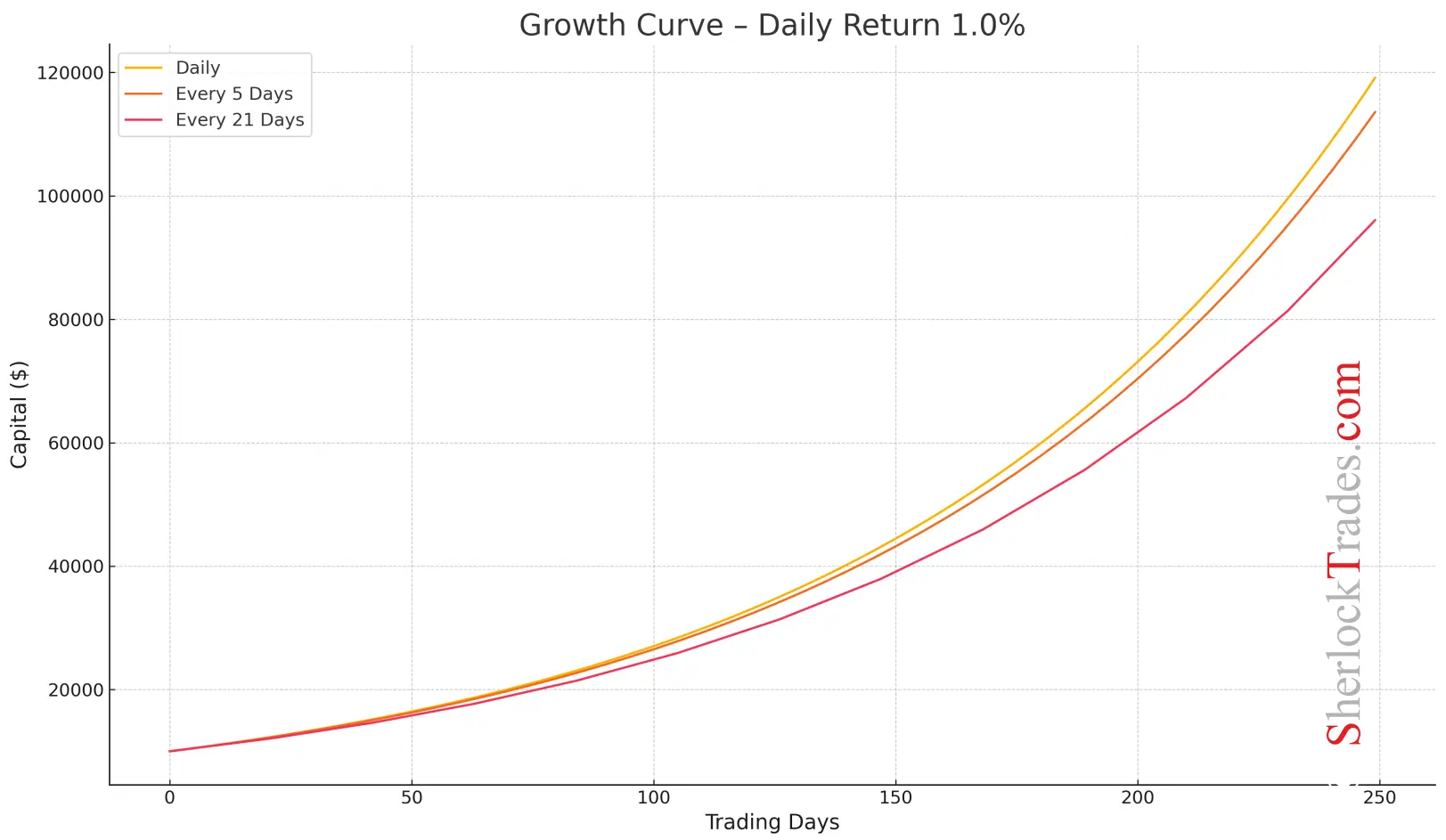
The four charts show how the capital growth curve develops over a year with an average daily return of 0.5%, 1%, 1.5%, and 2%.
The more frequent the reinvestment, the faster the capital grows. Even with a moderate daily profit (0.5%), the differences between daily and monthly position updates after 250 days are clear.
This is a transparent demonstration of the power of compound interest in practice.

Chapter: 47.3

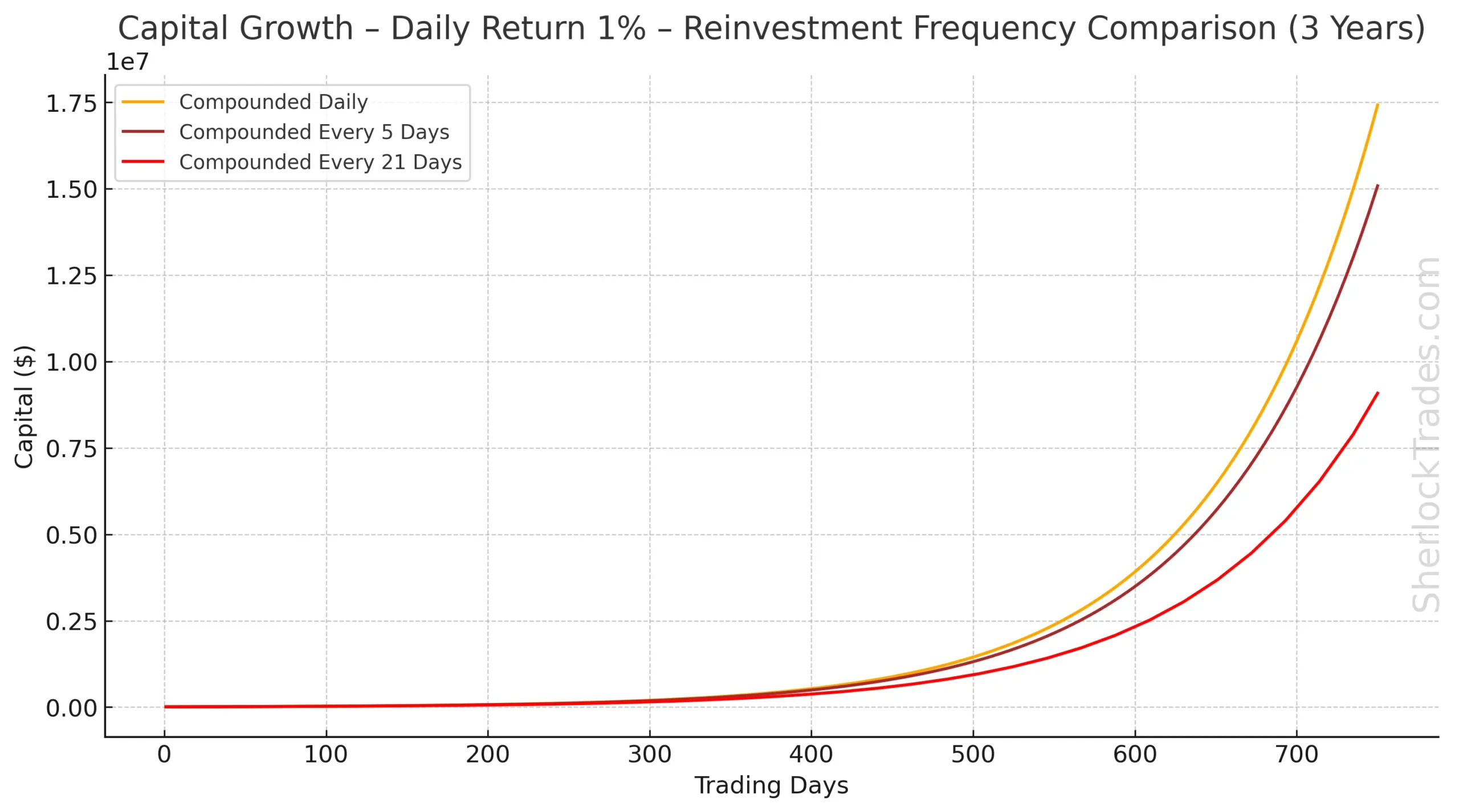
All capital growth curves assume the same average daily percentage gain.
The only difference is whether the position size is recalculated daily, every 5 days, or every 21 days.

Chapter: 47.3

1.5% per day is a really good, ambitious level…
The difference is definitely noticeable when you finish the year with 250 thousand or 400 thousand in your account :)

Chapter: 47.3

I guess there’s no need to convince anyone anymore that it’s worth getting interested in this topic :)

Chapter: 47.3

A modest, reasonable 1% per day and the results visible after 3 years of trading…
This is the reward for analyzing your work, staying consistent, and maintaining discipline.

Chapter: 47.4

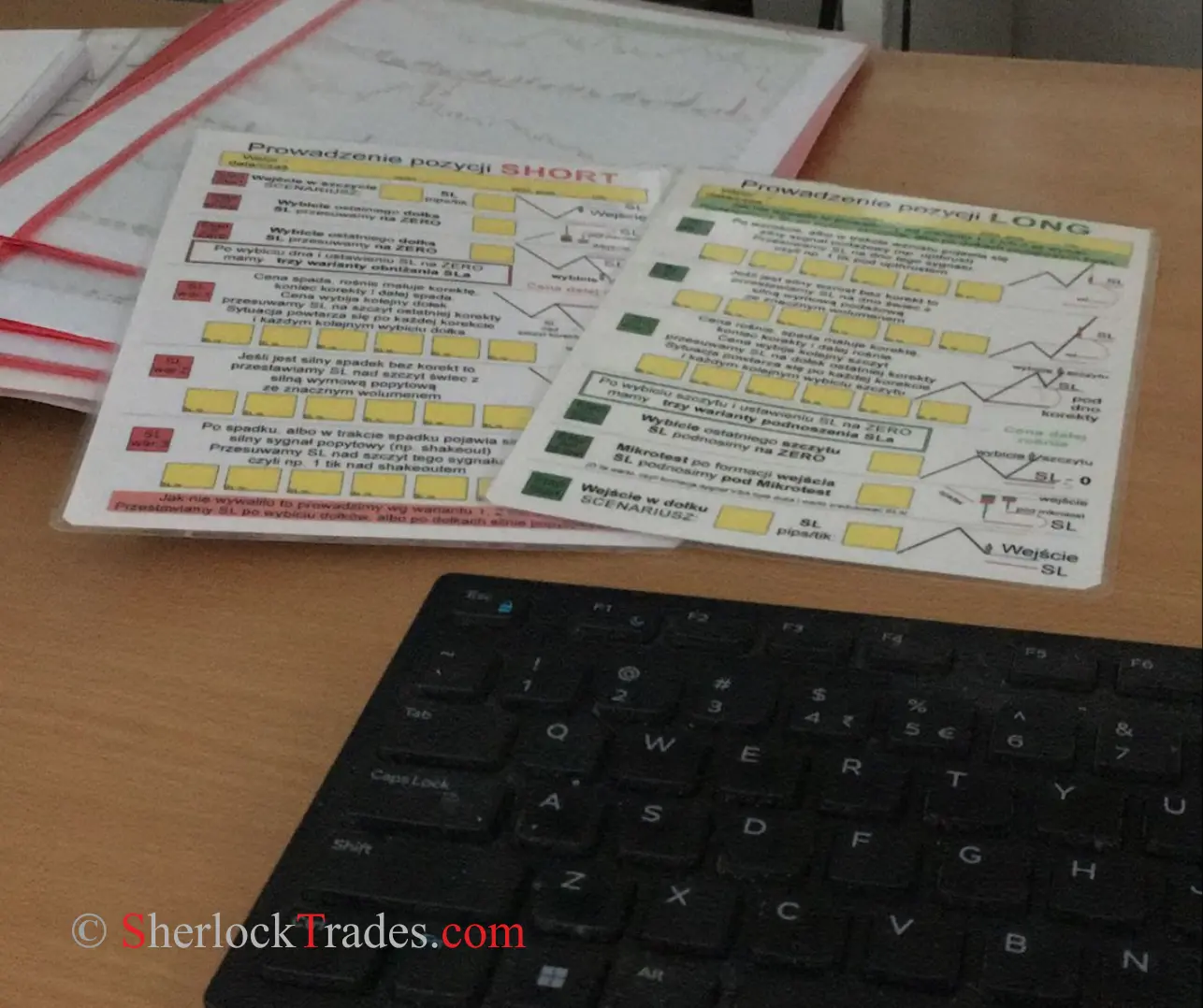
These are my old trade management cards – a tool that helps to manage market positions logically and consistently.
If we want to achieve stable results and eliminate emotional decisions, such cards are essential.
As the old Traders’ saying goes: “Cut losses quickly and let profits run.”
These cards are a practical way to implement this principle in everyday trading.

Chapter: 50.3

The graphic refers to the chapter where I discuss trading effectiveness depending on the Trader’s emotional state. It symbolizes inner strength and complete control over the market. The bull and the bear become allies of the Trader, who has achieved calm, emotional control, and maximum focus.
It is a visual metaphor for silencing the noise, eliminating toxic stimuli, and creating one’s own environment of power – conducive to making rational decisions.

Chapter: 50.3

Compared to the earlier illustration, see what happens when you let destructive “vibrations” in.
Instead of acting with strength and calm, you sink into chaos, losing control.
In such a state, there is no chance for proper chart analysis or making accurate decisions.

Chapter: 51

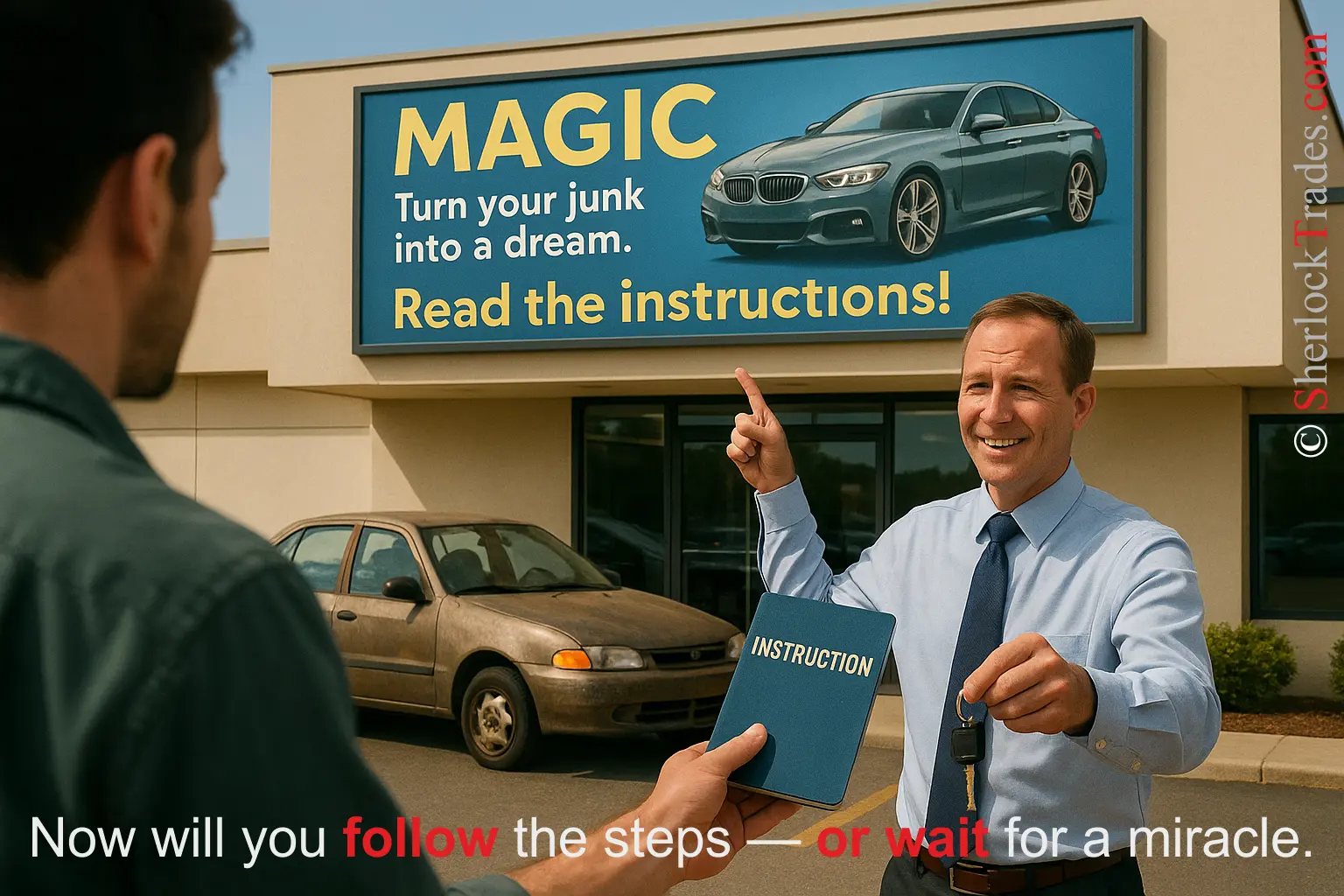
The illustration is a metaphor for the approach to growth and success. It shows a situation where someone is given a complete set of tools and clear instructions, but must decide for themselves whether to use them or wait for a miracle.
This reflects the message of the book – the author has given everything they could, but it’s up to the reader to decide whether to follow this “manual” and build something valuable, or waste the opportunity.
What will you do?

Chapter: 52.2.3

It’s nothing magical :) Our mental state largely depends on how we feel physically. Long hours spent at a desk can negatively affect the body. Short dumbbell exercises help release tension in the forearms and prevent micro-injuries to muscles and tendons.
This is a practical example of how to take care of ergonomics and health during long hours of desk work.

Chapter: 52.2.7

Earlier I showed my green tea set, and here I’m presenting the “gear” for another chapter that focuses on health during trading…

Chapter: 52.3

The scene symbolizes a key moment of decision: go “all in” or stop and reconsider the situation. At first glance, everything looks perfect – strong cards, full readiness to enter. But a careful Trader will notice that something doesn’t add up. The market, just like this game, can be manipulated. The illustration warns: a strong entry signal is not enough – you must be able to assess whether it’s even worth playing and whether the game you want to go “all in” on isn’t a trap.
I’ll just add that “all in” is the domain of gamblers, not professional Traders.

Chapter: 53

This time, the graphic with the link to buy me a coffee appeared in the chapter where I reveal a method to have at least a million dollars in your account within a month – of course, in exchange for a symbolic coffee :)
The method itself may not appeal to everyone :), but the trade management cards I share as a thank-you for the coffee are a completely different story.

Chapter: 53

Once I’m done with publishing the book, I ambitiously plan to share my knowledge about chart analysis on my YouTube channel.
Add it to your subscriptions if you want to see how I approach working with charts.

Chapter: 54

The last graphic in my book…
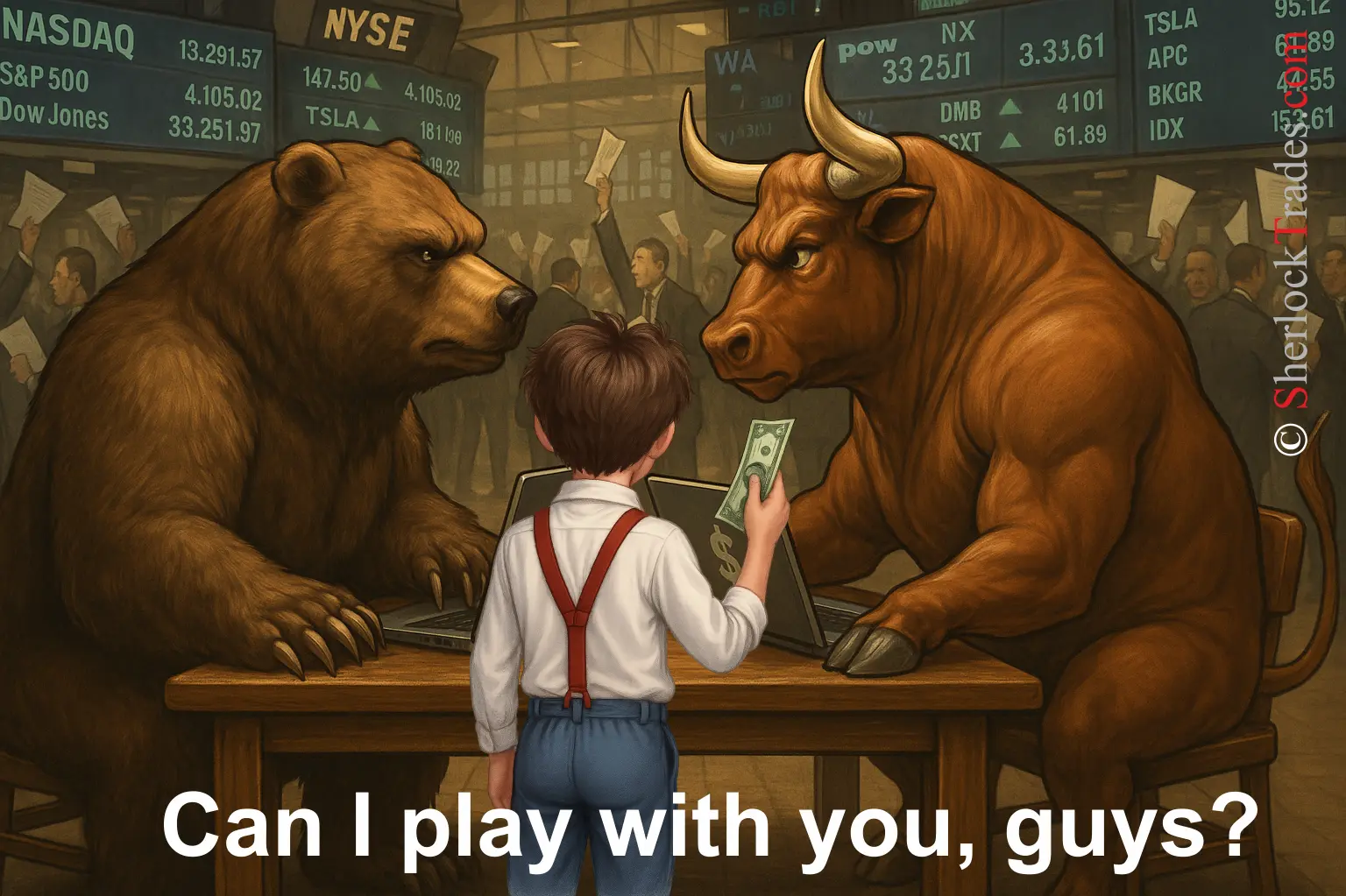
It’s an image showing a young Trader who wants to enter the market.
It’s better to be well prepared for this game.
Either way, I’m keeping my fingers crossed for you, and may we always play in the right direction :)

That’s all...

If you like the photos, graphics and the message, and you don't yet have my book, below you’ll find a page with a short description as well as links to where you can buy it.
You’re warmly invited...

© 2025 SherlockTrades.com. All rights reserved.